Want to be in the loop?
subscribe to
our notification
Business News
PRIVATE CORPORATE BOND MARKET EXCEEDS $28 BILLION IN A YEAR
The commencement of private corporate bond market operations has significantly bolstered market transparency and mitigated risks for investors, especially retail traders, said the Hà Nội Stock Exchange (HNX).
On July 19, 2023, the private corporate bond trading system was inaugurated at the HNX, introducing centralised trading via negotiated transactions through trading members.
This system offers immediate or end-of-day payments, managed by the Việt Nam Securities Depository Centre (VSDC) for bilateral settlement.
Its operation enhances market transparency and reduces investor transaction risks in the corporate bond market.
According to HNX, at the market's opening, there were 19 private corporate bond codes from three issuers, valued at VNĐ9.06 trillion (US$359.3 million). By the end of 2023, the system had 887 bond codes from 249 issuers, worth VNĐ617.6 trillion.
As of June 30, the market had grown to 997 bond codes from 259 issuers, with a value of over VNĐ706.2 trillion ($28 billion).
The trading member system expanded from five at launch to 36 by the end of 2023 and by the end of June, there were 48 members, including 44 securities firms and four banks, with 45 of them trading on HNX.
The liquidity of private corporate bonds has seen a significant enhancement.
The average trading value per session surged from VNĐ250.6 billion during the market's inaugural month to VNĐ1.88 trillion by the close of 2023. By the end of June, this figure had further soared to more than VNĐ4 trillion per session.
Since the system's inception until June 30, bonds from credit institutions dominated the market, constituting 45.7 per cent of total transactions, equivalent to a value of VNĐ324.2 trillion. Meanwhile, bonds from real estate companies accounted for approximately 30 per cent of the market's trading value, reaching nearly VNĐ212.6 trillion.
The majority of issuing entities belong to the credit sector, representing 63 per cent of the market, while real estate firms constitute 24.9 per cent of the total issuance value.
The average capital mobilisation cost across the market is 7.52 per cent annually. Specifically, bonds from credit institutions offer the lowest interest rate at 6.01 per cent per year, with the commercial and service sectors at 10.76 per cent and other sectors at 10.87 per cent.
Issuing organisations also conduct early bond repurchases, with a cumulative value of bonds repurchased reaching VNĐ182.9 trillion.
HNX plans to work with associated entities to continue refining the technological infrastructure of the trading system to better cater to market needs.
It aims to enhance and update the specialised information platform for private corporate bonds in alignment with Decree 65/2022/ND-CP and Circular 30/2023/TT-BTC.
Issuances double in seven months
According to the Ministry of Finance (MoF), companies issued VNĐ161.5 trillion ($6.43 billion) worth of bonds in the first seven months, 2.6 times higher than the same period last year.
Credit institutions accounted for 67.5 per cent of the value, property enterprises some 24 per cent and businesses of other industries 8.5 per cent.
As much as VNĐ24 trillion worth of covered bonds was released during the span, with those by realty firms making up 84.4 per cent.
Some VNĐ88.8 trillion worth of bonds were redeemed during the period, down 36 per cent year-on-year.
Source: VNS
Related News

BANKING / FINANCE / INSURANCE / TAX
REMITTANCES TO HCM CITY RISE NEARLY 40% IN Q3
Remittances to HCM City reached more than US$2.83 billion in the third quarter of this year, up 39.5 per cent from the previous quarter and 3.6 per cent year-on-year. This was the first quarter showing positive annual growth this year, helping narrow the decline in remittance inflows over the first nine months. According to the State Bank of Vietnam (SBV)’s Regional Branch 2, remittances transferred to HCM City through credit institutions and economic organisations totalled $2.835 billion in Q3, an increase of more than $802 million from the previous quarter.

TECHNOLOGY
TECH SECTOR GROWTH OPENS UP OPPORTUNITIES FOR VIỆT NAM TO GO GLOBAL
The growth of the electronics, semiconductor and high-tech sectors worldwide is opening up a variety of opportunities for Vietnamese enterprises to integrate more deeply into the global supply chain. However, to become suppliers for these corporations, domestic enterprises must meet rigorous standards regarding quality, technology, productivity and order fulfilment capabilities.
VIETNAM ECONOMY INVESTMENT
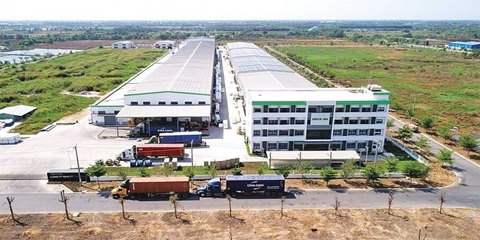
FOREIGN INVESTORS SEEKING A SYNCHRONISED MANUFACTURING ECOSYSTEM
Instead of focusing only on land costs and incentives as usual, foreign investors are seeking a synchronised manufacturing ecosystem, from stable power supply and logistics to shared infrastructure and the convenience of completing residence procedures for experts to serve their long-term investment in the country.

MEMBER CORNER / PROMOTIONS
SENTRYSAFE FHW40200 – PROTECT YOUR VALUABLES, ENJOY PEACE OF MIND!
Looking for a reliable solution to protect your important documents, cash, and valuables from fire and water damage? Genuine SENTRYSAFE - Reliable protection for your valuables and peace of mind! Contact Sen Wai Vietnam for more information and personalized product recommendations.
PROPERTY / INDUSTRIAL ZONE
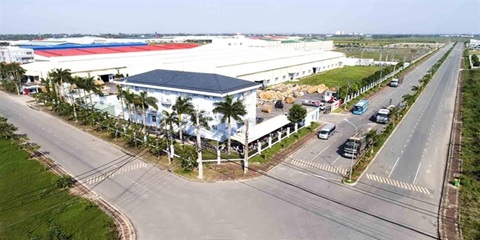
HCM CITY ATTRACTS US$5.7 BILLION INTO EXPORT PROCESSING AND INDUSTRIAL ZONES
HCM City attracted US$5.7 billion in domestic and foreign investment into its export processing and industrial zones during the first nine months of 2026. The figure exceeded the city's full-year target by 31 per cent, highlighting strong momentum in high-quality industrial investment under Resolution No.10-NQ/TW. Total investment reached 131 per cent of the 2026 target of $4.25 billion and represented a 29 per cent increase compared with the same period in 2025, according to the city's Export Processing and Industrial Zones Authority (HEPZA).
INFRASTRUCTURE / CONSTRUCTION / LOGISTIC / PORT
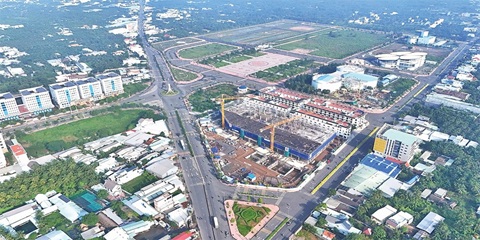
DONG THAP PROVINCE STEPS UP INDUSTRIAL EXPANSION AND INFRASTRUCTURE CONNECTIVITY
Accelerating public investment, strengthening inter-regional connectivity, and expanding industrial land are helping Dong Thap efficiently bolster competitiveness and drive economic growth. Following the 2025 merger of the former Dong Thap and Tien Giang provinces, the expanded Dong Thap province in the Mekong Delta faces mounting pressure to accelerate infrastructure development and strengthen connectivity among local economic zones, urban areas, industrial parks (IPs), and production centres.
Events Sponsors






















