Want to be in the loop?
subscribe to
our notification
Business News
POLICIES COME INTO EFFECT IN OCTOBER
A series of policies on business registration, rice export business, management of foreign exchange for border trade activities between Viet Nam and China come into force in October.
Supplementing articles on business registration
Decree 108/2018/ND-CP (Decree 108) shall replace Decree 78/2015/ND-CP of the Government on business registration. Decree 108 shall take effect on October 10.
Under Decree 108, business locations can be established in any province. An enterprise wishing to establish a business location can now send a notice in this regard to the Business Registration Office (“BRO”) of the province/city where such business is to be located.
In addition, procedures for business registration would be simplified. It will no longer be compulsory to affix an enterprise’s seal on registration forms; notices of changes of enterprise details; or on any resolutions, decisions or meeting minutes which are attached to the application file for enterprise registration. Documents authorizing individuals to carry out procedures relating to enterprise registration will no longer require notarization or certification. If the procedures for the notification of a sample seal are conducted online, the enterprise is not required to submit a hardcopy of the application file to the BRO as currently required.
Removing barriers for rice export
Decree 107/2018/ND-CP comes into effect in October, aiming to remove difficulties and legal barriers for rice businesses to expand into foreign markets.
The new regulation only requires rice exporters to have a special-use warehouse for rice storage and a rice husking and milling facility which satisfy the standards and national technical regulations set by competent agencies under the Law on Standards and Technical Regulations.
Allowing Yuan for payment at border area
Circular 19/2018/TT-NHNN on guiding about foreign exchange management for border trade activities between Viet Nam and China shall take effect since October 12.
Accordingly, the activities of trade in goods and services across the Viet Nam-China border will be allowed to make payment in freely convertible foreign currencies, Vietnamese dong (VND) or Yuan (CNY).
Viet Nam has seven provinces sharing the border with China, including Lang Son, Quang Ninh, Ha Giang, Lai Chau, Lao Cai, Cao Bang and Dien Bien. The Chinese yuan and Vietnamese dong are only used for payment in border areas of these provinces.
More people eligible for retirement
Public employees and officials can take early retirement if they do not meet new job specifications after their company gets restructured. The final decision will be made by management if employees take the retirement option.
Decree 113/2018/NĐ-CP approved by PM Nguyen Xuan Phuc shall take effect since October 15.
Financial support for farmers
Decree 116/2018/NÐ-CP on amending and supplementing a number of articles of Decree No.55/2015/ND-CP on credit policies for agricultural and rural development shall come into force on October 25.
Under the new provision, the credit institution can provide loans at a maximum of VND100 million for those who have no collateral assets, reside outside the rural areas and engage in agricultural production or business activities (it was VND50 million under the old provision). Meanwhile, individuals and households residing in rural areas will be provided with the maximum loan amount of VND200 million (previously VND100 million).
Source: VGP
Related News

BANKING / FINANCE / INSURANCE / TAX
REMITTANCES TO HCM CITY RISE NEARLY 40% IN Q3
Remittances to HCM City reached more than US$2.83 billion in the third quarter of this year, up 39.5 per cent from the previous quarter and 3.6 per cent year-on-year. This was the first quarter showing positive annual growth this year, helping narrow the decline in remittance inflows over the first nine months. According to the State Bank of Vietnam (SBV)’s Regional Branch 2, remittances transferred to HCM City through credit institutions and economic organisations totalled $2.835 billion in Q3, an increase of more than $802 million from the previous quarter.

TECHNOLOGY
TECH SECTOR GROWTH OPENS UP OPPORTUNITIES FOR VIỆT NAM TO GO GLOBAL
The growth of the electronics, semiconductor and high-tech sectors worldwide is opening up a variety of opportunities for Vietnamese enterprises to integrate more deeply into the global supply chain. However, to become suppliers for these corporations, domestic enterprises must meet rigorous standards regarding quality, technology, productivity and order fulfilment capabilities.
VIETNAM ECONOMY INVESTMENT
FOREIGN INVESTORS SEEKING A SYNCHRONISED MANUFACTURING ECOSYSTEM
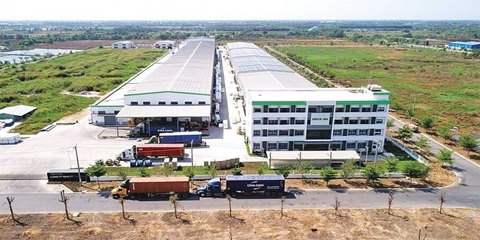
Instead of focusing only on land costs and incentives as usual, foreign investors are seeking a synchronised manufacturing ecosystem, from stable power supply and logistics to shared infrastructure and the convenience of completing residence procedures for experts to serve their long-term investment in the country.
MEMBER CORNER / PROMOTIONS
SENTRYSAFE FHW40200 – PROTECT YOUR VALUABLES, ENJOY PEACE OF MIND!
Looking for a reliable solution to protect your important documents, cash, and valuables from fire and water damage? Genuine SENTRYSAFE - Reliable protection for your valuables and peace of mind! Contact Sen Wai Vietnam for more information and personalized product recommendations.
PROPERTY / INDUSTRIAL ZONE
HCM CITY ATTRACTS US$5.7 BILLION INTO EXPORT PROCESSING AND INDUSTRIAL ZONES
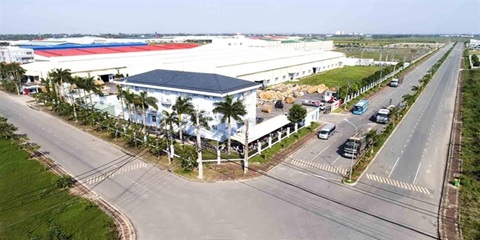
HCM City attracted US$5.7 billion in domestic and foreign investment into its export processing and industrial zones during the first nine months of 2026. The figure exceeded the city's full-year target by 31 per cent, highlighting strong momentum in high-quality industrial investment under Resolution No.10-NQ/TW. Total investment reached 131 per cent of the 2026 target of $4.25 billion and represented a 29 per cent increase compared with the same period in 2025, according to the city's Export Processing and Industrial Zones Authority (HEPZA).
INFRASTRUCTURE / CONSTRUCTION / LOGISTIC / PORT
DONG THAP PROVINCE STEPS UP INDUSTRIAL EXPANSION AND INFRASTRUCTURE CONNECTIVITY
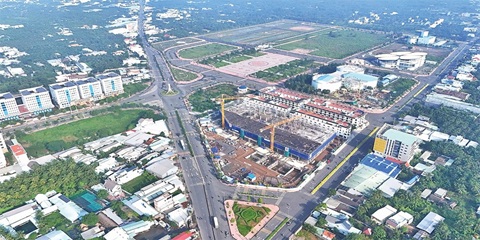
Accelerating public investment, strengthening inter-regional connectivity, and expanding industrial land are helping Dong Thap efficiently bolster competitiveness and drive economic growth. Following the 2025 merger of the former Dong Thap and Tien Giang provinces, the expanded Dong Thap province in the Mekong Delta faces mounting pressure to accelerate infrastructure development and strengthen connectivity among local economic zones, urban areas, industrial parks (IPs), and production centres.
Events Sponsors






















