Want to be in the loop?
subscribe to
our notification
Business News
PM WORKS WITH BANKING INDUSTRY TO PROMOTE ECONOMIC GROWTH
The PM said that the banking industry is a key growth lever. Therefore, besides further studying policies for traditional growth drivers such as investment, export and consumption, banks must focus on credit policies.
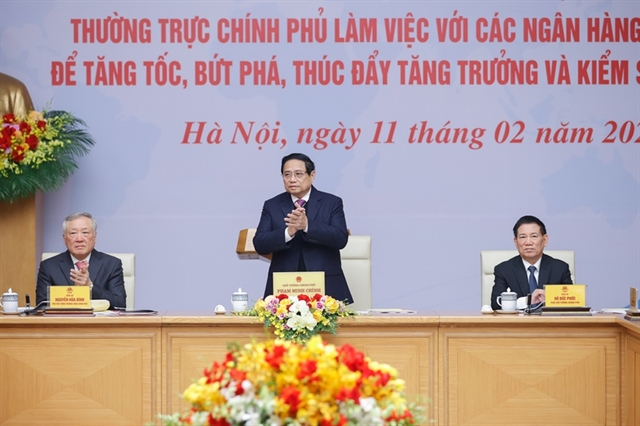
Prime Minister Phạm Minh Chính speaks at the conference. Photo baochinhphu.vn
HÀ NỘI — Prime Minister Phạm Minh Chính is asking the banking industry to propose solutions to renew traditional growth drivers and promote new growth drivers to help the country meet a high growth rate target of 8 per cent, or more, in 2025.
At a conference with 20 commercial banks to promote growth and control inflation in 2025 held in Hà Nội on Tuesday, the PM said that the growth rate this year would create momentum for the following years to achieve double-digit growth. Therefore, the Government had accelerated its drive to achieve the high target set for 2025.
However, in these earliest months of 2025, the world economy had been changing rapidly and policies of major economies had been affecting Việt Nam’s macroeconomic, monetary and fiscal policies.
According to the PM, the current difficulties and challenges are the impacts of politics and competition between major countries. The current world economy tends to break supply chains and Việt Nam's large traditional export markets are facing many difficulties.
The PM said that the banking industry was a key growth lever. Therefore, besides further studying policies for traditional growth drivers such as investment, export and consumption, banks must focus on credit policies. They would need to drive new growth in areas such as green, circular and knowledge economies, along with the creative and sharing economy, along with supporting emerging industries such as semiconductor chips, artificial intelligence and cloud computing.
He added that Việt Nam also has many advantages, including its location in an important strategic geopolitical position, which banks must exploit, use and promote.
The banking industry needed to use banking tools to fully develop the competitive advantages, turning them into driving forces for national development, the PM said.
According to the PM, exports, one of the country’s three traditional growth drivers, is facing difficulties. So banks also need to research and develop credit packages for young people to borrow to buy houses, which will contribute to restructuring the real estate market and increasing domestic consumption.
At the conference, Deputy Governor of the State Bank of Vietnam (SBV) Đào Minh Tú said they were proposing four solutions to unblock capital flows to support the high growth target.
Firstly, the Government should direct ministries, branches and localities to promote the synchronous implementation of solutions to increase the ability to absorb credit capital of businesses and the economy. The solutions need to focus on trade promotion, stimulating investment and consumption, along with disbursement of public investment capital and attraction of social investment and high-quality FDI capital over the medium and long terms.
Secondly, it needs to continually implement solutions to synchronously develop financial markets and capital markets, and create confidence in the markets to ensure they are a medium and long-term capital channel for the economy, reducing pressure on the banking system.
It is also necessary to continually implement policies on supporting SMEs, according to the laws, especially solutions to develop and improve the efficiency of the operations of the Small and Medium Enterprise Guarantee Fund, and the Small and Medium Enterprise Development Fund.
Finally, the Government should have strong enough measures to unblock the capital sources that are stuck in projects in real estate, other infrastructure and industry and trade sectors, to create conditions for capital flows to continually circulate, as a large proportion of the capital sources is bank credit.
According to the SBV, as of February 3, 2025, the bank's credit reached VNĐ15.65 quadrillion, (US$588 billion) an increase of 0.19 per cent compared to 2024. — VNS
Source: VNS
Related News
VIETNAM ECONOMY INVESTMENT
FOREIGN INVESTORS SEEKING A SYNCHRONISED MANUFACTURING ECOSYSTEM
Instead of focusing only on land costs and incentives as usual, foreign investors are seeking a synchronised manufacturing ecosystem, from stable power supply and logistics to shared infrastructure and the convenience of completing residence procedures for experts to serve their long-term investment in the country.
INFRASTRUCTURE / CONSTRUCTION / LOGISTIC / PORT
DONG THAP PROVINCE STEPS UP INDUSTRIAL EXPANSION AND INFRASTRUCTURE CONNECTIVITY
Accelerating public investment, strengthening inter-regional connectivity, and expanding industrial land are helping Dong Thap efficiently bolster competitiveness and drive economic growth. Following the 2025 merger of the former Dong Thap and Tien Giang provinces, the expanded Dong Thap province in the Mekong Delta faces mounting pressure to accelerate infrastructure development and strengthen connectivity among local economic zones, urban areas, industrial parks (IPs), and production centres.
PROPERTY / INDUSTRIAL ZONE
HCM CITY ATTRACTS US$5.7 BILLION INTO EXPORT PROCESSING AND INDUSTRIAL ZONES
HCM City attracted US$5.7 billion in domestic and foreign investment into its export processing and industrial zones during the first nine months of 2026. The figure exceeded the city's full-year target by 31 per cent, highlighting strong momentum in high-quality industrial investment under Resolution No.10-NQ/TW. Total investment reached 131 per cent of the 2026 target of $4.25 billion and represented a 29 per cent increase compared with the same period in 2025, according to the city's Export Processing and Industrial Zones Authority (HEPZA).
BANKING / FINANCE / INSURANCE / TAX
REMITTANCES TO HCM CITY RISE NEARLY 40% IN Q3
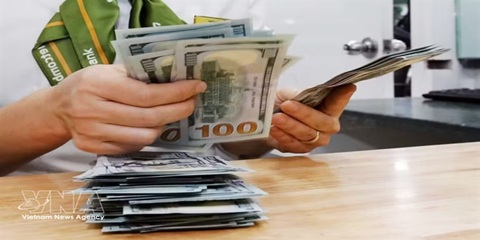
Remittances to HCM City reached more than US$2.83 billion in the third quarter of this year, up 39.5 per cent from the previous quarter and 3.6 per cent year-on-year. This was the first quarter showing positive annual growth this year, helping narrow the decline in remittance inflows over the first nine months. According to the State Bank of Vietnam (SBV)’s Regional Branch 2, remittances transferred to HCM City through credit institutions and economic organisations totalled $2.835 billion in Q3, an increase of more than $802 million from the previous quarter.

VIETNAM ECONOMY INVESTMENT
LOCALITIES REPORT BREAKTHROUGH RESULTS IN FDI IN FIRST NINE MONTHS
In Ho Chi Minh City, total registered capital reached $17.2 billion in the first nine months, up 4.2 times from the same period last year. The figure included more than $9.35 billion in newly registered capital and over $4.9 billion in additional capital for existing projects. Foreign investors also registered more than $2.9 billion through capital contributions and share purchases.
TECHNOLOGY
TECH SECTOR GROWTH OPENS UP OPPORTUNITIES FOR VIỆT NAM TO GO GLOBAL
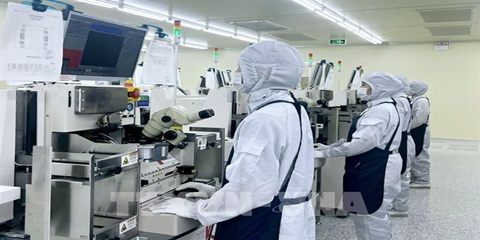
The growth of the electronics, semiconductor and high-tech sectors worldwide is opening up a variety of opportunities for Vietnamese enterprises to integrate more deeply into the global supply chain. However, to become suppliers for these corporations, domestic enterprises must meet rigorous standards regarding quality, technology, productivity and order fulfilment capabilities.
Events Sponsors






















