Want to be in the loop?
subscribe to
our notification
Business News
PANDEMIC HIGHLIGHTS THE NEED FOR DEVELOPING PART-SUPPLY INDUSTRIES TO COPE WITH DISRUPTIONS
The COVID-19 pandemic is highlighting the urgent need for promoting the development of part-supply industries to enable enterprises to be more resilient to shocks or disruptions to global supply chains.
Việt Nam’s part-supply industries remained weak in terms of technology, management capacity and linkages with foreign-direct-investment (FDI) companies, which became evident when the COVID-19 pandemic caused disruptions to global supply chains.
The recent virus outbreaks at industrial parks pushed many enterprises into difficulty with a severe shortage of components and materials for production.
Automobile manufacturer Huyndai Thành Công said that the company was facing a chip shortage and planned to reduce 20 per cent of their production capacity. They said that risks of further cuts in production existed if the chip crunch did not ease.
Nguyễn Văn Kết, director of mechanics company SKD Việt Nam, said that his company was also affected by the shortage of chips which depends on imported sources.
The shortage of components and materials for production has become more severe during the outbreak of the COVID-19 pandemic in a number of countries which makes transportation of goods more difficult.
According to Trương Thị Chí Bình, Deputy President of the Việt Nam Association for Supporting Industries, although production was maintained during the pandemic, nearly 50 per cent of the association's member enterprises saw drops in revenue.
Việt Nam’s supporting enterprises remained of weak capacity compared with other countries in the region such as Thailand, Indonesia, Malaysia and India, which made Vietnamese enterprises more vulnerable to global shocks and disruptions to value chains.
A report from the Ministry of Industry and Trade showed that for the garment and textile industry, as an example, the local procurement rate was just 40-45 per cent and the industry has to depend on imported fabric. The industry mainly did outsourcing contracts with a low added value.
For the automobile production industry, the local procurement rate was far below what was expected.
The local procurement rate for the electronics and telecommunications industry was only around 15 per cent and just five per cent for hi-tech industries.
Đào Phan Long, President of the Việt Nam Association of Mechanical Industry, said Việt Nam lacked spearhead products which could compete with imported ones. In addition, Việt Nam remained largely dependent on imports of raw materials for production, which would also undermine its productivity and competitiveness.
More than ever, enterprises need further support from the Government to recover production and promote the development of the part-supply industry, Bình said.
She said that policies should be developed to encourage the consumption of domestically-produced products and expand exports.
A law supporting industries is important to attract investment and promote the development of these industries.
According to the Industry Agency under the Ministry of Industry and Trade, the ministry will study and develop policies to attract investment and enhance linkages to promote technology transfers between FDI and domestic enterprises. This would contribute to support the development of the part-supply industries.
The ministry’s database of the manufacturing and processing industry included more than 3,600 potential enterprises operating in mechanical, automotive, electronics, footwear, and garment and textile industries.
Việt Nam set the target of having at least 1,000 enterprises that were capable of being direct suppliers to multinational companies.
Source: VIR
Related News

BANKING / FINANCE / INSURANCE / TAX
REMITTANCES TO HCM CITY RISE NEARLY 40% IN Q3
Remittances to HCM City reached more than US$2.83 billion in the third quarter of this year, up 39.5 per cent from the previous quarter and 3.6 per cent year-on-year. This was the first quarter showing positive annual growth this year, helping narrow the decline in remittance inflows over the first nine months. According to the State Bank of Vietnam (SBV)’s Regional Branch 2, remittances transferred to HCM City through credit institutions and economic organisations totalled $2.835 billion in Q3, an increase of more than $802 million from the previous quarter.
TECHNOLOGY
TECH SECTOR GROWTH OPENS UP OPPORTUNITIES FOR VIỆT NAM TO GO GLOBAL
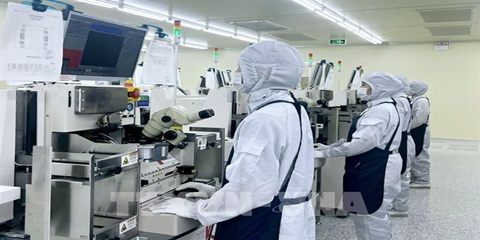
The growth of the electronics, semiconductor and high-tech sectors worldwide is opening up a variety of opportunities for Vietnamese enterprises to integrate more deeply into the global supply chain. However, to become suppliers for these corporations, domestic enterprises must meet rigorous standards regarding quality, technology, productivity and order fulfilment capabilities.
VIETNAM ECONOMY INVESTMENT
FOREIGN INVESTORS SEEKING A SYNCHRONISED MANUFACTURING ECOSYSTEM
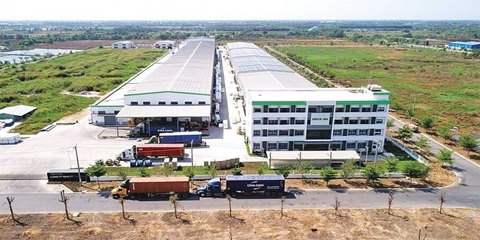
Instead of focusing only on land costs and incentives as usual, foreign investors are seeking a synchronised manufacturing ecosystem, from stable power supply and logistics to shared infrastructure and the convenience of completing residence procedures for experts to serve their long-term investment in the country.

MEMBER CORNER / PROMOTIONS
SENTRYSAFE FHW40200 – PROTECT YOUR VALUABLES, ENJOY PEACE OF MIND!
Looking for a reliable solution to protect your important documents, cash, and valuables from fire and water damage? Genuine SENTRYSAFE - Reliable protection for your valuables and peace of mind! Contact Sen Wai Vietnam for more information and personalized product recommendations.
PROPERTY / INDUSTRIAL ZONE
HCM CITY ATTRACTS US$5.7 BILLION INTO EXPORT PROCESSING AND INDUSTRIAL ZONES
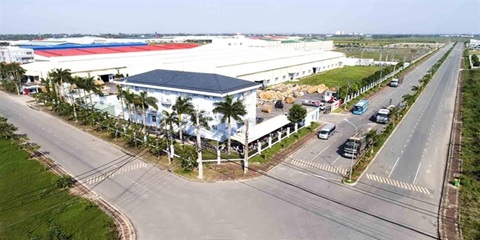
HCM City attracted US$5.7 billion in domestic and foreign investment into its export processing and industrial zones during the first nine months of 2026. The figure exceeded the city's full-year target by 31 per cent, highlighting strong momentum in high-quality industrial investment under Resolution No.10-NQ/TW. Total investment reached 131 per cent of the 2026 target of $4.25 billion and represented a 29 per cent increase compared with the same period in 2025, according to the city's Export Processing and Industrial Zones Authority (HEPZA).
INFRASTRUCTURE / CONSTRUCTION / LOGISTIC / PORT
DONG THAP PROVINCE STEPS UP INDUSTRIAL EXPANSION AND INFRASTRUCTURE CONNECTIVITY
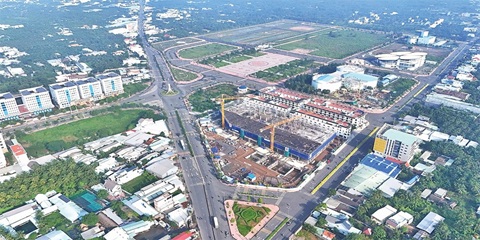
Accelerating public investment, strengthening inter-regional connectivity, and expanding industrial land are helping Dong Thap efficiently bolster competitiveness and drive economic growth. Following the 2025 merger of the former Dong Thap and Tien Giang provinces, the expanded Dong Thap province in the Mekong Delta faces mounting pressure to accelerate infrastructure development and strengthen connectivity among local economic zones, urban areas, industrial parks (IPs), and production centres.
Events Sponsors






















