Want to be in the loop?
subscribe to
our notification
Business News
OPEN-END FUNDS KEEP ATTRACTING CAPITAL INFLOWS
Accumulated in the first quarter of 2025, net withdrawals of equity funds were more than VNĐ5.3 trillion, (US$ 20 million) double that of the previous quarter.

Open-end funds have maintained their capital attraction, with a net inflow of VNĐ700 billion in the first quarter of 2025. Photo cafef.vn
HÀ NỘI — Though capital flows into open-end funds have shown signs of weakening, amid investors' caution over the US tariff change, such fund is the only group that has continuously maintained net inflows since the fourth quarter of 2023.
According to Đỗ Hồng Vân, Head of the financial data provider FiinGroup’s Data Analysis Division, equity funds suffered the strongest capital withdrawal pressure. Accumulated in the first quarter of 2025, net withdrawals of equity funds were more than VNĐ5.3 trillion (US$ 20 million), double that of the previous quarter.
In terms of month, March marked the fifth consecutive month of net withdrawal and was the month with the strongest capital withdrawal value.
Under the context, according to Vân, open-end funds have maintained their capital attraction, with a net inflow of VNĐ700 billion in the first quarter of 2025. Dragon Capital's VFMVSF led in attracting net capital inflows, with a focus on banking and retail stocks such as MWG and CTG.
Despite significantly decreasing compared to the average of more than VNĐ3.3 trillion per quarter in 2024, open-end funds are the only fund group that has maintained net inflows since the fourth quarter of 2023, in the context of strong net withdrawals from other fund groups including ETFs and closed-end funds.
The slowdown has clearly reflected the defensive psychology of institutional investors, in the context of the domestic stock market being exposed to risks from external factors, especially the US reciprocal tax policy.
According to experts, during periods of strong fluctuations in the stock market, individual investors with limited experience and expertise are prone to excessive psychological states. It is difficult for individual investors to achieve positive investment results as they often make quick sale when unexpected economic events occur and make quick purchase when the market recovers.
Meanwhile, the advantage of investment funds is that they have a team of experienced, highly specialised experts and methodical investment activities. This is the reason why investment funds still bring more positive performance in the medium and long term, despite being affected by market fluctuations.
For example, right before US President Donald Trump announced his unexpected tariff policy in early April 2025, which caused the VN-Index to decrease by more than 18 per cent in just the first two weeks of April, most investment funds proactively adjusted their asset portfolios to limit risks. Specifically, in March 2025, up to 19 out of 31 open-end equity funds increased their cash ratio compared to the previous month. — BIZHUB/VNS
Source: VNS
Related News
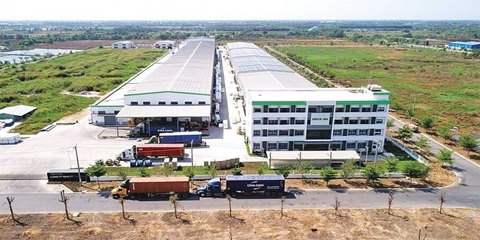
VIETNAM ECONOMY INVESTMENT
FOREIGN INVESTORS SEEKING A SYNCHRONISED MANUFACTURING ECOSYSTEM
Instead of focusing only on land costs and incentives as usual, foreign investors are seeking a synchronised manufacturing ecosystem, from stable power supply and logistics to shared infrastructure and the convenience of completing residence procedures for experts to serve their long-term investment in the country.
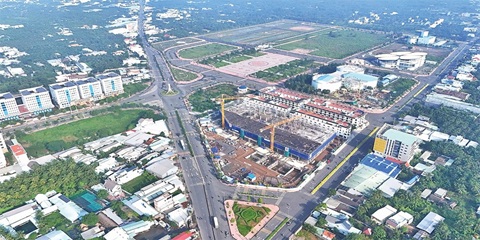
INFRASTRUCTURE / CONSTRUCTION / LOGISTIC / PORT
DONG THAP PROVINCE STEPS UP INDUSTRIAL EXPANSION AND INFRASTRUCTURE CONNECTIVITY
Accelerating public investment, strengthening inter-regional connectivity, and expanding industrial land are helping Dong Thap efficiently bolster competitiveness and drive economic growth. Following the 2025 merger of the former Dong Thap and Tien Giang provinces, the expanded Dong Thap province in the Mekong Delta faces mounting pressure to accelerate infrastructure development and strengthen connectivity among local economic zones, urban areas, industrial parks (IPs), and production centres.
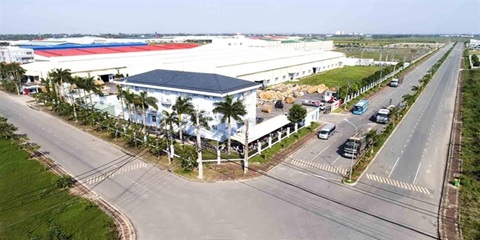
PROPERTY / INDUSTRIAL ZONE
HCM CITY ATTRACTS US$5.7 BILLION INTO EXPORT PROCESSING AND INDUSTRIAL ZONES
HCM City attracted US$5.7 billion in domestic and foreign investment into its export processing and industrial zones during the first nine months of 2026. The figure exceeded the city's full-year target by 31 per cent, highlighting strong momentum in high-quality industrial investment under Resolution No.10-NQ/TW. Total investment reached 131 per cent of the 2026 target of $4.25 billion and represented a 29 per cent increase compared with the same period in 2025, according to the city's Export Processing and Industrial Zones Authority (HEPZA).

BANKING / FINANCE / INSURANCE / TAX
REMITTANCES TO HCM CITY RISE NEARLY 40% IN Q3
Remittances to HCM City reached more than US$2.83 billion in the third quarter of this year, up 39.5 per cent from the previous quarter and 3.6 per cent year-on-year. This was the first quarter showing positive annual growth this year, helping narrow the decline in remittance inflows over the first nine months. According to the State Bank of Vietnam (SBV)’s Regional Branch 2, remittances transferred to HCM City through credit institutions and economic organisations totalled $2.835 billion in Q3, an increase of more than $802 million from the previous quarter.

VIETNAM ECONOMY INVESTMENT
LOCALITIES REPORT BREAKTHROUGH RESULTS IN FDI IN FIRST NINE MONTHS
In Ho Chi Minh City, total registered capital reached $17.2 billion in the first nine months, up 4.2 times from the same period last year. The figure included more than $9.35 billion in newly registered capital and over $4.9 billion in additional capital for existing projects. Foreign investors also registered more than $2.9 billion through capital contributions and share purchases.

TECHNOLOGY
TECH SECTOR GROWTH OPENS UP OPPORTUNITIES FOR VIỆT NAM TO GO GLOBAL
The growth of the electronics, semiconductor and high-tech sectors worldwide is opening up a variety of opportunities for Vietnamese enterprises to integrate more deeply into the global supply chain. However, to become suppliers for these corporations, domestic enterprises must meet rigorous standards regarding quality, technology, productivity and order fulfilment capabilities.
Events Sponsors






















