Want to be in the loop?
subscribe to
our notification
Business News
OBVIOUS RISKS CONTINUE TO CLOUD FOREIGN INVESTMENT PROSPECTS FOR THE SECOND HALF
The country’s ambitious targets of wooing foreign investments this year are expected to be within reach, in defiance of uncertainties affecting global funding flows.
According to the World Investment Report 2022, launched this month by the United Nations Conference on Trade and Development (UNCTAD), the world’s foreign direct investment (FDI) recovered in 2021 and hit nearly $1.6 trillion, but this course is unlikely to be sustained in 2022.
This year, the business and investment climate has changed dramatically as the war in Ukraine is resulting in a triple crisis of high food, raised fuel prices, and tighter financing. Other factors clouding the FDI horizon include renewed pandemic impacts, the likelihood of more interest rate rises in major economies, negative sentiment in financial markets, and a potential recession, the report stated.
According to Nguyen Mai, chairman of the Vietnam Association of Foreign-Invested Enterprises, geopolitical tensions and policy changes in many nations worldwide will affect Vietnam’s efforts to attract FDI.
“Unless there is some breakthrough in FDI attraction in the second half of the year, FDI inflows to Vietnam in 2022 are estimated at $31-32 billion, and FDI disbursement is around $20 billion, the same as last year’s result,” Mai said in May. “Amid the competition of FDI attraction getting fierce, it is difficult for Vietnam to achieve its goals of quality and socioeconomic efficiency. However, it can at least reach the lowest target set forth in terms of quantity of FDI.”
Vietnam has set the highest target to lure in as much as $30-40 billion in registered foreign investment, including $20-30 billion in disbursement, but the improvement in quality is expected to be mild due to uncertainties affecting global investment flows.
This month, in addition to cutting down global growth projections to 2.9 per cent in 2022, the World Bank has emphasised that the Russia-Ukraine crisis has exacerbated the economic downturn and boosted the risk of stagnant inflation around the world. Besides that, the lockdowns of China and the interruption of production there have caused confusion for foreign investors.
Phan Huu Thang, former director of the Foreign Investment Agency (FIA) under the Ministry of Planning and Investment, said China’s pandemic policy has reduced the domestic consumption demand and this nation’s import and export turnover with the rest of the world. “Vietnam is affected to a certain extent. However, the impact of these factors is only for the short term,” said Thang.
Do Nhat Hoang, general director of the FIA, said there have been positive signals for Vietnam to attract FDI, such as Danish toymaker Lego to invest more than $1 billion on its first-ever carbon-neutral factory in the southern province of Binh Duong. The venture could generate 4,000 jobs over the next 15 years.
“Vietnam is gradually becoming a new manufacturing hub of the region, with the presence of many global groups including Samsung, Intel, LG, and Foxconn,” Hoang said.
In fact, in the World Investment Report 2022 by UNCTAD, Vietnam was also highlighted as a strong investment destination. “International project finance announcements in industrial real estate have also grown continuously for several years, with no let-up during the pandemic. In 2021, deal numbers tripled to 152 projects with a value of $135 billion. Large projects include the construction of a steel and cement manufacturing plant in India for $14 billion and the construction of a 960 -hectare pharmaceutical zone in Vietnam worth $10 billion,” the report stated.
The Politburo’s Resolution No.50-NQ/TW, enacted in 2019, provides the nation’s general orientation for completing institutions and policies and improving the quality and efficiency of foreign investment cooperation for this decade. Accordingly, registered capital shall be about $150-200 billion ($30-40 billion per year) in the period of 2021-2025; disbursed capital shall be about $100-150 billion ($20-30 billion per year) in the same period, and the localisation rate shall increase from the current 20-25 per cent to 30 per cent by 2025, and 40 per cent by 2030.
In the first half of the year, FDI flows into Vietnam were still lower than the same period last year. Specifically, the nation counted inflows of about $14 billion in the period, a slight decrease of 8.9 per cent on-year, and more than $10 billion was disbursed into the economy.
Source: VIR
Related News
BANKING / FINANCE / INSURANCE / TAX
REMITTANCES TO HCM CITY RISE NEARLY 40% IN Q3
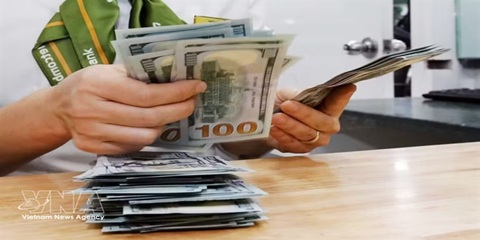
Remittances to HCM City reached more than US$2.83 billion in the third quarter of this year, up 39.5 per cent from the previous quarter and 3.6 per cent year-on-year. This was the first quarter showing positive annual growth this year, helping narrow the decline in remittance inflows over the first nine months. According to the State Bank of Vietnam (SBV)’s Regional Branch 2, remittances transferred to HCM City through credit institutions and economic organisations totalled $2.835 billion in Q3, an increase of more than $802 million from the previous quarter.
TECHNOLOGY
TECH SECTOR GROWTH OPENS UP OPPORTUNITIES FOR VIỆT NAM TO GO GLOBAL
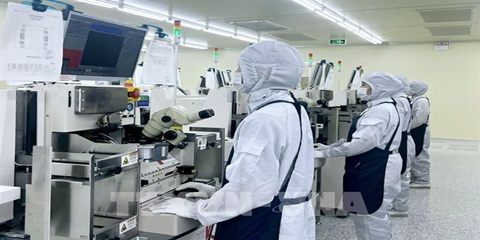
The growth of the electronics, semiconductor and high-tech sectors worldwide is opening up a variety of opportunities for Vietnamese enterprises to integrate more deeply into the global supply chain. However, to become suppliers for these corporations, domestic enterprises must meet rigorous standards regarding quality, technology, productivity and order fulfilment capabilities.
VIETNAM ECONOMY INVESTMENT
FOREIGN INVESTORS SEEKING A SYNCHRONISED MANUFACTURING ECOSYSTEM
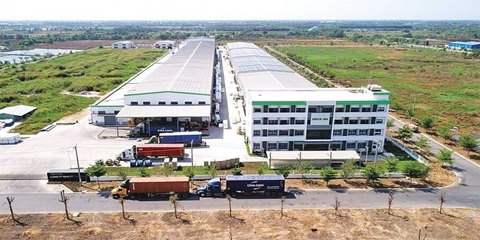
Instead of focusing only on land costs and incentives as usual, foreign investors are seeking a synchronised manufacturing ecosystem, from stable power supply and logistics to shared infrastructure and the convenience of completing residence procedures for experts to serve their long-term investment in the country.
MEMBER CORNER / PROMOTIONS
SENTRYSAFE FHW40200 – PROTECT YOUR VALUABLES, ENJOY PEACE OF MIND!
Looking for a reliable solution to protect your important documents, cash, and valuables from fire and water damage? Genuine SENTRYSAFE - Reliable protection for your valuables and peace of mind! Contact Sen Wai Vietnam for more information and personalized product recommendations.
PROPERTY / INDUSTRIAL ZONE
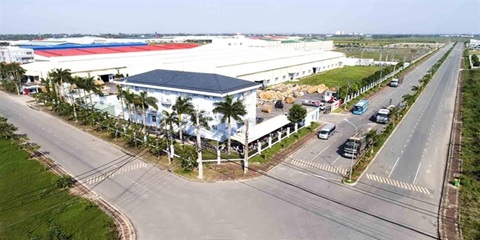
HCM CITY ATTRACTS US$5.7 BILLION INTO EXPORT PROCESSING AND INDUSTRIAL ZONES
HCM City attracted US$5.7 billion in domestic and foreign investment into its export processing and industrial zones during the first nine months of 2026. The figure exceeded the city's full-year target by 31 per cent, highlighting strong momentum in high-quality industrial investment under Resolution No.10-NQ/TW. Total investment reached 131 per cent of the 2026 target of $4.25 billion and represented a 29 per cent increase compared with the same period in 2025, according to the city's Export Processing and Industrial Zones Authority (HEPZA).
INFRASTRUCTURE / CONSTRUCTION / LOGISTIC / PORT
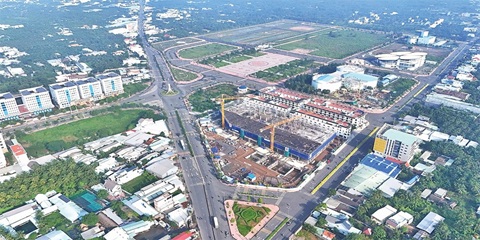
DONG THAP PROVINCE STEPS UP INDUSTRIAL EXPANSION AND INFRASTRUCTURE CONNECTIVITY
Accelerating public investment, strengthening inter-regional connectivity, and expanding industrial land are helping Dong Thap efficiently bolster competitiveness and drive economic growth. Following the 2025 merger of the former Dong Thap and Tien Giang provinces, the expanded Dong Thap province in the Mekong Delta faces mounting pressure to accelerate infrastructure development and strengthen connectivity among local economic zones, urban areas, industrial parks (IPs), and production centres.
Events Sponsors






















