Want to be in the loop?
subscribe to
our notification
Business News
NEW WAVE OF COVID-19 TO THREATEN STILL-STRUGGLING GARMENT INDUSTRY
With the second wave of Covid-19, Vietnam's textile and footwear industries, still reeling from the impact of the first, are likely to see things worsen.
TNG Investment and Trading JSC., which manufactures clothing and footwear for various domestic and international brands, reported first half revenues and net profit were down 10 percent and 29 percent at VND1.84 trillion ($79.3 million) and VND66 billion ($2.84 million).
The Vietnam National Textile and Garment Group (Vinatex) reported a 15 percent decrease in revenues and 25 percent decrease in profits despite partially switching to manufacturing face masks and protective clothing and retaining all its workers.
The situation was "better than predicted," according to Vinatex's deputy general director, Cao Huu Hieu, who said the company had anticipated declines of 30 percent and 50 percent.
Song Hong Garment JSC. reported its profit had fallen by 44 percent to just VND122 billion ($5.26 million).
RTW Retailwinds Inc., one of its major partners in the U.S., has filed for bankruptcy but still owes it around VND166 billion ($7.16 million).
According to a report by the Ministry of Industry and Trade, Vietnam's apparel production in July increased by 13.2 percent from June but was nearly 5 percent down year-on-year in the year to date.
Exports of textiles and footwear are down 21 percent and 8 percent in the first seven months of the year.
While the switch to making face masks and protective clothing was considered a lifesaver for many garment firms in the first half of the year, a global oversupply of these products have caused prices to plummet. Firms such as TNG have even stopped manufacturing masks and started focusing on high-value products.
With many countries, including Vietnam, being hit by a new wave of Covid-19, getting orders has also become a difficult task for the majority of garment firms. Many did not receive a single order for high-value products in the second half of the year, according to the ministry.
Another challenge facing the garment industry is the fact that consumer behaviors have changed dramatically due to the pandemic.
Recent surveys by the global professional services company Deloitte of the international market and Vietnamese garment producer Vinatex of the domestic market show that the top priorities for consumers now are medicines, food and savings. While clothing did come fourth in the list, the budget for clothes was very limited.
"The trend of consuming less, using basic products more and low purchasing power will dominate the fashion market in future," Le Tien Truong, CEO of Vinatex, said.
Vinatex forecast the country’s garment exports to decrease by 14-18 percent year-on-year in the second half, and full-year exports to drop by 16 percent to around $32.75 billion.
The International Textile Manufacturers Federation said if the Covid-19 pandemic lasts until the end of the year, the global textile and garment trade would decrease by 15-20 percent this year to $600-640 billion, but even if it is controlled well, it would still take at least until the third quarter of next year for demand to return to normal.
Source: Vnexpress
Related News
VIETNAM ECONOMY INVESTMENT
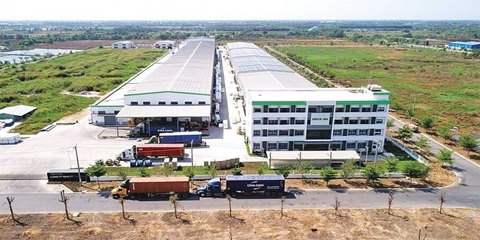
FOREIGN INVESTORS SEEKING A SYNCHRONISED MANUFACTURING ECOSYSTEM
Instead of focusing only on land costs and incentives as usual, foreign investors are seeking a synchronised manufacturing ecosystem, from stable power supply and logistics to shared infrastructure and the convenience of completing residence procedures for experts to serve their long-term investment in the country.
INFRASTRUCTURE / CONSTRUCTION / LOGISTIC / PORT
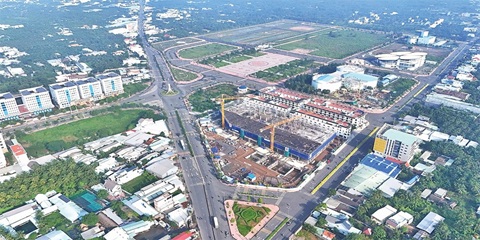
DONG THAP PROVINCE STEPS UP INDUSTRIAL EXPANSION AND INFRASTRUCTURE CONNECTIVITY
Accelerating public investment, strengthening inter-regional connectivity, and expanding industrial land are helping Dong Thap efficiently bolster competitiveness and drive economic growth. Following the 2025 merger of the former Dong Thap and Tien Giang provinces, the expanded Dong Thap province in the Mekong Delta faces mounting pressure to accelerate infrastructure development and strengthen connectivity among local economic zones, urban areas, industrial parks (IPs), and production centres.
PROPERTY / INDUSTRIAL ZONE
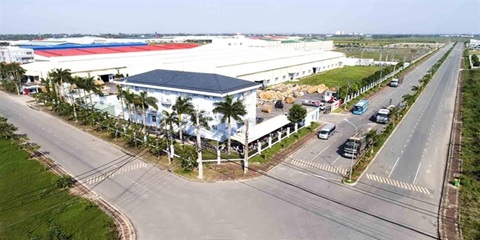
HCM CITY ATTRACTS US$5.7 BILLION INTO EXPORT PROCESSING AND INDUSTRIAL ZONES
HCM City attracted US$5.7 billion in domestic and foreign investment into its export processing and industrial zones during the first nine months of 2026. The figure exceeded the city's full-year target by 31 per cent, highlighting strong momentum in high-quality industrial investment under Resolution No.10-NQ/TW. Total investment reached 131 per cent of the 2026 target of $4.25 billion and represented a 29 per cent increase compared with the same period in 2025, according to the city's Export Processing and Industrial Zones Authority (HEPZA).

BANKING / FINANCE / INSURANCE / TAX
REMITTANCES TO HCM CITY RISE NEARLY 40% IN Q3
Remittances to HCM City reached more than US$2.83 billion in the third quarter of this year, up 39.5 per cent from the previous quarter and 3.6 per cent year-on-year. This was the first quarter showing positive annual growth this year, helping narrow the decline in remittance inflows over the first nine months. According to the State Bank of Vietnam (SBV)’s Regional Branch 2, remittances transferred to HCM City through credit institutions and economic organisations totalled $2.835 billion in Q3, an increase of more than $802 million from the previous quarter.
VIETNAM ECONOMY INVESTMENT
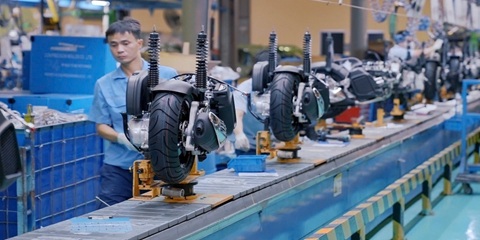
LOCALITIES REPORT BREAKTHROUGH RESULTS IN FDI IN FIRST NINE MONTHS
In Ho Chi Minh City, total registered capital reached $17.2 billion in the first nine months, up 4.2 times from the same period last year. The figure included more than $9.35 billion in newly registered capital and over $4.9 billion in additional capital for existing projects. Foreign investors also registered more than $2.9 billion through capital contributions and share purchases.

TECHNOLOGY
TECH SECTOR GROWTH OPENS UP OPPORTUNITIES FOR VIỆT NAM TO GO GLOBAL
The growth of the electronics, semiconductor and high-tech sectors worldwide is opening up a variety of opportunities for Vietnamese enterprises to integrate more deeply into the global supply chain. However, to become suppliers for these corporations, domestic enterprises must meet rigorous standards regarding quality, technology, productivity and order fulfilment capabilities.
Events Sponsors






















