Want to be in the loop?
subscribe to
our notification
Business News
NEW REAL ESTATE INVESTMENT TRENDS FOR 2025
Real estate investors, both individual and institutional, are redirecting investments from downtown to suburbs and neighboring regions, capitalizing on available land and strong infrastructure growth.
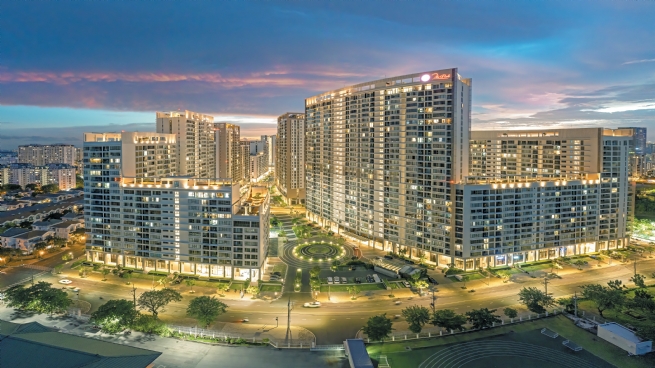
Downtown real estate prices in Hanoi and Ho Chi Minh City hit record highs, hindering investment amid rising costs and shrinking margins
Ms. Pham Thi Mien, Deputy Director of the Market Research, Investment Promotion and Consulting Department, the Vietnam Association of Realtors (VARS), said: This trend not only shows the need for property investment opportunities but also objective factors like planning policies, transport infrastructure and new buyer demand.
In fact, downtown real estate prices in large cities, typically Hanoi and Ho Chi Minh City, are rising, even to record levels, making investments more difficult amid growing capital costs, narrowing profit margins or uncertain success. These force investors with weak financial resources to look for opportunities in the suburbs.
Shaped by many factors
“Especially for the apartment segment, the primary price of an apartment averages VND70 million per square meters in 2024. Newly opened projects are offered from VND60 million per square meter in Hanoi where buyers need to have the minimum monthly income from VND45 million to VND210 million, depending on areas. In business districts like Hoan Kiem, Ba Dinh and Tay Ho, the gap between the minimum annual income required for mortgage repayment and the average household income reaches tens of billions of VND. As a result, many homebuyers struggle and postpone purchases, while investors face capital shortages, hindering their ability to continue projects,” she added.
Meanwhile, central and local governments are promoting satellite urban development planning, expanding urban spaces to reduce population pressure and infrastructure in the downtown, helping suburban districts and neighboring provinces of the two metropolises truly become attractive destinations for both individual and institutional investors.
In addition, transport infrastructure investment, including highways, beltways or public transport systems, reduces the travel time between downtown and its satellite areas and creates added value for real estate. “All in one” mega urban projects on the outskirts also play a very important role in promoting infrastructure and strong commercial development, thus adding value to real estate in surrounding areas and catching the fancy of investors.
“When investors move more quickly to areas with softer land prices and high growth potential, they often focus on residential land plots, commercial townhouses or new affordable urban area projects. Specifically, instead of picking short-term choices, many investors have opted to buy suburban land and wait for future growth when infrastructure is completed. Beyond housing, suburban second homes, farmstays and resorts have attracted investor interest due to their strong rental potential, especially post-COVID-19, which accelerated green living and remote work trends,” she added.
Opportunities for businesses
This is an opportunity for real estate companies to develop projects of diverse scales, Mien said. Currently, many large real estate firms have seized the opportunity to develop large-scale urban areas in neighboring provinces.
Similarly, for small and medium-sized real estate companies, developing projects in suburban areas, satellite cities or provinces and cities neighboring Hanoi and Ho Chi Minh City is not only an opportunity but also a key approach amid tighter regulations on land, housing and real estate business and rising land costs, which may weaken their competition and project development in the downtown.
Therefore, recently, many small and medium-sized companies have actively sought and purchased cheaper but high potential land on the outskirts for their investment projects. These supplies are also an important factor to boost the strong development of the suburban real estate market to meet housing demands.
Besides the housing segment, many enterprises are stepping up investment in industrial real estate amid high demand from redirected global supply chains and planning-driven motivation, she noted. Given population expansion in satellite areas, the demand for commercial centers, complexes and offices there will continue to increase and encourage real estate developers to expand their investment portfolio.
According to the VARS representative, moving to non-business districts will be a clearer trend because downtown real estate investment is currently only suitable for investors with strong financial potential and long-term asset investment needs. Meanwhile, in non-business districts, real estate prices in some well-planned places with developed infrastructure are still relatively "cheap" relative to future growth prospects. Especially when there is a continued rising demand for housing in non-business districts, preferential policies and incentives for urban development in the suburbs still motivate investors.
However, investors interested in investment in non-business districts need to carefully research and evaluate their choices because they may encounter legal issues relating to planning, land use rights and legal procedures. At the same time, despite great potential, not all areas are attractive enough because of liquidity and limited public utilities.
Sharing the same view, Mr. Le Dinh Chung, General Director of SGO Homes, a property consulting and development firm, recommended that property investors should carefully study local development orientations in the coming period. Besides, they should carefully study local economic indicators and market liquidity before making any investment decision.
"When an area develops well, investors' products will benefit. Investors should only invest in liquid markets; thus, they must carefully pick marketable locations and should not invest in remote areas," he noted.
At a workshop themed "Real Estate in 2025 - Finding opportunities in challenges", Mr. Le Van Binh, Deputy Director of the Department of Land Administration, suggested that low- and middle-income earners should now buy houses about 15-20 km away from the downtown.
Source: VCCI
Related News

BANKING / FINANCE / INSURANCE / TAX
REMITTANCES TO HCM CITY RISE NEARLY 40% IN Q3
Remittances to HCM City reached more than US$2.83 billion in the third quarter of this year, up 39.5 per cent from the previous quarter and 3.6 per cent year-on-year. This was the first quarter showing positive annual growth this year, helping narrow the decline in remittance inflows over the first nine months. According to the State Bank of Vietnam (SBV)’s Regional Branch 2, remittances transferred to HCM City through credit institutions and economic organisations totalled $2.835 billion in Q3, an increase of more than $802 million from the previous quarter.

TECHNOLOGY
TECH SECTOR GROWTH OPENS UP OPPORTUNITIES FOR VIỆT NAM TO GO GLOBAL
The growth of the electronics, semiconductor and high-tech sectors worldwide is opening up a variety of opportunities for Vietnamese enterprises to integrate more deeply into the global supply chain. However, to become suppliers for these corporations, domestic enterprises must meet rigorous standards regarding quality, technology, productivity and order fulfilment capabilities.

VIETNAM ECONOMY INVESTMENT
FOREIGN INVESTORS SEEKING A SYNCHRONISED MANUFACTURING ECOSYSTEM
Instead of focusing only on land costs and incentives as usual, foreign investors are seeking a synchronised manufacturing ecosystem, from stable power supply and logistics to shared infrastructure and the convenience of completing residence procedures for experts to serve their long-term investment in the country.
MEMBER CORNER / PROMOTIONS
SENTRYSAFE FHW40200 – PROTECT YOUR VALUABLES, ENJOY PEACE OF MIND!
Looking for a reliable solution to protect your important documents, cash, and valuables from fire and water damage? Genuine SENTRYSAFE - Reliable protection for your valuables and peace of mind! Contact Sen Wai Vietnam for more information and personalized product recommendations.

PROPERTY / INDUSTRIAL ZONE
HCM CITY ATTRACTS US$5.7 BILLION INTO EXPORT PROCESSING AND INDUSTRIAL ZONES
HCM City attracted US$5.7 billion in domestic and foreign investment into its export processing and industrial zones during the first nine months of 2026. The figure exceeded the city's full-year target by 31 per cent, highlighting strong momentum in high-quality industrial investment under Resolution No.10-NQ/TW. Total investment reached 131 per cent of the 2026 target of $4.25 billion and represented a 29 per cent increase compared with the same period in 2025, according to the city's Export Processing and Industrial Zones Authority (HEPZA).

INFRASTRUCTURE / CONSTRUCTION / LOGISTIC / PORT
DONG THAP PROVINCE STEPS UP INDUSTRIAL EXPANSION AND INFRASTRUCTURE CONNECTIVITY
Accelerating public investment, strengthening inter-regional connectivity, and expanding industrial land are helping Dong Thap efficiently bolster competitiveness and drive economic growth. Following the 2025 merger of the former Dong Thap and Tien Giang provinces, the expanded Dong Thap province in the Mekong Delta faces mounting pressure to accelerate infrastructure development and strengthen connectivity among local economic zones, urban areas, industrial parks (IPs), and production centres.
Events Sponsors






















