Want to be in the loop?
subscribe to
our notification
Business News
NEW PPP LAW A MILESTONE FOR VIETNAMESE INFRASTRUCTURE MARKET: FITCH SOLUTIONS
A new law on public-private partnerships (PPPs) will provide tailwinds to the growth of Vietnam’s infrastructure sector, according to the London-based Fitch Solutions.
In a statement issued last week, the primary distributor of Fitch Ratings content said it had earlier provided an analysis relating to a draft version of the PPP law, in which Fitch Solutions noted the potential to improve the existing PPP framework in Vietnam.
On June 18, the lawmaking National Assembly approved the new PPP law, which acts as the main piece of legislation governing PPP transactions in the Southeast Asian country.
Prior to the PPP law being passed, Vietnamese authorities have been struggling to attract private capital to the country’s burgeoning infrastructure sector, according to Fitch Solutions.
Previously governed by Decree No.63/2018, investors pointed out the lack of a comprehensive risk-sharing mechanism, which reduces the attractiveness of PPP transactions in Vietnam.
Also, the lack of a unified PPP law resulted in higher legal risks and costs, especially for prospective foreign investors who are unfamiliar with the Vietnamese legal landscape.
“Going forward, these risks could be lowered with the new PPP law in force. Currently, we maintain our long-term growth forecast for the Vietnamese construction sector to average at 6.8% per year from 2021 to 2029,” noted Fitch Solutions.
The firm will be monitoring and assessing the progress of PPP transactions under the new PPP law, and make adjustments to its forecast, if necessary.
According to Article 4 of the new law, only projects undertaken in the following sectors can be considered for PPPs: transport; grid infrastructure and power plant; irrigation, clean water supply, drainage, sewage treatment, and waste; health, education and training, and information technology infrastructure.
The scale of the minimum total investment of the PPP project in each field cannot be less than VND200 billion (US$8.6 million), except in the case of healthcare and education, where a lower threshold of VND100 billion (US$4.3 million) is applied.
In case of geographical areas with difficult socio-economic conditions, according to the Law on Investment, the scale will not be less than VND100 billion.
Investor eligibility is a selection mechanism for potential PPP investors, which Fitch Solutions believes has been included to ensure a certain quality of bids.
Potential investors will be considered only if they meet a series of criteria explained in the law, such as having an establishment and operation registration certificate issued by a competent agency of the country in which the investor is operating and developing independent financial accounting.
Meanwhile, the revenue risk sharing mechanism is provided in Article 84, which states that if actual revenue exceeds 125% of what was planned, the PPP project investor will share 50% of the difference.
On the other hand, the State will share 50% of the revenue reduction between actual revenue and contracted revenue with PPP investors for projects that meet certain conditions.
Most proposed PPPs are road projects
PPP projects implemented in the Vietnamese roads sector will serve as a litmus test to assess the effectiveness of the new PPP law, according to Fitch Solutions.
Based on its proprietary infrastructure key projects database, there are 98 major infrastructure projects in the planning stage earmarked as PPPs.
As many as 58 of 98 of these projects belong to the roads and bridges sector, with an estimated value of US$20.8 billion.
“Vietnam’s rapid pace of economic development, partially helped by its emergence as an alternative low-cost manufacturing hub to China, has increased the need for the Government to invest in quality infrastructure to support the flow of goods and services,” said the firm.
One key project is the North-South Expressway linking Hanoi to HCMC, parts of which the Government had previously attempted to execute through the PPP model, but ultimately decided against it due to complications relating to bidding.
With the demand for road infrastructure increasing and the Government needing private capital to share the burden of financing, Fitch Solutions predicts a continued number of PPP opportunities in this sector despite the failure of the North-South Expressway PPP scheme.
Source: The Saigon Times
Related News

MEMBER CORNER / PROMOTIONS
AN ELECTRIFYING NIGHT WITH THE "QUEEN OF DANCE" THU MINH AT THE GRAND HO TRAM!
The stage at The Grand Ballroom is set to catch fire as Vietnam’s undisputed "Queen of Dance," Thu Minh, takes the spotlight. Renowned for her powerhouse vocals, magnetic stage presence, and sultry, high-energy performances, Thu Minh promises an evening of pure musical euphoria. The energy escalates with an exclusive appearance by special guest and The Voice champion, Vu Thao My.
HR / LABOUR/ EMPLOYMENT
HIGH-QUALITY HUMAN RESOURCES NEEDED TO ATTRACT NEW TECH INVESTMENT CAPITAL
Besides infrastructure, Việt Nam must also rapidly develop a highly skilled workforce to attract investment in AI, semiconductors and advanced manufacturing, experts have said. Don Lam, CEO and co-founder of investment management company VinaCapital, said that global technology investors were increasingly looking at the readiness of the entire ecosystem, with high-quality human resources a decisive factor.

HR / LABOUR/ EMPLOYMENT
HIRING OUTLOOK STRENGTHENS IN Q4 AS SKILLS SHORTAGES PERSIST
Hiring intentions among employers in Việt Nam strengthened in the fourth quarter, with 52 per cent of surveyed companies planning to increase headcount between October and December, according to a ManpowerGroup survey released this week. Việt Nam's hiring outlook was stronger than the Asia Pacific and Middle East (APME) regional average of 33 per cent and the global average of 29 per cent, ranking third in the region and 11th globally among 42 markets surveyed.

BANKING / FINANCE / INSURANCE / TAX
LARGE BANKS FORECAST TO GAIN HIGHER PROFITABILITY IN H2 2026
The return on average assets (ROAA) of the banking sector will likely remain stable at around 1.5 per cent in the second half of 2026, but profitability divergence among banks will increase, with large banks outperforming peers on stronger margins and diversified earnings, analysts forecast. In a recent report on the banking sector, analysts from the Vietnam Investors Service Rating said the sector’s ROAA rose by 10 basis points quarter-on-quarter to 1.51 per cent in the first half of this year, driven by net interest margin (NIM) improvements at some State-owned banks and large private banks.
GARMENT / TEXTILE
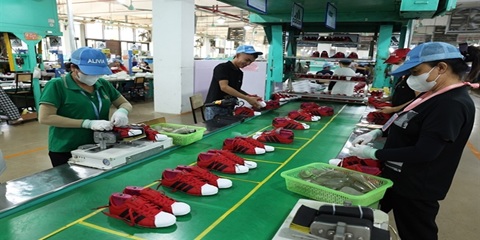
VIỆT NAM'S FOOTWEAR, BAG EXPORTS TO US TOP $8 BILLION IN EIGHT MONTHS
Việt Nam's exports of footwear and handbags to the US exceeded US$8 billion in the first eight months of 2026, as the US and EU remained the country's biggest markets despite sluggish growth in footwear shipments. Exports from Việt Nam's leather and footwear sector reached more than $2.45 billion in August, down 9 per cent from July but up 3 per cent from a year earlier, according to preliminary statistics.
VIETNAM ECONOMY INVESTMENT
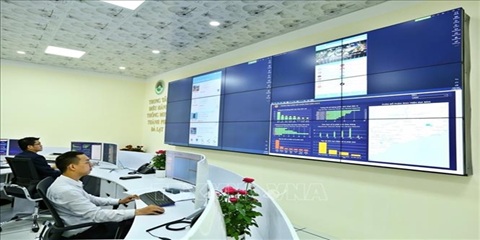
LÂM ĐỒNG TARGETS DIGITAL ECONOMY TO ACCOUNT FOR 30 PER CENT OF GRDP BY 2030
Lâm Đồng Province aims to raise the digital economy’s contribution to around 30 per cent of its gross regional domestic product (GRDP) by 2030, as part of a five-year plan to develop digital economy and society issued recently. Under Plan No. 15358/KH-UBND, the province targets more than 60 per cent of small- and medium-sized enterprises (SMEs) to adopt digital technologies by 2030 while increasing the value of cashless payments to 30 times its GRDP.
Events Sponsors






















