Want to be in the loop?
subscribe to
our notification
Business News
NEW POLICIES NEEDED TO MEET WORKERS’ HOUSING NEEDS
HCM City is home to thousands of migrant labourers working in industrial parks (IPs) and export processing zones (EPZs), but its housing projects meet only a fraction of the demand for stable accommodations.
Trần Công Khanh, head of the labour affairs division under the HCM City Export Processing Zone and Industrial Park Authority (HEPZA), said at a seminar in HCM City on Tuesday (May 21) that housing for workers was meeting only 15 per cent of total demand.
One of main reasons is the shortage of available land.
The city has 17 industrial and export processing zones, one high-tech park and 16 industrial clusters, with over 1,600 enterprises and nearly 380,000 labourers. Of the number, about 65 per cent of them are migrants.
Demand for housing accounts for around 60-70 per cent of the total, equivalent to 280,000 accommodations.
“The city has many policies to encourage enterprises to participate in social housing and low-cost apartments for workers, but many investors have not expressed an interest,” Khanh said.
Currently, there are 12 dormitories built at eight IPs and EPZs to provide accommodations for around 18,000 employees.
Despite many conveniences, many workers prefer to live in rented rooms or with relatives instead of dormitories which restrict visits by friend and relatives.
Some dormitories also require tenants to return home before 10pm though many workers have to work overtime and night shifts.
“Enterprises should consider building dormitories to care for their labourers’ living conditions as well as their health and productivity,” Khanh said.
The city should also develop a policy to build rental housing outside the IPs and EPZs, he said.
Phạm Chí Tâm, vice chairman of the HCM City Labour Federation, said the development of housing projects in the city had not met demand for workers.
A large number of workers have to live in narrow rented rooms with poor conditions, while others travel to the city to work in the early morning and return home in the late afternoon or evening.
For example, the Pou Yuen Việt Nam Co., Ltd in Bình Tân District does not have dormitories for its workers, so the company uses more than 400 shuttle buses to transport workers every day.
Tâm said that housing for workers in the IPs and EPZs should be arranged, and that support policies should be given to develop housing in residential areas.
The Government should create favourable conditions for workers so they buy social housing apartments, he added.
“Labourers have made contributions to the remarkable economic development of the city, so it is necessary to have policies to improve their living conditions to protect their legitimate rights,” he said.
Nguyễn Văn Đực, deputy chairman of the HCM City Real Estate Association (HoREA), said that investors have to spend a lot of time completing administrative procedures about these kinds of housing projects.
“To succeed, businesses only contribute 30 percent of the total work, while the rest depends on support of State management agencies,” he said.
Simplifying administrative procedures and preferential policies for investors are needed, he said.
Trần Quốc Đạt, deputy head of housing and real estate market management division at the city’s Department of Construction, said the city has encouraged businesses and individuals to invest in building housing for workers.
“Investment in building accommodations for workers in industrial and export processing zones requires large capital and complicated administrative procedures,” he said.
The Government needs to have better tax incentives to attract enterprises in industrial parks, and should seek capital from the Việt Nam Bank for Social Policies for preferential loans to develop social housing projects, he said.
In addition, agencies should set building standards and regulations for low-cost housing projects and rental houses in residential areas to ensure quality accommodations for workers, he said.
The city plans to develop 15 low-cost apartment projects and social housing accommodations on a total area of 47ha in the next five years, providing 95,000 accommodations for workers.
This year, the city strives to develop an additional area of 710,000sq.m for social housing apartments, including 120,000sq.m for accommodations for workers.
It is also speeding up the progress of three projects: a social housing project and kindergarten in District 9’s Long Trường Ward, accommodations for workers at Linh Trung Export Processing Zone, and social housing apartments in Củ Chi and Thủ Đức districts.
Source: VNS
Related News

CHARITY / EXHIBITION / OTHER EVENTS
INVESTMENT OPPORTUNITIES IN CA MAU PROVINCE: 96 PROJECTS AND 20 STRATEGIC PROJECTS
We are pleased to share with you information on investment projects currently seeking investors in Ca Mau Province. Should your esteemed company or association be interested, we kindly invite you to review the project information and complete the registration form via the links provided. The Ho Chi Minh City Investment and Trade Promotion Centre (ITPC) will consolidate the expressions of interest and facilitate connections with the leadership of Ca Mau Province at a meeting tentatively scheduled for 13 November 2026 in Ho Chi Minh City.

MEMBER CORNER / PROMOTIONS
BẰNG KIỀU LIVESHOW - A SYMPHONY OF LOVE UNDER THE GOLDEN GLOW
A masterclass in live music that takes the audience on a soulful journey through immortal love songs, guided by the peerless artistry and emotive storytelling of renowned singer Bằng Kiều. The highlight of the night is his seamless musical chemistry with special guest Triệu Hồng Ngọc, promising passionate and deeply resonant duets inside the magnificent Grand Ballroom.
INFRASTRUCTURE / CONSTRUCTION / LOGISTIC / PORT
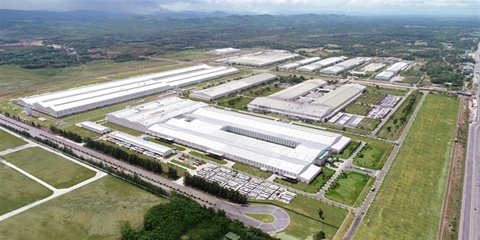
ĐÀ NẴNG GREEN-LIGHTS US$105 MILLION THAI DEVELOPMENT DEAL
The central city has approved an investment proposal by Thailand’s WHA Group to develop infrastructure for the 400ha WHA Đà Nẵng Industrial Park project on two communes of Thăng Bình and Đồng Dương, with an investment of more than VNĐ2.7 trillion (US$105 million). The city said it approved WHA Industrial Development International's status as an investor in the project, which is expected to take place between 2027 and 2034.
VIETNAM ECONOMY INVESTMENT
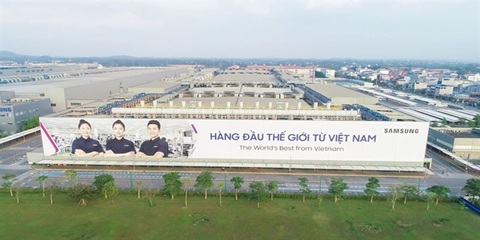
MOBILE PHONE EXPORTS RISE 20% TO $51.8 BILLION IN FIRST NINE MONTHS
Exports of mobile phones and components rose 20 per cent year-on-year to nearly US$51.8 billion in the first nine months of 2026, with China, the US and Republic of Korea accounting for more than half of the total. Shipments to the three markets reached a combined $26.18 billion, or 50.6 per cent of total exports of the product group during the period, according to data from the Vietnam Department of Customs under the Ministry of Finance.
INFRASTRUCTURE / CONSTRUCTION / LOGISTIC / PORT
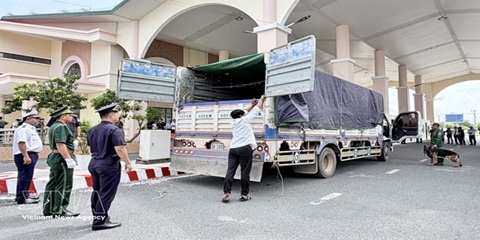
VIỆT NAM-CAMBODIA TRADE GATHERS PACE TOWARDS $20 BILLION TARGET
Trade between Việt Nam and Cambodia continues to grow, remaining a bright spot and a key pillar of bilateral cooperation as the two countries aim to raise two-way trade to US$20 billion in the coming years. After setting a record of more than $11.3 billion last year, bilateral trade reached about $8.7 billion in the first eight months of this year, up 8.3 per cent year on year.
VIETNAM ECONOMY INVESTMENT
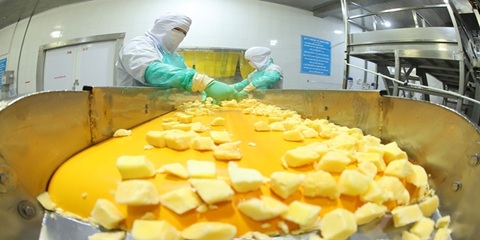
FRUIT AND VEGETABLE EXPORTS POISED TO HIT $10 BILLION IN 2026
Fruit and vegetable exports are on track to reach nearly US$10 billion in 2026, after rising 19.9 per cent year on year to nearly US$7.4 billion in the first nine months, driven by strong seasonal demand and abundant tropical fruit supplies. The Ministry of Agriculture and Environment said the growth reflected stronger international demand for fresh produce and processed agricultural products.
Events Sponsors






















