Want to be in the loop?
subscribe to
our notification
Business News
NEW DRIVE IN SMART CITY DEVELOPMENT
A modern city with many public facilities and utilities serving people, suitable investment attraction, and effectively supporting the policy of relaxing Hanoi’s inner city are the targets of a smart city project in accordance with the development master plan of the Nhat Tan-Noi Bai area.
In the Fourth Industrial Revolution era, investing in smart cities is not only a trend but also a new drive for developing urban areas. Already many countries in the ASEAN bloc have announced ambitious plans. Besides the pioneering Singapore, Myanmar and the Philippines are also building high-tech green cities with unmanned vehicles, and robots. Elsewhere, Thailand has the goal of creating 100 smart cities by 2022.
In Hanoi this week, a smart city project will be officially implemented, marking the start of building an e-government in the capital city.
According to Nguyen Thi Nga, president of project investor BRG Group, when completed, the smart city will create a highlight for the space and architecture of the gateway to the capital, creating a driving force to develop urban areas in the north of the Red River, creating many jobs, and contributing to the socio-economic development of Hanoi.
Over the past five years, the demand for investment and construction of smart cities in Vietnam has appeared alongside plans from authorities of Hanoi, Ho Chi Minh City, and Danang, but until the new smart city project in Hanoi is licensed, people may not feel the effects or understand fully what a modern city can achieve.
It is hoped that the use of energy in smart cities in general will be optimised by integrating energy management systems in buildings and apartments with central energy management systems along with using renewable energy.
Throughout Hanoi, a smart public transportation system, including high-volume urban transport such as buses and subways, will be built to help reduce using personal vehicles and ensure quick and convenient transportation of residents. Especially, the smart city and the centre of the capital will be connected synchronously through Urban Railway No.2, which will originate from Tran Hung Dao street in the hub of the capital.
Smart city residents can be almost guaranteed safety thanks to a modern security management system. There aims to be advanced monitoring and warnings systems, along with flood controlling and rainwater reusing systems. Besides that, there will be a smart classroom system with lessons from foreign teachers via virtual classes.
Cashless payment methods will be applied to enhance the smart consumption experience of residents.
Currently, Hanoi has prioritised implementing information systems and professional data in big data centres, ensuring connection and sharing with national data facilities. So far, the capital has completed building data of eight million residences serving for management work of the city. In addition, Hanoi has also built the WAN net for the whole city, and applied one-door electric linking systems in different fields like public administration, education, and healthcare.
Nguyen Duc Chung, Chairman of Hanoi People’s Committee, said, “The Vietnamese government has been facilitating Hanoi to develop into a green, civilised, and friendly capital which is a smart urban area with management based on new technologies and smart infrastructure with the aim to serve people better and build an open and friendly community.”
At recent meetings, many experts emphasised the position and role of the northern Red River region, in which Dong Anh rural district will play the role in easing the urban population. Besides that, the city also advocates relocating hospitals, universities, and offices of ministries and agencies out of the city centre.
Nga of BRG Group emphasised that the group will pay attention to inherited and long-term values. Containing the essence for solving urban issues around the world, the smart city is expected to become the key to unlock new development drivers for the future, in Hanoi, Vietnam, and further afield.
Experience and know-how from Japan in developing smart cities will be applied in Hanoi’s smart city project. As a result, it is expected that the project will bring the city long-term economic and social values, addressing the current inadequacies in Hanoi such as overload, traffic congestion, and pollution.
With such convenience, a smart city can be a liveable urban area, contributing to the strong development of the region as a whole.
Source: VIR
Related News
MEMBER CORNER / PROMOTIONS
AN ELECTRIFYING NIGHT WITH THE "QUEEN OF DANCE" THU MINH AT THE GRAND HO TRAM!
The stage at The Grand Ballroom is set to catch fire as Vietnam’s undisputed "Queen of Dance," Thu Minh, takes the spotlight. Renowned for her powerhouse vocals, magnetic stage presence, and sultry, high-energy performances, Thu Minh promises an evening of pure musical euphoria. The energy escalates with an exclusive appearance by special guest and The Voice champion, Vu Thao My.
HR / LABOUR/ EMPLOYMENT
HIGH-QUALITY HUMAN RESOURCES NEEDED TO ATTRACT NEW TECH INVESTMENT CAPITAL
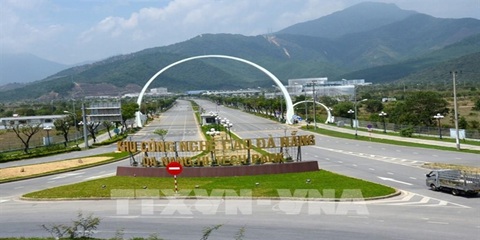
Besides infrastructure, Việt Nam must also rapidly develop a highly skilled workforce to attract investment in AI, semiconductors and advanced manufacturing, experts have said. Don Lam, CEO and co-founder of investment management company VinaCapital, said that global technology investors were increasingly looking at the readiness of the entire ecosystem, with high-quality human resources a decisive factor.

HR / LABOUR/ EMPLOYMENT
HIRING OUTLOOK STRENGTHENS IN Q4 AS SKILLS SHORTAGES PERSIST
Hiring intentions among employers in Việt Nam strengthened in the fourth quarter, with 52 per cent of surveyed companies planning to increase headcount between October and December, according to a ManpowerGroup survey released this week. Việt Nam's hiring outlook was stronger than the Asia Pacific and Middle East (APME) regional average of 33 per cent and the global average of 29 per cent, ranking third in the region and 11th globally among 42 markets surveyed.

BANKING / FINANCE / INSURANCE / TAX
LARGE BANKS FORECAST TO GAIN HIGHER PROFITABILITY IN H2 2026
The return on average assets (ROAA) of the banking sector will likely remain stable at around 1.5 per cent in the second half of 2026, but profitability divergence among banks will increase, with large banks outperforming peers on stronger margins and diversified earnings, analysts forecast. In a recent report on the banking sector, analysts from the Vietnam Investors Service Rating said the sector’s ROAA rose by 10 basis points quarter-on-quarter to 1.51 per cent in the first half of this year, driven by net interest margin (NIM) improvements at some State-owned banks and large private banks.
GARMENT / TEXTILE
VIỆT NAM'S FOOTWEAR, BAG EXPORTS TO US TOP $8 BILLION IN EIGHT MONTHS
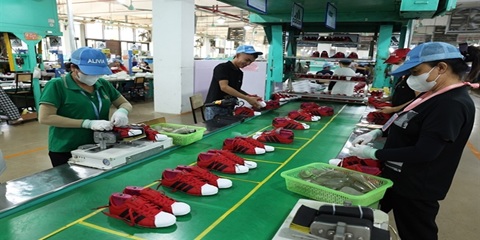
Việt Nam's exports of footwear and handbags to the US exceeded US$8 billion in the first eight months of 2026, as the US and EU remained the country's biggest markets despite sluggish growth in footwear shipments. Exports from Việt Nam's leather and footwear sector reached more than $2.45 billion in August, down 9 per cent from July but up 3 per cent from a year earlier, according to preliminary statistics.
VIETNAM ECONOMY INVESTMENT
LÂM ĐỒNG TARGETS DIGITAL ECONOMY TO ACCOUNT FOR 30 PER CENT OF GRDP BY 2030
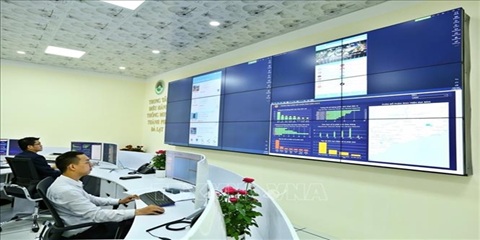
Lâm Đồng Province aims to raise the digital economy’s contribution to around 30 per cent of its gross regional domestic product (GRDP) by 2030, as part of a five-year plan to develop digital economy and society issued recently. Under Plan No. 15358/KH-UBND, the province targets more than 60 per cent of small- and medium-sized enterprises (SMEs) to adopt digital technologies by 2030 while increasing the value of cashless payments to 30 times its GRDP.
Events Sponsors






















