Want to be in the loop?
subscribe to
our notification
Business News
NEW CROSS-HOLDING RULE TO HIT BANKS
A new law is set to ban bank owners in Vietnam from taking up senior positions at non-financial firms, a move aimed at overhauling the banking sector, which has been mired in cross-holding controversy.
Last week, the National Assembly passed the amended Law on Credit Institutions, which will take effect on January 15, 2018. Under it, people holding senior positions at credit institutions will be prohibited from concurrently running a non-banking firm. Specifically, board members, CEOs, and deputy CEOs of a bank cannot hold top positions in any other businesses.
Analysts expect the new rule to have profound implications for Vietnam’s financial sector, as several bank owners in the country are also running side businesses, most of them are major diversified corporations. For example, Do Quang Hien is the chairman of both Saigon-Hanoi Bank and T&T Group, Vu Van Tien owns both ABBank and Geleximco, Nguyen Thi Nga holds the top position at SeABank and BRG Group, and Do Minh Phu runs both TPBank and Doji.
The list goes on. Techcombank’s chairman Ho Hung Anh is concurrently the deputy chairman at Masan Group. His counterpart at VIB, Dang Khac Vy, also owns Mareven Food Holdings. Vo Quoc Thang, chairman at Kien Long Bank, is also both chairman and CEO of brick maker Dong Tam Group.
Other examples include Vietjet Air’s chairwoman Nguyen Thi Phuong Thao and Vinamilk’s chairwoman Nguyen Thi Bang Tam, both of whom hold senior positions at HDBank. Most recently, Duong Cong Minh, chairman of Him Lam Group, was appointed Sacombank’s chairman at the lender’s general meeting.
To comply with the new law, these businesspeople must give up their involvement at either the bank or the side business. This will not be an easy decision, but it is necessary for the banking sector, said Nguyen Khac Quoc Bao, head of the Finance Department at Ho Chi Minh City’s University of Economics. The professor said that the amended bill will improve the overall transparency of Vietnam’s finance industry.
“It is also a matter of ethics. A businessman running both a bank and a side business faces a lot of moral dilemmas, especially when it comes to transparency in lending and capital raising activities. The new bill will make it harder for them to misuse the bank’s funds for their private gain,” Bao said.
The most prominent example of such misuse is banking tycoon Tram Be, who owned Binh Chanh Construction Investment and several banks like Sacombank, ACB, Southern Bank, and Eximbank. Tram Be was arrested this year for “serious violations of banking rules” and Sacombank divested its entire stake at Binh Chanh Construction afterwards.
Experts believe that to deal with the new rules, some of the affected owners may ask a relative or business partner to hold the bank’s shares on their behalf. In another high-profile case of embezzlement and fraud, Pham Cong Danh used this tactic when working at Construction Bank. Regulators will need to address this problem when implementing the revised law next year, said analysts.
The new Law on Credit Institutions also forbids senior executives of any bank to sit on the board of another financial firm, unless it is the bank’s subsidiary or the assignment has been ordered by the State Bank of Vietnam.
The landmark Circular 36/2014/TT-NHNN stated that a commercial bank in Vietnam can only hold stake in two other financial institutions, and can only own less than 5 per cent of each.
Source: VIR
Related News

MEMBER CORNER / PROMOTIONS
AN ELECTRIFYING NIGHT WITH THE "QUEEN OF DANCE" THU MINH AT THE GRAND HO TRAM!
The stage at The Grand Ballroom is set to catch fire as Vietnam’s undisputed "Queen of Dance," Thu Minh, takes the spotlight. Renowned for her powerhouse vocals, magnetic stage presence, and sultry, high-energy performances, Thu Minh promises an evening of pure musical euphoria. The energy escalates with an exclusive appearance by special guest and The Voice champion, Vu Thao My.

HR / LABOUR/ EMPLOYMENT
HIGH-QUALITY HUMAN RESOURCES NEEDED TO ATTRACT NEW TECH INVESTMENT CAPITAL
Besides infrastructure, Việt Nam must also rapidly develop a highly skilled workforce to attract investment in AI, semiconductors and advanced manufacturing, experts have said. Don Lam, CEO and co-founder of investment management company VinaCapital, said that global technology investors were increasingly looking at the readiness of the entire ecosystem, with high-quality human resources a decisive factor.

HR / LABOUR/ EMPLOYMENT
HIRING OUTLOOK STRENGTHENS IN Q4 AS SKILLS SHORTAGES PERSIST
Hiring intentions among employers in Việt Nam strengthened in the fourth quarter, with 52 per cent of surveyed companies planning to increase headcount between October and December, according to a ManpowerGroup survey released this week. Việt Nam's hiring outlook was stronger than the Asia Pacific and Middle East (APME) regional average of 33 per cent and the global average of 29 per cent, ranking third in the region and 11th globally among 42 markets surveyed.

BANKING / FINANCE / INSURANCE / TAX
LARGE BANKS FORECAST TO GAIN HIGHER PROFITABILITY IN H2 2026
The return on average assets (ROAA) of the banking sector will likely remain stable at around 1.5 per cent in the second half of 2026, but profitability divergence among banks will increase, with large banks outperforming peers on stronger margins and diversified earnings, analysts forecast. In a recent report on the banking sector, analysts from the Vietnam Investors Service Rating said the sector’s ROAA rose by 10 basis points quarter-on-quarter to 1.51 per cent in the first half of this year, driven by net interest margin (NIM) improvements at some State-owned banks and large private banks.
GARMENT / TEXTILE
VIỆT NAM'S FOOTWEAR, BAG EXPORTS TO US TOP $8 BILLION IN EIGHT MONTHS
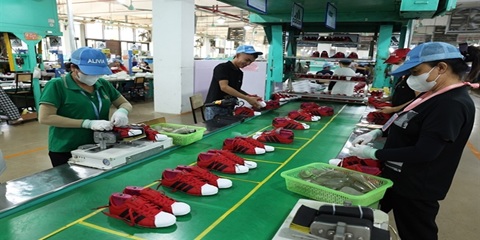
Việt Nam's exports of footwear and handbags to the US exceeded US$8 billion in the first eight months of 2026, as the US and EU remained the country's biggest markets despite sluggish growth in footwear shipments. Exports from Việt Nam's leather and footwear sector reached more than $2.45 billion in August, down 9 per cent from July but up 3 per cent from a year earlier, according to preliminary statistics.
VIETNAM ECONOMY INVESTMENT
LÂM ĐỒNG TARGETS DIGITAL ECONOMY TO ACCOUNT FOR 30 PER CENT OF GRDP BY 2030
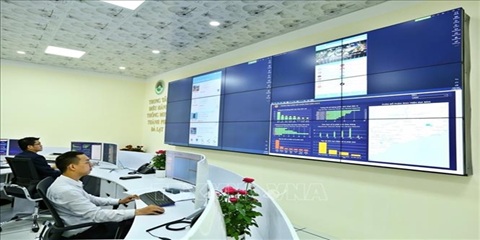
Lâm Đồng Province aims to raise the digital economy’s contribution to around 30 per cent of its gross regional domestic product (GRDP) by 2030, as part of a five-year plan to develop digital economy and society issued recently. Under Plan No. 15358/KH-UBND, the province targets more than 60 per cent of small- and medium-sized enterprises (SMEs) to adopt digital technologies by 2030 while increasing the value of cashless payments to 30 times its GRDP.
Events Sponsors






















