Want to be in the loop?
subscribe to
our notification
Business News
NEW REGULATIONS ON EMPLOYEE SICKNESS, MATERNITY TAKE EFFECT
Sickness regime.
Previous regulations gave details about the conditions for sickness regime eligibility (such as employees suffering from ailments or injuries from accidents or sick children under the age of seven). Circular 59/2015/TT-BLDTBXH (Circular 59) provides further details about the terms linked to accidents such as "employees who suffer from accidents that are not occupational accidents, or are under treatment for their injuries, recurrent illness previously caused by work accidents or occupational diseases that lead to taking of leave."
Simultaneously, Circular 59 mentions specific cases that will not be eligible for the sickness regime, such as those taking time off for treatment of accidental injury suffered at work or occupational diseases; and suffering from sickness or accident injury during annual, personal, unpaid, or maternity leave. If female workers fall sick or have sick children while working during pregnancy, they are eligible for the regime.
It is essential for enterprises to take the above-mentioned cases of sickness regime ineligibility into consideration in order to determine their situations to avoid wasting time accepting all applications for sickness regime from workers and then having them rejected by insurance authorities.
The method to determine entitlement to the illness regime is quite different from that specified by older regulations:
The number of days in a month used to calculate the level of sickness regime entitlement is reduced to 24 days (26 days in the old regulations).
The percentage of sickness regime entitlement, applied to workers who quit their job from the 181st day due to a disease that requires long-term treatment, and who paid social insurance for less than 15 years, is increased to 50 per cent (from 45 per cent in previous provisions).
In addition, Circular 59 includes guidance on identifying the level of sickness regime entitlement applied to prolonged treatment by determining the number of months off; and a separate level of entitlement is made for odd days or incomplete months. The level of sickness regime entitlement is decided based on the number of days as provided for by older regulations.
Maternity regime
Circular 59 provides detailed guidance on cases and base salaries, by which the level of maternity regime applied to the father or the person directly fostering the child shall be calculated in case the mother passes away after giving birth. Specifically:
Where only the mother has joined social insurance before passing away after childbirth, the father is entitled to the maternity regime for the rest of the mother's remaining time. The level of the maternity regime entitlement shall be calculated based on the mother's salary.
Where both parents join social insurance, and then the mother passes away after childbirth, the father is entitled to the maternity regime for the rest of the mother's remaining time. The level of maternity regime entitlement shall be calculated based on the father's salary.
Where only the mother joins social insurance, but fails to meet the eligibility conditions for the maternity regime, the father or the person directly fostering the child are entitled to the maternity regime till the child is six months old. The level of maternity regime entitlement shall be calculated based on the mother's salary.
Where both parents join social insurance, but are ineligible for the maternity regime and then the mother passes away after giving birth, the father is entitled to the maternity regime for the rest of the mother's remaining time. The amount of the maternity regime entitlement shall be calculated based on the father's salary.
With regard to maternity leave, should the mother join social insurance and fail to meet the requirement of insurance payment time leading to ineligibility for the maternity regime, and eventually die after childbirth, the time of maternity regime entitlement of the father and person directly fostering the child has been raised from when the child is four months old (previous regulations) to six months old.
In order to guarantee their benefits, PLF recommends that enterprises should give heed to maternity-related cases provided above by Circular 59 to accurately determine base salaries and the duration of maternity leave in special cases, as well as be able to provide precise answers to related questions from their employees.
Source: VIR
Related News

MEMBER CORNER / PROMOTIONS
SENTRYSAFE CHW20201 - EFFECTIVE WATER RESISTANCE, MAXIMUM PROTECTION
In unexpected flooding situations, the most important thing is to keep your valuables dry and intact. SentrySafe CHW20201 is specially designed with superior water-resistant capabilities, helping protect documents, cash, and important belongings even when fully submerged. Proven in real testing: After water submersion, the documents inside remain dry - undamaged.
MEMBER CORNER / PROMOTIONS
AN ELECTRIFYING NIGHT WITH THE "QUEEN OF DANCE" THU MINH AT THE GRAND HO TRAM!
The stage at The Grand Ballroom is set to catch fire as Vietnam’s undisputed "Queen of Dance," Thu Minh, takes the spotlight. Renowned for her powerhouse vocals, magnetic stage presence, and sultry, high-energy performances, Thu Minh promises an evening of pure musical euphoria. The energy escalates with an exclusive appearance by special guest and The Voice champion, Vu Thao My.

HR / LABOUR/ EMPLOYMENT
HIGH-QUALITY HUMAN RESOURCES NEEDED TO ATTRACT NEW TECH INVESTMENT CAPITAL
Besides infrastructure, Việt Nam must also rapidly develop a highly skilled workforce to attract investment in AI, semiconductors and advanced manufacturing, experts have said. Don Lam, CEO and co-founder of investment management company VinaCapital, said that global technology investors were increasingly looking at the readiness of the entire ecosystem, with high-quality human resources a decisive factor.

HR / LABOUR/ EMPLOYMENT
HIRING OUTLOOK STRENGTHENS IN Q4 AS SKILLS SHORTAGES PERSIST
Hiring intentions among employers in Việt Nam strengthened in the fourth quarter, with 52 per cent of surveyed companies planning to increase headcount between October and December, according to a ManpowerGroup survey released this week. Việt Nam's hiring outlook was stronger than the Asia Pacific and Middle East (APME) regional average of 33 per cent and the global average of 29 per cent, ranking third in the region and 11th globally among 42 markets surveyed.

BANKING / FINANCE / INSURANCE / TAX
LARGE BANKS FORECAST TO GAIN HIGHER PROFITABILITY IN H2 2026
The return on average assets (ROAA) of the banking sector will likely remain stable at around 1.5 per cent in the second half of 2026, but profitability divergence among banks will increase, with large banks outperforming peers on stronger margins and diversified earnings, analysts forecast. In a recent report on the banking sector, analysts from the Vietnam Investors Service Rating said the sector’s ROAA rose by 10 basis points quarter-on-quarter to 1.51 per cent in the first half of this year, driven by net interest margin (NIM) improvements at some State-owned banks and large private banks.
GARMENT / TEXTILE
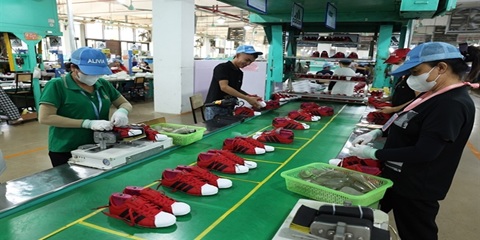
VIỆT NAM'S FOOTWEAR, BAG EXPORTS TO US TOP $8 BILLION IN EIGHT MONTHS
Việt Nam's exports of footwear and handbags to the US exceeded US$8 billion in the first eight months of 2026, as the US and EU remained the country's biggest markets despite sluggish growth in footwear shipments. Exports from Việt Nam's leather and footwear sector reached more than $2.45 billion in August, down 9 per cent from July but up 3 per cent from a year earlier, according to preliminary statistics.
Events Sponsors






















