Want to be in the loop?
subscribe to
our notification
Business News
NATION URGED TO BUILD ON ECO-IP MODEL
A project on implementing eco-industrial parks in Vietnam has had significant results in terms of building policy institutions, environmental benefits, and socioeconomic development for businesses.
Industrial parks (IPs) involved in an initiative that aims to help push them into the realm of being classed as eco-parks have seen improvements across a string of indicators, according to a review event in Ho Chi Minh City last week.
For the 2020-2024 project, three IPs were selected for the transformation including Deep C Industrial Zones in the northern city of Haiphong, AMATA City Bien Hoa in the southern province of Dong Nai, and Hiep Phuoc IP in Ho Chi Minh City. Over the last four years, the level of compliance with the international framework on eco-IPs for all pilot complexes has increased in terms of environment, economy, and management.
DEEP C scored in 52 among 64 indicators, showing an 83 per cent of compliance level with the international framework on eco-IPs, up 36 per cent compared to the score in 2020.
AMATA scored on 54 indicators, equalling 86 per cent of compliance and 45 per cent higher than 2020; and Hiep Phuoc IP scored on 47 indicators, achieving a 76 per cent compliance rate, an increase of 32 per cent from 2020.
In January, the project also conducted a pilot assessment to demonstrate the national indicators set for Hoa Khanh IP in the central city of Danang. The trial results indicated that Hoa Khanh meets 68 per cent of Vietnam’s national eco-IP indicators.
The Eco-IP Intervention in Vietnam scheme has been funded by the Swiss State Secretariat for Economic Affairs and implemented by the United Nations Industrial Development Organization (UNIDO) in Vietnam and the Ministry of Planning and Investment (MPI).
It has a total budget of more than $1.8 million and was piloted from 2020 in the five localities of Ho Chi Minh City, Can Tho, Dong Nai, Danang, and Haiphong. Along with the selected IPs, technical support was also provided to Tra Noc 1 and 2 IPs as well as Hoa Khanh IP.
The project’s objectives were to demonstrate eco-IP solutions to improve the economic, environmental, and social efficiency of the industry and intergrade eco-IP development regulations into relevant policies.
The collaboration has led to substantial savings in energy, resources, and materials, and reduction of nearly 9,000 tonnes of CO2 per year.
Decades of development
Le Thanh Quan, general director of the Department of Economic Zones Management under the MPI, emphasised the project’s role in advocating eco-IP approaches, aligning with national strategies such as the National Green Growth Strategy for 2021-2030 and Vietnam’s commitment to the UN’s Sustainable Development Goals, the circular economy, and achieving net-zero emissions.
“As one of seven countries in the global eco-IP programme, the results of the project in Vietnam have been appreciated by sponsors, partners, and the participating business community, bringing active support for state management agencies, IP infrastructure enterprises, and businesses participating,” Quan said.
Vietnam currently has more than 420 IPs in 61 provinces and cities. According to Quan, a review of more than 30 years of construction and development of Vietnam’s IPs last year showed that they were a key attraction for domestic and foreign initiatives and the destination of many leading corporations, positively contributing to the industrial and socioeconomic development of the whole country.
“The world is changing rapidly and resources in terms of labour, land, natural resources, and preferential tax policies are gradually running out. Sustainable development, green growth, circular economy, and digital economy are becoming mainstream trends for countries to achieve the goal of green growth while ensuring social security, environmental, and ecosystem protection,” Quan said.
“In that context, the development of IPs and economic zones needs new models and appropriate policies such as the eco-IP model to improve land use efficiency, engage investment, and take advantage of Industry 4.0.”
There are 64 indicators in the international framework for the eco-IP initiative, including park management, and environment, social, and economic indicators.
In Vietnam, the project provided support such as capacity training, implementing greenhouse gases emission inventory, developing solid waste monitoring systems, and assessing resource-efficient and cleaner production. In addition, it supports the research, proposing, identifying, and implementing of industrial symbiotic solutions, and simultaneously supports financial assessment to implement opportunities.
An ongoing process
The project has collaborated with the MPI to demonstrate the national eco-IP indicator set, comprising 23 indicators to monitor the performance of eco-IPs in terms of the environment, management, and socioeconomic aspects.
Evaluating the performance of entrepreneurship indicators reveals that IP management is a strength of all the pilot IPs, while the environment represents a common challenge that needs improvement.
Despite the improvements, none of the pilot IPs fully meet the requirements for eco-IPs according to international frameworks. To achieve the goal of becoming eco-IPs, all pilot parks need to continue efforts to improve and comply with the indicators for eco-IPs in all areas.
Tran Quoc Trung, deputy general director of the Department of Economic Zones Management, said that efforts were ongoing to improve the legal basis for eco-IPs in Vietnam, develop documents to support the model, and raise awareness and understanding of about such facilities.
“Before implementing this key project, Vietnam had a series of legal documents, policies, and strategies in response to climate change, environmental protection, and sustainable development. Currently, the MPI is in the process of consulting on a draft circular guiding the 2022 regulations in which Vietnam’s set of 23 entrepreneurship indicators is tested. Of these, 12 indicators refer to the international eco-IP framework,” Trung said.
Le Thi Thanh Thao, country representative for UNIDO, appreciated the Vietnamese government’s commitment to eco-IP development and the longstanding collaboration with the MPI.
She highlighted the significant engagement from relevant ministries, participating IP authorities, developers, and tenant companies. “The substantial economic, environmental, and social benefits showcased from the project could inspire a wider adoption of entrepreneurship indicators for inclusive and sustainable industrial development in Vietnam,” Thao said.
Meanwhile, Sibylle Bachmann, head of Cooperation at the Embassy of Switzerland, stressed the crucial role of the project in enabling a sustainable and prosperous industrial development in Vietnam.
“With the support of the eco-IP programme, Vietnam has put in place relevant regulations and decrees on industrial solid waste management, wastewater reuse, and recycling,” Bachmann said.
Source: VIR
Related News

MEMBER CORNER / PROMOTIONS
AN ELECTRIFYING NIGHT WITH THE "QUEEN OF DANCE" THU MINH AT THE GRAND HO TRAM!
The stage at The Grand Ballroom is set to catch fire as Vietnam’s undisputed "Queen of Dance," Thu Minh, takes the spotlight. Renowned for her powerhouse vocals, magnetic stage presence, and sultry, high-energy performances, Thu Minh promises an evening of pure musical euphoria. The energy escalates with an exclusive appearance by special guest and The Voice champion, Vu Thao My.

HR / LABOUR/ EMPLOYMENT
HIGH-QUALITY HUMAN RESOURCES NEEDED TO ATTRACT NEW TECH INVESTMENT CAPITAL
Besides infrastructure, Việt Nam must also rapidly develop a highly skilled workforce to attract investment in AI, semiconductors and advanced manufacturing, experts have said. Don Lam, CEO and co-founder of investment management company VinaCapital, said that global technology investors were increasingly looking at the readiness of the entire ecosystem, with high-quality human resources a decisive factor.

HR / LABOUR/ EMPLOYMENT
HIRING OUTLOOK STRENGTHENS IN Q4 AS SKILLS SHORTAGES PERSIST
Hiring intentions among employers in Việt Nam strengthened in the fourth quarter, with 52 per cent of surveyed companies planning to increase headcount between October and December, according to a ManpowerGroup survey released this week. Việt Nam's hiring outlook was stronger than the Asia Pacific and Middle East (APME) regional average of 33 per cent and the global average of 29 per cent, ranking third in the region and 11th globally among 42 markets surveyed.

BANKING / FINANCE / INSURANCE / TAX
LARGE BANKS FORECAST TO GAIN HIGHER PROFITABILITY IN H2 2026
The return on average assets (ROAA) of the banking sector will likely remain stable at around 1.5 per cent in the second half of 2026, but profitability divergence among banks will increase, with large banks outperforming peers on stronger margins and diversified earnings, analysts forecast. In a recent report on the banking sector, analysts from the Vietnam Investors Service Rating said the sector’s ROAA rose by 10 basis points quarter-on-quarter to 1.51 per cent in the first half of this year, driven by net interest margin (NIM) improvements at some State-owned banks and large private banks.
GARMENT / TEXTILE
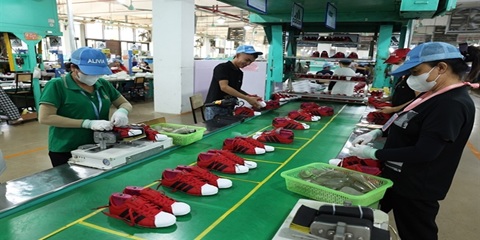
VIỆT NAM'S FOOTWEAR, BAG EXPORTS TO US TOP $8 BILLION IN EIGHT MONTHS
Việt Nam's exports of footwear and handbags to the US exceeded US$8 billion in the first eight months of 2026, as the US and EU remained the country's biggest markets despite sluggish growth in footwear shipments. Exports from Việt Nam's leather and footwear sector reached more than $2.45 billion in August, down 9 per cent from July but up 3 per cent from a year earlier, according to preliminary statistics.
VIETNAM ECONOMY INVESTMENT
LÂM ĐỒNG TARGETS DIGITAL ECONOMY TO ACCOUNT FOR 30 PER CENT OF GRDP BY 2030
Lâm Đồng Province aims to raise the digital economy’s contribution to around 30 per cent of its gross regional domestic product (GRDP) by 2030, as part of a five-year plan to develop digital economy and society issued recently. Under Plan No. 15358/KH-UBND, the province targets more than 60 per cent of small- and medium-sized enterprises (SMEs) to adopt digital technologies by 2030 while increasing the value of cashless payments to 30 times its GRDP.
Events Sponsors