Want to be in the loop?
subscribe to
our notification
Business News
NA DISCUSSES SOCIO-ECONOMIC DEVELOPMENT IN 2023, THE ANTICIPATED PLAN FOR 2024
The National Assembly (NA) continued its 6th session on Tuesday, discussing the results of implementing the socio-economic development plan for 2023 and the anticipated plan for 2024.
Vice Chairman of the NA Nguyễn Đức Hải led the discussion.
At the meeting, NA deputies highly valued the Government’s efforts in providing support to businesses. However, Deputy Dương Văn Phước from central Quảng Nam Province pointed out that businesses were facing various challenges, such as difficulties in accessing capital, heavy tax burdens, and volatile prices.
Regarding capital access, especially for long-term loans, the borrowing conditions were stringent, and the procedures were complex. Most businesses could only access short-term loans, he said.
In the challenging economic conditions, business revenue collection was slow, and with substantial inventories, banks did not consider these as collateral, creating significant barriers to capital access, he added.
Phước noted that the current tax policies were not supportive of businesses. He highlighted the fact that businesses were burdened with taxes, not only due to the tax rates but also the complexity in tax calculations.
He cited an example from central Quảng Nam Province, in which a golf course business could earn an annual revenue of VNĐ100 billion (US$4.07 million) on his over 60 hectare-golf course. But this business had to pay VNĐ45 billion ($1.83 million) in taxes, which posed significant challenges, and it had repeatedly raised concerns about the unfair tax calculations.
Nguyễn Đại Thắng, deputy head of the northern Hưng Yên Province deputies, emphasised the need for a stronger push in public investment to boost economic demand and achieve growth targets. He proposed enhancing accountability in the allocation of investment funds and clear regulations for oversight to prevent inefficient project funding.
He also suggested that the Government should stabilise construction material prices, particularly for infrastructure projects, and resolve issues in the real estate market. This would help develop affordable housing options for the public and create a sustainable real estate market.
On the other hand, Nguyễn Ngọc Sơn, a permanent member of the Committee for Science, Technology, and Environment, expressed his concern about the declining primary drivers of growth, including exports, investments, and consumption. He noted that public investment disbursement had not met expectations.
In this context, foreign investment was sluggish, and private investment, while crucial, had only increased by 2.3 per cent, which was one-sixth of the pre-pandemic level of 17.3 per cent.
Domestic consumption had shown signs of recovery but was not yet stable, with a decrease from 13.9 per cent in the first quarter to 7.3 per cent in the third quarter. Exports were estimated to reach US$466.2 billion, an 8.2 per cent decrease, marking the first negative growth since 2019.
Sơn also mentioned credit growth and non-performing loans, citing the Government’s reports. Credit growth was at 6.29 per cent as of October 11 compared to the previous year, which was slower than expected. The ratio of non-performing loans by June stood at 3.36 per cent, higher than the targeted rate of below 3 per cent.
However, Sơn emphasised that the report did not provide detailed information on credit growth in specific sectors. He pointed out that concentrated credit growth in the real estate sector could lead to increased bad debts due to oversupply and a lack of public trust.
Therefore, he recommended that the Government thoroughly analyse this issue, carefully consider relaxing lending conditions, and develop solutions to remove bottlenecks and support production and business activities. This would help to significantly boost economic growth and control credit risks in sectors with potential hazards.
Speaking at the meeting, Vice Chairman of the NA Hải suggested that according to the agenda, the NA would continue discussing socio-economic issues and the budget on Wednesday.
The Governor of the State Bank, the Minister of Health, the Minister of Education and Training, the Minister of Finance, and others would discuss these matters, he said.
Source: VNS
Related News
BANKING / FINANCE / INSURANCE / TAX
REMITTANCES TO HCM CITY RISE NEARLY 40% IN Q3
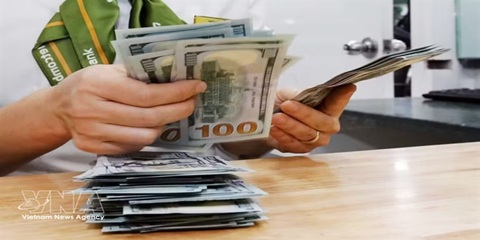
Remittances to HCM City reached more than US$2.83 billion in the third quarter of this year, up 39.5 per cent from the previous quarter and 3.6 per cent year-on-year. This was the first quarter showing positive annual growth this year, helping narrow the decline in remittance inflows over the first nine months. According to the State Bank of Vietnam (SBV)’s Regional Branch 2, remittances transferred to HCM City through credit institutions and economic organisations totalled $2.835 billion in Q3, an increase of more than $802 million from the previous quarter.
TECHNOLOGY
TECH SECTOR GROWTH OPENS UP OPPORTUNITIES FOR VIỆT NAM TO GO GLOBAL
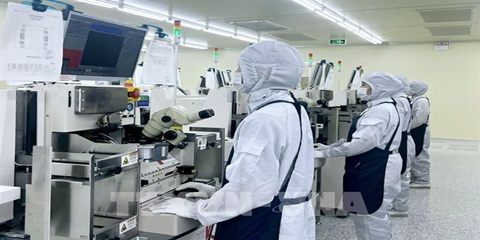
The growth of the electronics, semiconductor and high-tech sectors worldwide is opening up a variety of opportunities for Vietnamese enterprises to integrate more deeply into the global supply chain. However, to become suppliers for these corporations, domestic enterprises must meet rigorous standards regarding quality, technology, productivity and order fulfilment capabilities.
VIETNAM ECONOMY INVESTMENT
FOREIGN INVESTORS SEEKING A SYNCHRONISED MANUFACTURING ECOSYSTEM
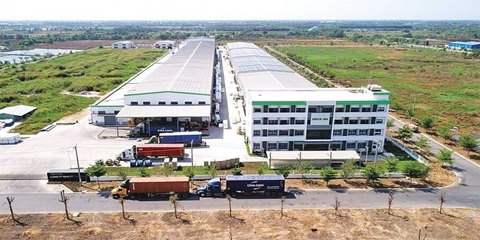
Instead of focusing only on land costs and incentives as usual, foreign investors are seeking a synchronised manufacturing ecosystem, from stable power supply and logistics to shared infrastructure and the convenience of completing residence procedures for experts to serve their long-term investment in the country.
MEMBER CORNER / PROMOTIONS
SENTRYSAFE FHW40200 – PROTECT YOUR VALUABLES, ENJOY PEACE OF MIND!
Looking for a reliable solution to protect your important documents, cash, and valuables from fire and water damage? Genuine SENTRYSAFE - Reliable protection for your valuables and peace of mind! Contact Sen Wai Vietnam for more information and personalized product recommendations.
PROPERTY / INDUSTRIAL ZONE
HCM CITY ATTRACTS US$5.7 BILLION INTO EXPORT PROCESSING AND INDUSTRIAL ZONES
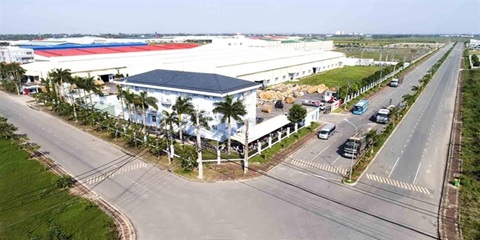
HCM City attracted US$5.7 billion in domestic and foreign investment into its export processing and industrial zones during the first nine months of 2026. The figure exceeded the city's full-year target by 31 per cent, highlighting strong momentum in high-quality industrial investment under Resolution No.10-NQ/TW. Total investment reached 131 per cent of the 2026 target of $4.25 billion and represented a 29 per cent increase compared with the same period in 2025, according to the city's Export Processing and Industrial Zones Authority (HEPZA).
INFRASTRUCTURE / CONSTRUCTION / LOGISTIC / PORT
DONG THAP PROVINCE STEPS UP INDUSTRIAL EXPANSION AND INFRASTRUCTURE CONNECTIVITY
Accelerating public investment, strengthening inter-regional connectivity, and expanding industrial land are helping Dong Thap efficiently bolster competitiveness and drive economic growth. Following the 2025 merger of the former Dong Thap and Tien Giang provinces, the expanded Dong Thap province in the Mekong Delta faces mounting pressure to accelerate infrastructure development and strengthen connectivity among local economic zones, urban areas, industrial parks (IPs), and production centres.
Events Sponsors