Want to be in the loop?
subscribe to
our notification
Business News
MPI REVIEWING LAND-USE STAGNATION
The Ministry of Planning and Investment has launched a review into the long delays of large-scale foreign-invested projects, in an attempt to free up valuable plots that have been occupying land throughout the country.
The Ministry of Planning and Investment (MPI) on May 25 requested the people’s committees of cities and provinces to improve the quality of foreign direct investment (FDI) attraction and strengthen inspection and supervision.
Projects with the registered capital of $100 million or more, those with a usable land area of 50 hectares or more, and projects in the real estate sector in Hanoi, Ho Chi Minh City, Danang, Haiphong, Khanh Hoa, and Ba Ria-Vung Tau are subject to the review.
The MPI requests licensing agencies to report on capital contribution and disbursement; the implementation of the objectives specified in the investment certificates; the land-use situation, and the observance of the provisions of the laws on land and construction.
The MPI’s move will contribute to filtering out those projects which fail to meet the objectives outlined in the investment certificates or the laws.
The consolidated figures of the Foreign Investment Agency under the MPI showed that as of May 20, there were almost 35,000 valid foreign-invested projects with the total registered capital of over $426.1 billion. The disbursed capital reached almost $258 billion, equaling 60.7 per cent of the total.
During the last 35 years, a series of billion-dollar projects have been committed to Vietnam. The year 2008 was considered a heyday in attracting FDI, with 11 projects worth over $64 billion, tripling the figure from the previous year. However, numerous investment certificates for huge projects were either long-delayed or revoked entirely.
Nguyen Mai, chairman of the Vietnam Association of Foreign-Invested Enterprises, said that the remaining 40 per cent of the registered capital has yet to be disbursed. There is a large volume of unfeasible projects but their investment certificates have not been revoked.
“The government and localities need to recover unused land and revoke investment certificates for projects not complying with their commitments, leading to waste of land resources. This would pave the way for newly-registered capital,” Mai said.
Hoang Si Tuan, deputy director of Thanh Hoa Investment, Trade, and Tourism Promotion Agency, said, “Many foreign investors registered in Vietnam with the initial plan to keep the land and then look for local partners to develop the project. However, when they can’t find suitable partners, they often propose extending the implementation schedule and this only causes more delays.”
According to the MPI, real estate has been one of the hottest sectors for FDI inflows. In the January-May 20 period of this year, capital in real estate was almost $3 billion, ranking second among 18 sectors.
Among the six localities required to be reviewed, Ho Chi Minh City has the most foreign-invested real estate projects, with most coming from Singapore or South Korea.
Keppel Land, owned by Keppel Group (Singapore), has been developing many large-scale urban projects in Ho Chi Minh City. The most notable is the Empire City project in Thu Thiem, with 3,000 luxury apartments, offices, retail areas, and an 86-storey tower.
In Thu Duc city, Keppel Land funded Saigon Sports City with $500 million. This project aims to be the first sports-themed urban area in Vietnam and, although it was started in 2019, the project has seen almost no progress thus far.
Among South Korean developers, Lotte attracted the most attention with the Lotte Eco Smart City Thu Thiem, which includes a commercial centre, offices, hotels, serviced apartments, and high-class residential areas. After many adjustments, the current registered capital of the project is about $900 million.
GS E&C, another South Korean group, is establishing the Zeitgeist City project in Nha Be district. The project consists of five development stages and includes about 760 villas, 770 mid-range apartments, 13,000 luxury apartments, and 26,000 apartments.
In the west of Ho Chi Minh City, Celadon City from the Malaysian investor Gamuda Land is offering more than 7,000 apartments.
Meanwhile, in Hanoi, some golden land plots have been wasted for many years. In Ha Dong district’s Mo Lao urban area, a large apartment building project named Booyoung Vina has been abandoned for more than a decade. The project of the South Korean investor was licensed in 2006 and started construction the following year with six buildings. While two of these were built, the four remaining ones are still non-existent today.
Source: VIR
Related News

BANKING / FINANCE / INSURANCE / TAX
REMITTANCES TO HCM CITY RISE NEARLY 40% IN Q3
Remittances to HCM City reached more than US$2.83 billion in the third quarter of this year, up 39.5 per cent from the previous quarter and 3.6 per cent year-on-year. This was the first quarter showing positive annual growth this year, helping narrow the decline in remittance inflows over the first nine months. According to the State Bank of Vietnam (SBV)’s Regional Branch 2, remittances transferred to HCM City through credit institutions and economic organisations totalled $2.835 billion in Q3, an increase of more than $802 million from the previous quarter.

TECHNOLOGY
TECH SECTOR GROWTH OPENS UP OPPORTUNITIES FOR VIỆT NAM TO GO GLOBAL
The growth of the electronics, semiconductor and high-tech sectors worldwide is opening up a variety of opportunities for Vietnamese enterprises to integrate more deeply into the global supply chain. However, to become suppliers for these corporations, domestic enterprises must meet rigorous standards regarding quality, technology, productivity and order fulfilment capabilities.
VIETNAM ECONOMY INVESTMENT
FOREIGN INVESTORS SEEKING A SYNCHRONISED MANUFACTURING ECOSYSTEM
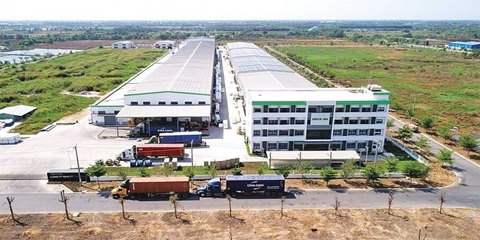
Instead of focusing only on land costs and incentives as usual, foreign investors are seeking a synchronised manufacturing ecosystem, from stable power supply and logistics to shared infrastructure and the convenience of completing residence procedures for experts to serve their long-term investment in the country.
MEMBER CORNER / PROMOTIONS
SENTRYSAFE FHW40200 – PROTECT YOUR VALUABLES, ENJOY PEACE OF MIND!
Looking for a reliable solution to protect your important documents, cash, and valuables from fire and water damage? Genuine SENTRYSAFE - Reliable protection for your valuables and peace of mind! Contact Sen Wai Vietnam for more information and personalized product recommendations.
PROPERTY / INDUSTRIAL ZONE
HCM CITY ATTRACTS US$5.7 BILLION INTO EXPORT PROCESSING AND INDUSTRIAL ZONES
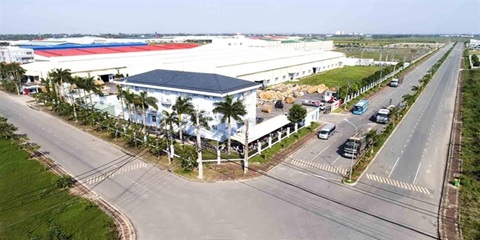
HCM City attracted US$5.7 billion in domestic and foreign investment into its export processing and industrial zones during the first nine months of 2026. The figure exceeded the city's full-year target by 31 per cent, highlighting strong momentum in high-quality industrial investment under Resolution No.10-NQ/TW. Total investment reached 131 per cent of the 2026 target of $4.25 billion and represented a 29 per cent increase compared with the same period in 2025, according to the city's Export Processing and Industrial Zones Authority (HEPZA).
INFRASTRUCTURE / CONSTRUCTION / LOGISTIC / PORT
DONG THAP PROVINCE STEPS UP INDUSTRIAL EXPANSION AND INFRASTRUCTURE CONNECTIVITY
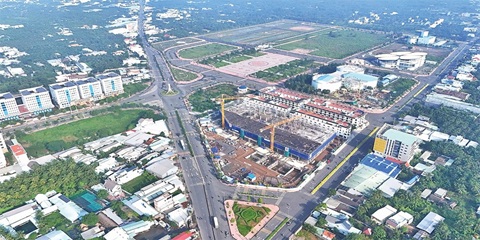
Accelerating public investment, strengthening inter-regional connectivity, and expanding industrial land are helping Dong Thap efficiently bolster competitiveness and drive economic growth. Following the 2025 merger of the former Dong Thap and Tien Giang provinces, the expanded Dong Thap province in the Mekong Delta faces mounting pressure to accelerate infrastructure development and strengthen connectivity among local economic zones, urban areas, industrial parks (IPs), and production centres.
Events Sponsors






















