Want to be in the loop?
subscribe to
our notification
Business News
MINISTRY OUTLINES TWO ECONOMIC GROWTH SCENARIOS FOR 2025
The Ministry of Planning and Investment recently presented to the Government two economic growth trajectories for 2025, with the highest rate forecast at 7.5 per cent.
In the first scenario, the country’s gross domestic product (GDP) is predicted at 6.5-7 per cent, and inflation rate at 4-4.5 per cent, given the global situation staying complicated and unpredictable, the global economic growth remaining low, and the global macroeconomic environment facing numerous risks. As a result, the average economic expansion for the 2021-2025 period will be 5.8-6 per cent.
Meanwhile, in the second, the ministry eyes a GDP growth of around 7-7.5 per cent, and inflation rate at 4.5 per cent, which could be achieved if the global situation, economic powers, and major trading partners of Vietnam enjoy better improvements than expected, and industrial production, export and foreign investment attraction on a strong surge. In this scenario, the average GDP growth will be 5.9-6.1 per cent.
The ministry has been in favour of the first one since the domestic economy has been affected by adverse external developments, while several intrinsic problems could not be improved in a short term.
In its recent forecast, the Asian Development Bank (ADB) said the Vietnamese economy will grow 6 per cent this year, and 6.2 per cent in 2025. ADB Country Director for Viet Nam Shantanu Chakraborty held that robust rebound in trade, production, and foreign invest attraction have brought rosy signs to the Vietnamese economy.
The bank also gave a positive prospect for the economy, estimating the GDP to expand 6.1 per cent in 2024, and 6.5 per cent in 2025. It hailed the economy’s resilience capacity amidst increasing challenges across the globe.
With a view to concretising the economic growth target of 6.5-7 per cent this year, and even higher in 2025, the ministry has proposed prioritising growth on the basis of stabilising the macroeconomy, curbing inflation, ensuring major balances, accelerating the disbursement of public investment, attracting foreign investment, and mobilising resources from state-owned corporations.
Besides, it is necessary to restructure the economy in tandem with improving productivity and competitive edge, renewing traditional growth drives, and bolstering digital, green and circular economies, and focus on reviewing and removing bottlenecks, particularly legal procedures, for development, the ministry added.
WB experts said the recovery of manufacturing and processing exports, and that of tourism, consumption and investment are important drivers of the Vietnamese economy’s growth.
The bank’s East Asia and Pacific Practice Manager for Macroeconomics, Trade, and Investment Sebastian Eckardt held that developing the capital market will create long-term funding for the economy, helping Vietnam realise its target of becoming a high-income nation by 2045.
Pushing ahead the disbursement of public capital not only helps stimulate demand in the short term but also deal with infrastructure shortages, especially in energy, transport, and logistics, which are seen as barriers to economic growth, he added.
Meanwhile, Minister of Planning and Investment Nguyen Chi Dung has affirmed that luring investment in pioneering industries like semiconductor and AI is a key that enable Vietnam to catch up with, advance together, and overtake others in the global playground.
Source: VIR
Related News
BANKING / FINANCE / INSURANCE / TAX
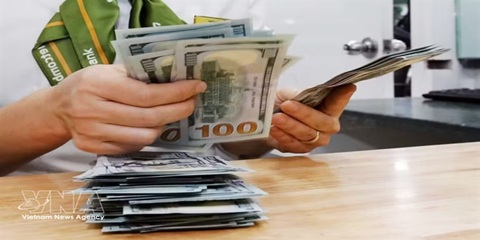
REMITTANCES TO HCM CITY RISE NEARLY 40% IN Q3
Remittances to HCM City reached more than US$2.83 billion in the third quarter of this year, up 39.5 per cent from the previous quarter and 3.6 per cent year-on-year. This was the first quarter showing positive annual growth this year, helping narrow the decline in remittance inflows over the first nine months. According to the State Bank of Vietnam (SBV)’s Regional Branch 2, remittances transferred to HCM City through credit institutions and economic organisations totalled $2.835 billion in Q3, an increase of more than $802 million from the previous quarter.
TECHNOLOGY
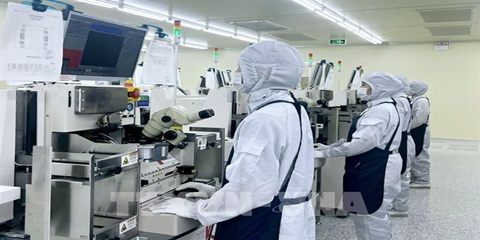
TECH SECTOR GROWTH OPENS UP OPPORTUNITIES FOR VIỆT NAM TO GO GLOBAL
The growth of the electronics, semiconductor and high-tech sectors worldwide is opening up a variety of opportunities for Vietnamese enterprises to integrate more deeply into the global supply chain. However, to become suppliers for these corporations, domestic enterprises must meet rigorous standards regarding quality, technology, productivity and order fulfilment capabilities.
VIETNAM ECONOMY INVESTMENT
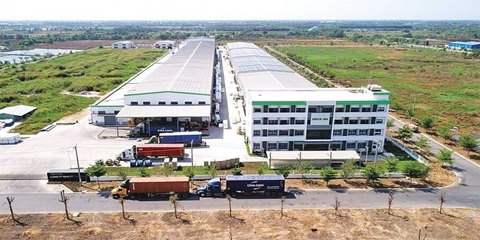
FOREIGN INVESTORS SEEKING A SYNCHRONISED MANUFACTURING ECOSYSTEM
Instead of focusing only on land costs and incentives as usual, foreign investors are seeking a synchronised manufacturing ecosystem, from stable power supply and logistics to shared infrastructure and the convenience of completing residence procedures for experts to serve their long-term investment in the country.
MEMBER CORNER / PROMOTIONS
SENTRYSAFE FHW40200 – PROTECT YOUR VALUABLES, ENJOY PEACE OF MIND!
Looking for a reliable solution to protect your important documents, cash, and valuables from fire and water damage? Genuine SENTRYSAFE - Reliable protection for your valuables and peace of mind! Contact Sen Wai Vietnam for more information and personalized product recommendations.
PROPERTY / INDUSTRIAL ZONE
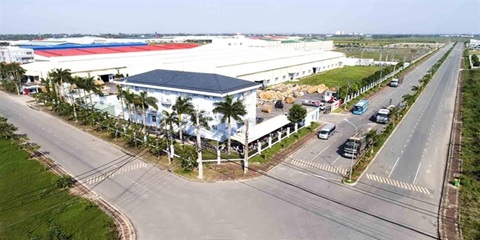
HCM CITY ATTRACTS US$5.7 BILLION INTO EXPORT PROCESSING AND INDUSTRIAL ZONES
HCM City attracted US$5.7 billion in domestic and foreign investment into its export processing and industrial zones during the first nine months of 2026. The figure exceeded the city's full-year target by 31 per cent, highlighting strong momentum in high-quality industrial investment under Resolution No.10-NQ/TW. Total investment reached 131 per cent of the 2026 target of $4.25 billion and represented a 29 per cent increase compared with the same period in 2025, according to the city's Export Processing and Industrial Zones Authority (HEPZA).
INFRASTRUCTURE / CONSTRUCTION / LOGISTIC / PORT
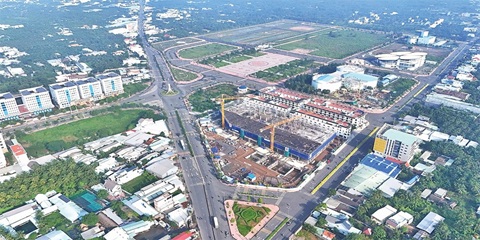
DONG THAP PROVINCE STEPS UP INDUSTRIAL EXPANSION AND INFRASTRUCTURE CONNECTIVITY
Accelerating public investment, strengthening inter-regional connectivity, and expanding industrial land are helping Dong Thap efficiently bolster competitiveness and drive economic growth. Following the 2025 merger of the former Dong Thap and Tien Giang provinces, the expanded Dong Thap province in the Mekong Delta faces mounting pressure to accelerate infrastructure development and strengthen connectivity among local economic zones, urban areas, industrial parks (IPs), and production centres.
Events Sponsors






















