Want to be in the loop?
subscribe to
our notification
Business News
MEKONG DELTA NEEDS $4B TO IMPROVE INFRASTRUCTURE TO MITIGATE CLIMATE CHANGE
The Cửu Long (Mekong) Delta needs more than VNĐ94.3 trillion (nearly US$4 billion) to improve its road infrastructure in order to boost its inter-provincial connectivity while mitigating the impacts of climate change.
Of the figure, foreign loans would be more than $2.8 billion and the rest (reciprocal capital) from the State budget.
The region needs to invest in 16 projects to build coastal roads and freshwater reservoirs to improve water storage and mitigate coastal erosion, among other goals.
The proposal was made by the ministries of Transport and Agriculture and Rural Development and 13 localities (including 12 provinces and Cần Thơ City) at the first meeting of the Steering Committee for Sustainable Development Projects in the Mekong Delta to respond to climate change organised in Cần Thơ last weekend.
The projects include one which requires large investment such as the 415-km long coastal road system passing through seven provinces: Tiền Giang, Bến Tre, Trà Vinh, Sóc Trăng, Bạc Liêu, Cà Mau and Kiên Giang with a total investment of up to VNĐ43 trillion.
Other projects will build Măng Thít river embankment (second phase) costing more than VNĐ4.15 trillion in Vĩnh Long; expand the 37-km National Highway 61C for VNĐ3.9 trillion in Hậu Giang; and build roads in the southern part of Tiền (Front) River for VNĐ4.26 trillion in Đồng Tháp.
Another project will build freshwater reservoirs and irrigation infrastructure in the Long Xuyên Quadrangle worth more than VNĐ2.66 trillion in An Giang.
Cần Thơ City authorities want to invest nearly VNĐ9.8 trillion in expanding National Highway 61C (by 10.2 km), building the 22.5-km Ô Môn - Thới Lai - Giồng Riềng connecting road system, and building Ô Môn bridge across the Hậu (Rear) River to connect it with Đồng Tháp Province.
In addition, the Ministry of Transport has proposed upgrading 46km of National Highway 53, 77km of National Highway 62, and 142km of Nam Sông Hậu road, with a total investment of nearly VNĐ7.16 trillion.
The Ministry of Agriculture and Rural Development has proposed developing three projects with a total investment of nearly VNĐ6.62 trillion.
Those include projects to renovate the canal system to transfer water from Hậu River to Cà Mau peninsula; renovate the inter-provincial canal system between Tiền River and Hậu River; and build the Bảo Định - Gò Công - Tân Trụ irrigation system (in Long An Province).
The Ministry of Planning and Investment has proposed the Government allocate 90 per cent of the investment needed to implement those projects. The rest (10 per cent) will be sourced from loans.
The projects are part of a Government master plan for the region (published last June) to respond to global warming by 2050.
The Mekong Delta, which is the country’s largest agricultural production hub, accounts for 12 per cent of the country’s total area and 19 per cent of total population.
Located on trade routes with ASEAN countries and the Greater Mekong sub-region, the region has a dense network of rivers and canals, which has advantages in agricultural development and the food industry.
It has, however, faced a number of challenges due to the impacts of climate change with sea levels rising much faster than expected, affecting livelihoods and lives of people.
Due to the impacts of climate change, the region has suffered from serious ecological imbalance, land subsidence, water level decline, coastal encroachment, natural forest areas, over-exploitation of sediment and increased risk of erosion.
Source: VNS
Related News

BANKING / FINANCE / INSURANCE / TAX
REMITTANCES TO HCM CITY RISE NEARLY 40% IN Q3
Remittances to HCM City reached more than US$2.83 billion in the third quarter of this year, up 39.5 per cent from the previous quarter and 3.6 per cent year-on-year. This was the first quarter showing positive annual growth this year, helping narrow the decline in remittance inflows over the first nine months. According to the State Bank of Vietnam (SBV)’s Regional Branch 2, remittances transferred to HCM City through credit institutions and economic organisations totalled $2.835 billion in Q3, an increase of more than $802 million from the previous quarter.
TECHNOLOGY
TECH SECTOR GROWTH OPENS UP OPPORTUNITIES FOR VIỆT NAM TO GO GLOBAL
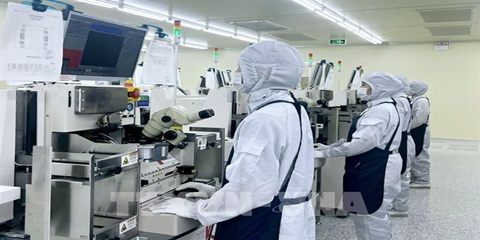
The growth of the electronics, semiconductor and high-tech sectors worldwide is opening up a variety of opportunities for Vietnamese enterprises to integrate more deeply into the global supply chain. However, to become suppliers for these corporations, domestic enterprises must meet rigorous standards regarding quality, technology, productivity and order fulfilment capabilities.
VIETNAM ECONOMY INVESTMENT
FOREIGN INVESTORS SEEKING A SYNCHRONISED MANUFACTURING ECOSYSTEM
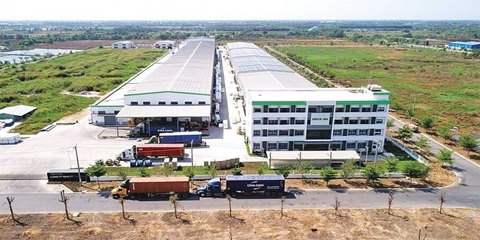
Instead of focusing only on land costs and incentives as usual, foreign investors are seeking a synchronised manufacturing ecosystem, from stable power supply and logistics to shared infrastructure and the convenience of completing residence procedures for experts to serve their long-term investment in the country.
MEMBER CORNER / PROMOTIONS
SENTRYSAFE FHW40200 – PROTECT YOUR VALUABLES, ENJOY PEACE OF MIND!
Looking for a reliable solution to protect your important documents, cash, and valuables from fire and water damage? Genuine SENTRYSAFE - Reliable protection for your valuables and peace of mind! Contact Sen Wai Vietnam for more information and personalized product recommendations.
PROPERTY / INDUSTRIAL ZONE
HCM CITY ATTRACTS US$5.7 BILLION INTO EXPORT PROCESSING AND INDUSTRIAL ZONES
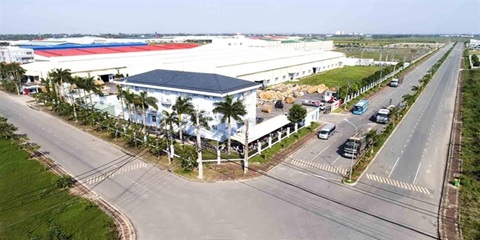
HCM City attracted US$5.7 billion in domestic and foreign investment into its export processing and industrial zones during the first nine months of 2026. The figure exceeded the city's full-year target by 31 per cent, highlighting strong momentum in high-quality industrial investment under Resolution No.10-NQ/TW. Total investment reached 131 per cent of the 2026 target of $4.25 billion and represented a 29 per cent increase compared with the same period in 2025, according to the city's Export Processing and Industrial Zones Authority (HEPZA).
INFRASTRUCTURE / CONSTRUCTION / LOGISTIC / PORT
DONG THAP PROVINCE STEPS UP INDUSTRIAL EXPANSION AND INFRASTRUCTURE CONNECTIVITY
Accelerating public investment, strengthening inter-regional connectivity, and expanding industrial land are helping Dong Thap efficiently bolster competitiveness and drive economic growth. Following the 2025 merger of the former Dong Thap and Tien Giang provinces, the expanded Dong Thap province in the Mekong Delta faces mounting pressure to accelerate infrastructure development and strengthen connectivity among local economic zones, urban areas, industrial parks (IPs), and production centres.
Events Sponsors






















