Want to be in the loop?
subscribe to
our notification
Business News
MARKETS SET TO SLIDE AS FOREIGN INVESTORS INCREASE SELLING PRESSURE
The VN-Index has continued its decline, accompanied by significant net selling by foreign investors throughout the past week, indicating persistent pessimism in the market.
The VN-Index on the Ho Chi Minh Stock Exchange (HoSE) closed last week at 1,261.72 points, while the HNX-Index on the Hanoi Stock Exchange (HNX) last traded at 243.09 points.
Over the week, the former index decreased by 0.02 per cent, while the latter increased by 0.57 per cent.
Liquidity on the HoSE for the week reached VNĐ109.5 trillion, a significant drop of 20.8 per cent compared to the previous week, remaining above average. This indicates a strong market divergence and balance after a sharp decline over the previous week. Many stocks and group stocks, have been rotating in and out of recovery, with demand increasing at the support level of 1,250 points and improving notably in medium and small-cap stocks.
Foreign investors continued their strong net selling trend with a substantial value of VNĐ6 trillion on the HoSE, focusing on large-cap stocks within the VN30, while recording net buying on the HNX with a value of VNĐ33.36 billion.
An expert from VNDirect Securities Corporation said that the stock market started to receive some supportive information last week.
On May 31, the US released the latest data on personal consumption expenditures (PCE), the Federal Reserve's preferred inflation gauge. Core PCE in April increased by 0.2 per cent from March, marking the lowest monthly rise since December 2023 and in line with market expectations.
Compared to the same period last year, core PCE rose by 2.8 per cent, lower than the forecast of 2.9 per cent. The overall PCE index in April increased by 2.7 per cent year-on-year and 0.3 per cent month-on-month, both matching forecasts.
The Dollar Index (DXY) and US Treasury yields adjusted downward, which will help ease pressure on the VNĐ exchange rate.
Domestically, there were also some positive developments in the gold and currency markets.
Specifically, after a recent hot rise, interbank market interest rates have started to cool following the State Bank of Vietnam's liquidity support actions. Government bond yields have also reversed and decreased.
Domestic gold prices also cooled after the announcement that four State-owned commercial banks would sell gold at stabilised prices from today (June 3). These developments are expected to improve investor sentiment in the upcoming trading week. Additionally, the VN-Index has approached the support zone around 1,250 points and is unlikely to fall significantly below this level.
According to an expert from Nhật Việt Securities Corporation (VFS), after recovering to the previous peak in the first half of May 2024, the VN-Index is facing significant profit-taking pressure from both domestic and foreign investors and is moving sideways around this price range to absorb the selling pressure. Capital flows have not entirely exited the market, but are moving rapidly between sectors.
Viet Dragon Securities Corporation (VDSC) noted that the market failed to gain points in the last session of the week and fell back to 1,261 points. Liquidity dropped sharply compared to the previous sessions, indicating cautious capital flows as the market recovered.
This low demand could negatively impact the market in the near future and the market may need to re-test supply and demand at the 1,250 - 1,255 points support zone once more. This exploratory signal will affect the market's subsequent movements.
According to the financial website shs.com.vn, the VN-Index will continue to fluctuate around the resistence level of 1,250 points. However demand is still increasing at that point, with many stocks/groups of stocks recovering strongly on the expectation of improved Q2/2024 business results.
Source: VNS
Related News

BANKING / FINANCE / INSURANCE / TAX
REMITTANCES TO HCM CITY RISE NEARLY 40% IN Q3
Remittances to HCM City reached more than US$2.83 billion in the third quarter of this year, up 39.5 per cent from the previous quarter and 3.6 per cent year-on-year. This was the first quarter showing positive annual growth this year, helping narrow the decline in remittance inflows over the first nine months. According to the State Bank of Vietnam (SBV)’s Regional Branch 2, remittances transferred to HCM City through credit institutions and economic organisations totalled $2.835 billion in Q3, an increase of more than $802 million from the previous quarter.

TECHNOLOGY
TECH SECTOR GROWTH OPENS UP OPPORTUNITIES FOR VIỆT NAM TO GO GLOBAL
The growth of the electronics, semiconductor and high-tech sectors worldwide is opening up a variety of opportunities for Vietnamese enterprises to integrate more deeply into the global supply chain. However, to become suppliers for these corporations, domestic enterprises must meet rigorous standards regarding quality, technology, productivity and order fulfilment capabilities.
VIETNAM ECONOMY INVESTMENT
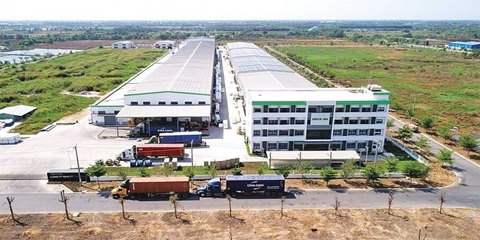
FOREIGN INVESTORS SEEKING A SYNCHRONISED MANUFACTURING ECOSYSTEM
Instead of focusing only on land costs and incentives as usual, foreign investors are seeking a synchronised manufacturing ecosystem, from stable power supply and logistics to shared infrastructure and the convenience of completing residence procedures for experts to serve their long-term investment in the country.

MEMBER CORNER / PROMOTIONS
SENTRYSAFE FHW40200 – PROTECT YOUR VALUABLES, ENJOY PEACE OF MIND!
Looking for a reliable solution to protect your important documents, cash, and valuables from fire and water damage? Genuine SENTRYSAFE - Reliable protection for your valuables and peace of mind! Contact Sen Wai Vietnam for more information and personalized product recommendations.
PROPERTY / INDUSTRIAL ZONE
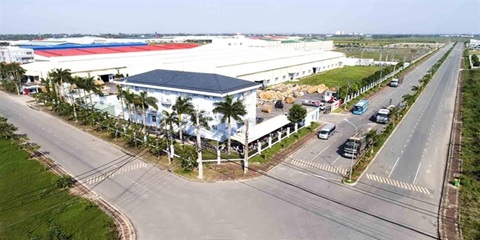
HCM CITY ATTRACTS US$5.7 BILLION INTO EXPORT PROCESSING AND INDUSTRIAL ZONES
HCM City attracted US$5.7 billion in domestic and foreign investment into its export processing and industrial zones during the first nine months of 2026. The figure exceeded the city's full-year target by 31 per cent, highlighting strong momentum in high-quality industrial investment under Resolution No.10-NQ/TW. Total investment reached 131 per cent of the 2026 target of $4.25 billion and represented a 29 per cent increase compared with the same period in 2025, according to the city's Export Processing and Industrial Zones Authority (HEPZA).
INFRASTRUCTURE / CONSTRUCTION / LOGISTIC / PORT
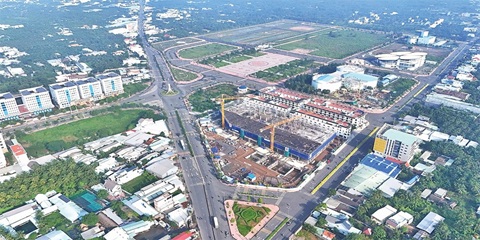
DONG THAP PROVINCE STEPS UP INDUSTRIAL EXPANSION AND INFRASTRUCTURE CONNECTIVITY
Accelerating public investment, strengthening inter-regional connectivity, and expanding industrial land are helping Dong Thap efficiently bolster competitiveness and drive economic growth. Following the 2025 merger of the former Dong Thap and Tien Giang provinces, the expanded Dong Thap province in the Mekong Delta faces mounting pressure to accelerate infrastructure development and strengthen connectivity among local economic zones, urban areas, industrial parks (IPs), and production centres.
Events Sponsors






















