Want to be in the loop?
subscribe to
our notification
Business News
MANUFACTURING SECTOR BOUNCES BACK TO GROWTH IN JULY
The Vietnamese manufacturing sector returned to growth in July as new orders supported a faster rise in production.
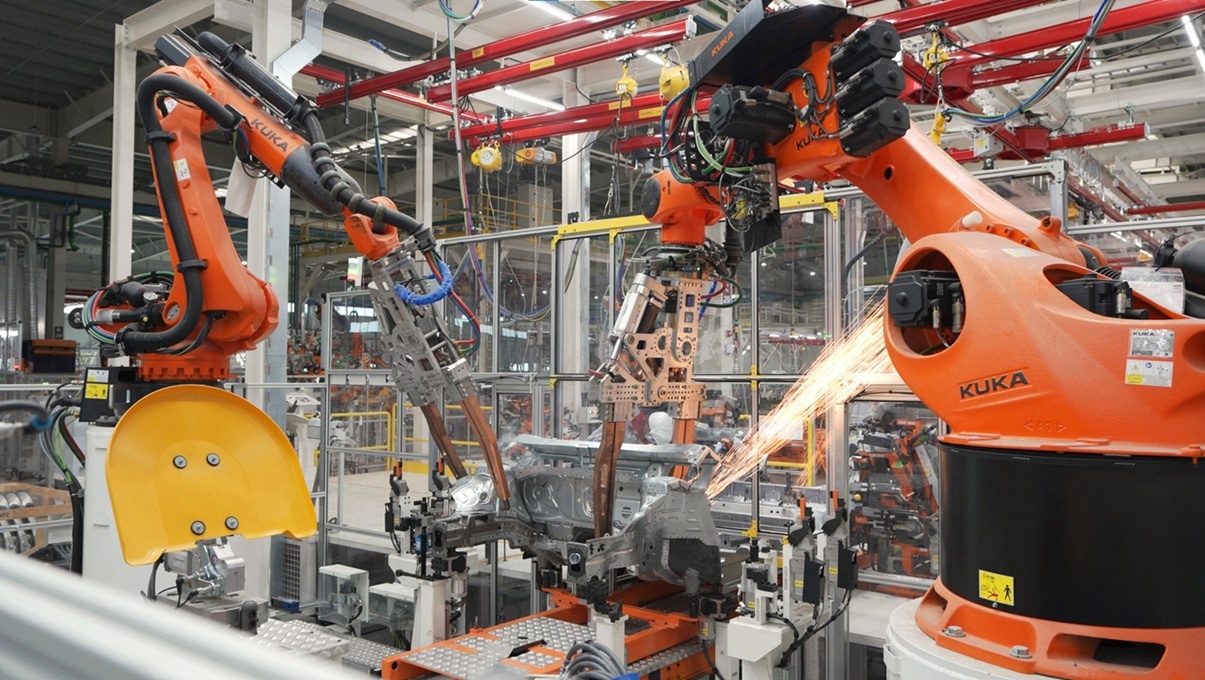
The S&P Global Vietnam Manufacturing Purchasing Managers' Index (PMI) posted 52.4 points in July, up from 48.9 points in June and back above the 50.0 no-change mark for the first time in four months. As such, the index pointed to a strengthening in the overall health of the manufacturing sector. The solid improvement in business conditions was the most marked for almost a year.
The improvement in operating conditions coincided with a return to growth of new orders in July. New business expanded for the first time in four months, and at the fastest pace since November last year, amid reports of customer demand strengthening.
That said, some respondents highlighted the negative impact of US tariffs on new order growth. New business from abroad continued to fall as a result of tariffs, extending the current sequence of contraction to nine months.
The renewed increase in new orders helped to support production growth in July. Output rose for the third month running. Moreover, the pace of expansion was marked and the fastest in 11 months.
Higher output requirements led to a return to growth of purchasing activity. Here too, the pace of expansion was the sharpest since August last year.
Meanwhile, employment neared stabilisation. Although staffing levels continued to fall amid ongoing spare capacity following the recent period of declining new orders, the latest reduction was the slowest in nine months as output requirements increased.
Backlogs of work continued to fall, albeit to the smallest extent in the current seven-month sequence of depletion.
Despite renewed growth of input buying, stocks of purchases declined again as panellists reported challenges securing raw materials. That said, the pace of depletion was the weakest since December 2023. Stocks of finished goods also decreased in July.
Material shortages resulted in a further lengthening of suppliers' delivery times. The latest deterioration in vendor performance was solid and only slightly less pronounced than that seen in June.
Difficulties sourcing materials, particularly those from abroad, led to an increase in input costs at the start of the second half of the year. Input prices increased for the second successive month, and at a solid pace that was the fastest in 2025 so far.
The pace of output price inflation also quickened in July as firms passed on higher input costs to customers. Here to, the rise was the sharpest in seven months. That said, the increase in charges was only modest.
Although manufacturers remained optimistic that output will increase over the coming year, sentiment dipped to a three-month low in July and was well below the series average. Confidence was linked by panellists to hopes for more stable economic conditions, new product launches, and new orders. On the other hand, concerns around the impact of US tariffs weighed on the outlook.
Andrew Harker, economics director at S&P Global Market Intelligence, said, "July PMI data suggested that the Vietnamese manufacturing sector is getting back on its feet following the disruption caused to operations by the US tariff announcements in recent months. Although tariffs continued to cause reductions in new export orders, firms were able to secure enough business elsewhere that total new orders returned to growth."
"A key feature of the latest survey was the impact of difficulties sourcing raw materials. Firms linked this to widespread supplier delivery delays, declining stocks of purchases, and building cost pressures. If material supplies continue to cause issues in the months ahead, then we may see limits to the growth rates that can be achieved by the sector," he said.
Source: VIR
Related News

MEMBER CORNER / PROMOTIONS
AN ELECTRIFYING NIGHT WITH THE "QUEEN OF DANCE" THU MINH AT THE GRAND HO TRAM!
The stage at The Grand Ballroom is set to catch fire as Vietnam’s undisputed "Queen of Dance," Thu Minh, takes the spotlight. Renowned for her powerhouse vocals, magnetic stage presence, and sultry, high-energy performances, Thu Minh promises an evening of pure musical euphoria. The energy escalates with an exclusive appearance by special guest and The Voice champion, Vu Thao My.

HR / LABOUR/ EMPLOYMENT
HIGH-QUALITY HUMAN RESOURCES NEEDED TO ATTRACT NEW TECH INVESTMENT CAPITAL
Besides infrastructure, Việt Nam must also rapidly develop a highly skilled workforce to attract investment in AI, semiconductors and advanced manufacturing, experts have said. Don Lam, CEO and co-founder of investment management company VinaCapital, said that global technology investors were increasingly looking at the readiness of the entire ecosystem, with high-quality human resources a decisive factor.

HR / LABOUR/ EMPLOYMENT
HIRING OUTLOOK STRENGTHENS IN Q4 AS SKILLS SHORTAGES PERSIST
Hiring intentions among employers in Việt Nam strengthened in the fourth quarter, with 52 per cent of surveyed companies planning to increase headcount between October and December, according to a ManpowerGroup survey released this week. Việt Nam's hiring outlook was stronger than the Asia Pacific and Middle East (APME) regional average of 33 per cent and the global average of 29 per cent, ranking third in the region and 11th globally among 42 markets surveyed.

BANKING / FINANCE / INSURANCE / TAX
LARGE BANKS FORECAST TO GAIN HIGHER PROFITABILITY IN H2 2026
The return on average assets (ROAA) of the banking sector will likely remain stable at around 1.5 per cent in the second half of 2026, but profitability divergence among banks will increase, with large banks outperforming peers on stronger margins and diversified earnings, analysts forecast. In a recent report on the banking sector, analysts from the Vietnam Investors Service Rating said the sector’s ROAA rose by 10 basis points quarter-on-quarter to 1.51 per cent in the first half of this year, driven by net interest margin (NIM) improvements at some State-owned banks and large private banks.
GARMENT / TEXTILE
VIỆT NAM'S FOOTWEAR, BAG EXPORTS TO US TOP $8 BILLION IN EIGHT MONTHS
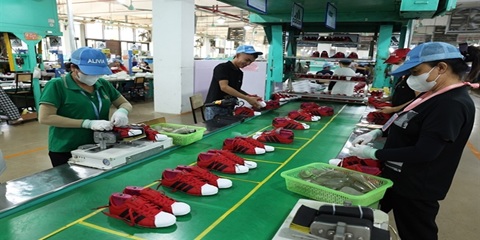
Việt Nam's exports of footwear and handbags to the US exceeded US$8 billion in the first eight months of 2026, as the US and EU remained the country's biggest markets despite sluggish growth in footwear shipments. Exports from Việt Nam's leather and footwear sector reached more than $2.45 billion in August, down 9 per cent from July but up 3 per cent from a year earlier, according to preliminary statistics.
VIETNAM ECONOMY INVESTMENT
LÂM ĐỒNG TARGETS DIGITAL ECONOMY TO ACCOUNT FOR 30 PER CENT OF GRDP BY 2030
Lâm Đồng Province aims to raise the digital economy’s contribution to around 30 per cent of its gross regional domestic product (GRDP) by 2030, as part of a five-year plan to develop digital economy and society issued recently. Under Plan No. 15358/KH-UBND, the province targets more than 60 per cent of small- and medium-sized enterprises (SMEs) to adopt digital technologies by 2030 while increasing the value of cashless payments to 30 times its GRDP.
Events Sponsors






















