Want to be in the loop?
subscribe to
our notification
Business News
MANUFACTURING RECOVERS WELL IN Q1
The manufacturing sector witnessed accelerated growth and increased investor confidence in February. The reopening of borders is also a promising sign that is expected to further strengthen the confidence of international markets.
Last week, the government issued Resolution No.32/NQ-CP. It is a positive sign for the country’s industrial sector, allowing citizens from 13 countries to travel to Vietnam for 15 days without a visa.
John Campbell, associate director and head of Industrial Services at Savills Vietnam said, “The economy is forecast to grow well this year as domestic demand rebounds and foreign direct investment (FDI) inflows remain stable. Business conditions have improved over the past five months following the disruption of the last two years.”
The Vietnamese manufacturing sector was in recovery mode in February with accelerated growth and improved investor confidence. According to IHS Markit, Vietnam’s Purchasing Managers' Index reached 54.3, increasing from 53.7 in January.
“February was a great month as factory activity not only increased for the fifth consecutive month, but it also saw the steepest growth since April. Output and new orders showed the best performance in ten months and we saw remarkable growth in export orders. Manufacturing employment levels increased for the third consecutive month, however job creation remains modest as many workers have still not returned from their hometowns,” John added.
Vietnam's industrial production rose by 8.4 per cent on-year in February, compared to a 2.8 per cent increase in January. Manufacturing output also improved from 2.8 per cent in January to 10 per cent in February.
The northern province of Bac Ninh currently leads in terms of FDI attraction. It is followed closely by the neighbouring province of Thai Nguyen, which has attracted $924 million, accounting for 18.5 per cent of Vietnam’s FDI this year. This is largely thanks to a notable investment by Samsung Electro-Mechanics Vietnam Co., Ltd. when it was granted an investment certificate to add $920 million to its project. The company’s investment at Yen Binh Industrial Park now stands at nearly $2.3 billion.
The reopening of borders is important in strengthening the confidence of international investors and is a promising sign for the industrial sector. Prominent businesses have already invested in factories and expanded production.
In March, Fuchs Group grew with a long-term lease of 20,000 square metres at Phu My 3 Specialised Industrial Park in the southern province of Ba Ria-Vung Tau.
Commenting on the acquisition, John said, “This 55-year lease emphasises the growth of Ba Ria’s industrial sector and the need for multinational tenants to consider alternative locations. The area not only offers competitive rents and infrastructure suited for medium and heavy industry, but it also provides access to a growing seaport cluster.”
In February, Framas – an injection moulding business from Germany – leased a 20,000sq.m ready-built facility at KTG Industrial Nhon Trach 2 in the southern province of Dong Nai. The 10-year lease represents the continued strength of the economy and the industrial real estate sector.
In terms of industrial park development, the market has been active with investment deals worth billions of dollars. At the end of December, Gaw NP Industrial broke ground on a factory project at the 16-hectare GNP Yen Binh 2 Industrial Zone (IZ). At the end of February, KCN Vietnam held a groundbreaking ceremony for a 13.4ha industrial facility in Phu An Thanh IZ.
LOGOS Vietnam made its fourth acquisition in the country in February. Along with Manulife Investment Management, it established a joint venture to acquire a 116,000sq.m modern logistics factory valued at more than $80 million.
CapitaLand Development has signed an MoU to invest $1 billion in the northern province of Bac Giang to develop its first IZ.
BW Industrial Development JSC has also acquired 74,000sq.m of land in Bac Tien Phong IZ, developed by DEEP C Industrial Zones.
The government’s support for foreign investors and the resilience and adaptability of local enterprises paint a reassuring picture that not only will the country recover, but it is likely to come back stronger than ever.
Source: VIR
Related News
BANKING / FINANCE / INSURANCE / TAX
REMITTANCES TO HCM CITY RISE NEARLY 40% IN Q3
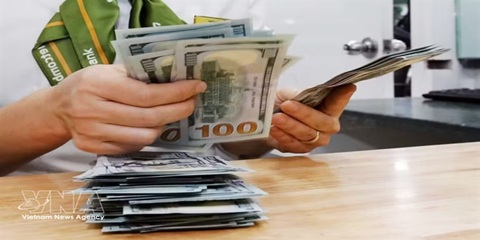
Remittances to HCM City reached more than US$2.83 billion in the third quarter of this year, up 39.5 per cent from the previous quarter and 3.6 per cent year-on-year. This was the first quarter showing positive annual growth this year, helping narrow the decline in remittance inflows over the first nine months. According to the State Bank of Vietnam (SBV)’s Regional Branch 2, remittances transferred to HCM City through credit institutions and economic organisations totalled $2.835 billion in Q3, an increase of more than $802 million from the previous quarter.
TECHNOLOGY
TECH SECTOR GROWTH OPENS UP OPPORTUNITIES FOR VIỆT NAM TO GO GLOBAL
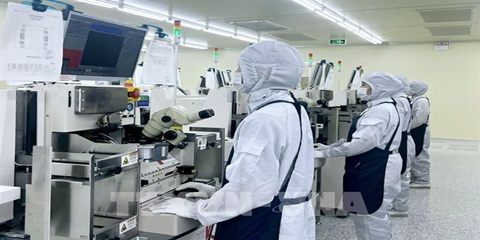
The growth of the electronics, semiconductor and high-tech sectors worldwide is opening up a variety of opportunities for Vietnamese enterprises to integrate more deeply into the global supply chain. However, to become suppliers for these corporations, domestic enterprises must meet rigorous standards regarding quality, technology, productivity and order fulfilment capabilities.
VIETNAM ECONOMY INVESTMENT
FOREIGN INVESTORS SEEKING A SYNCHRONISED MANUFACTURING ECOSYSTEM
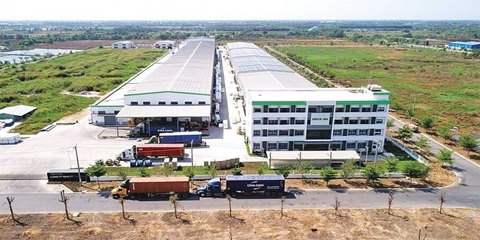
Instead of focusing only on land costs and incentives as usual, foreign investors are seeking a synchronised manufacturing ecosystem, from stable power supply and logistics to shared infrastructure and the convenience of completing residence procedures for experts to serve their long-term investment in the country.
MEMBER CORNER / PROMOTIONS
SENTRYSAFE FHW40200 – PROTECT YOUR VALUABLES, ENJOY PEACE OF MIND!
Looking for a reliable solution to protect your important documents, cash, and valuables from fire and water damage? Genuine SENTRYSAFE - Reliable protection for your valuables and peace of mind! Contact Sen Wai Vietnam for more information and personalized product recommendations.
PROPERTY / INDUSTRIAL ZONE
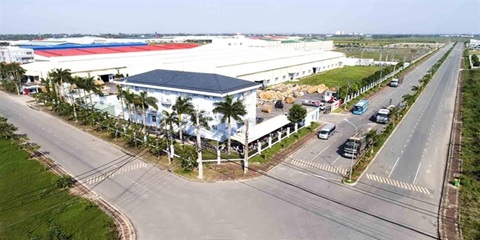
HCM CITY ATTRACTS US$5.7 BILLION INTO EXPORT PROCESSING AND INDUSTRIAL ZONES
HCM City attracted US$5.7 billion in domestic and foreign investment into its export processing and industrial zones during the first nine months of 2026. The figure exceeded the city's full-year target by 31 per cent, highlighting strong momentum in high-quality industrial investment under Resolution No.10-NQ/TW. Total investment reached 131 per cent of the 2026 target of $4.25 billion and represented a 29 per cent increase compared with the same period in 2025, according to the city's Export Processing and Industrial Zones Authority (HEPZA).
INFRASTRUCTURE / CONSTRUCTION / LOGISTIC / PORT
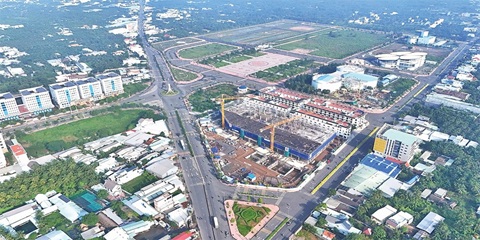
DONG THAP PROVINCE STEPS UP INDUSTRIAL EXPANSION AND INFRASTRUCTURE CONNECTIVITY
Accelerating public investment, strengthening inter-regional connectivity, and expanding industrial land are helping Dong Thap efficiently bolster competitiveness and drive economic growth. Following the 2025 merger of the former Dong Thap and Tien Giang provinces, the expanded Dong Thap province in the Mekong Delta faces mounting pressure to accelerate infrastructure development and strengthen connectivity among local economic zones, urban areas, industrial parks (IPs), and production centres.
Events Sponsors






















