Want to be in the loop?
subscribe to
our notification
Business News
MANUFACTURING HUB DREAMS MANIFESTING WITH BIG MOVES
Vietnam is pushing ahead in its mission to become the ideal manufacturing hub for overseas investors by taking advantage of a largely pandemic-free landscape and building on 2020’s successes.
On the last days of 2020, WHA Industrial Development Plc., a leading developer of industrial estates in Thailand, signed an MoU with Thanh Hoa People’s Committee to develop two industrial zone (IZ) infrastructure projects at a total cost of $335 million in this north-central province.
The first, WHA Smart Technology Industrial Zone Thanh Hoa, will cover an area of approximately 600 hectares, plus an additional residential area of between 30-50ha. Meanwhile, covering around 540ha, WHA Northern Industrial Zone Thanh Hoa will target downstream industries including plastics, rubber, chemical and bio-chemical products, metal fabrication and foundries, building materials, automotive parts, mechanical assembly, appliances and more. To date, the investor has commenced the necessary procedures for obtaining project approvals, with construction expected to begin for both by 2023.
“Vietnam has become an important industrial and manufacturing base in ASEAN. This MoU confirms that it is now a destination of choice for international investors in various industries, including high-value technology businesses. This will result in a new landscape of synergies and promising opportunities for WHA,” said Jareeporn Jarukornsakul, chairwoman and CEO of WHA Corporation.
Although the MoU between the two parties that will need time for legal procedure completion to realise the two projects, WHA’s move to develop two more IZs in Thanh Hoa after its first in the central province of Nghe An shows that WHA is laying many expectations on foreign-invested capital inflow in Vietnam.
WHA Industrial Zone 1 – Nghe An provides land of various sizes and ready-built factories for rent in Dong Nam Economic Zone, which offers special tax privileges to welcome investors in target industries.
Ready for new inflows
Along with WHA, numerous cities and provinces proposed the prime minister for approval to expand the land funds for IZs to catch up the investors’ shifting wave due to the COVID-19 pandemic. For example, the northern province of Bac Giang currently has six IZs covering 1,462ha, five of which have filled 85 per cent or more in capacity. In July last year, the province proposed the prime minister to establish two more IZs with a total area of 1,380ha.
In addition, the prime minister accepted addition of three more IZs – Long Duc 3, Bau Can-Tan Hien, and Xuan Que-Song Nhan in the southern province of Dong Nai – into Vietnam’s Master Plan on Industrial Zones Development in order to be ready to lure new investment inflows. A few days ago, telecoms tech specialists Everwin Precision Hong Kong Co., Ltd, said to be one of the key Apple suppliers, received an investment certificate for its project valued at $200 million on an area of 43.2ha at Vietnam-Singapore Industrial Park in Nghe An.
The factory’s capacity is expected at 270 million products per year, including metal shells, components and parts, cable assembly, plastic parts for smart devices, and new-energy cars. After two years of construction, the scheme will create 15,000 jobs, the majority local employees, and will significantly contribute to provincial socioeconomic development, as well as attract more foreign investors into the country.
Additionally, some sources of foreign media revealed that the world’s largest electronics manufacturers Foxconn, a key supplier of tech giants such as Apple, has been moving its manufacturing line for its iPad and MacBook products from China to Vietnam at the request of Apple, as well as raising its investment in Vietnam by $270 million into the factory in Bac Giang.
It is good news for the first days of 2021. This move shows Apple’s trust in Vietnam in the context other numerous large-scale manufacturers worldwide are considering Vietnam as their new production hub. The movements over the last few months have helped demonstrate the attractiveness of Vietnam, with an increase of additionally-registered capital in 2020, despite the lingering travel restrictions and economic turmoil being experienced in most countries.
Specifically, there was $6.4 billion in additionally-registered capital in 2020, a rise by 10.6 per cent on-year; and $14.65 billion in newly-registered capital, decreasing by 12.5 per cent on-year. Total registered overseas investment into Vietnam was $28.53 billion, and total foreign direct investment (FDI) disbursement was $19.98 billion, lightly down 2 per cent on-year.

Emerging haven
According to Do Nhat Hoang, director general of the Foreign Investment Agency under the Ministry of Planning and Investment (MPI), in the context that investment capital inflow worldwide was projected to fall by between 30-40 per cent due to the impact of the pandemic, as calculated by the United Nations Conference on Trade and Development, the 25-per-cent drop in registered FDI in Vietnam was still considered a success for the country.
Hoang noted while the figure of $28.53 billion in registered FDI is lower than that of 2019, “it remains better than numerous other countries, illustrating the attractiveness of Vietnam’s investment climate.”
Moreover, thanks to success in controlling the pandemic, both added-capital and newly-registered capital projects climbed in the last months of 2020. Notably, in the fourth quarter, total newly-registered projects rose by 9 per cent compared to the previous quarter. The number of added-capital projects hiked by 26, 18, and 45 per cent compared to the third, second, and first quarter respectively. “Numerous foreign investors are paying attention and are interested in investing in Vietnam. However, the suspension of international flights continue to prevent new investment decisions from being made, as well as their expansion implementation,” Hoang said.
According to Brand Finance, the world’s leading independent brand valuation consultancy, the country is being considered an emerging haven in Southeast Asia for manufacturing with foreign investors consecutively selecting Vietnam as a new investment destination – particularly from the United States – as they seek to relocate their Chinese operations following trade dispute fallouts.
Those signals and others are deemed a solid foundation for promise in foreign-invested capital inflow in 2021 onwards. Japanese Ambassador to Vietnam Yamada Takio said that instead of having 15 enterprises as a previous estimation, almost 40 Japanese enterprises have received support from the Japanese government to relocate their facilities to Vietnam. The number of companies selected for Thailand, in comparison, was 19 only. A report from the MPI noted that about 300 foreign investors have plans to expand operations, develop new projects, or study further investment opportunities in Vietnam. Around 60 have already implemented initial steps for their investment projects with the total registered capital of $60 billion, doubling 2020’s results. “It is a good signal, showing foreign investors’ attention on Vietnam’s investment environment,” the report noted.
It is clear that despite difficulties, Vietnam an attraction. David Nardone, group executive of Industrial and International under WHA Industrial Development PLC, said, “Vietnam, especially in this post-pandemic era, is attracting increasing foreign investments. “With the solid support of Vietnam’s government and provincial authorities, Nghe An has become an integrated hub for business, education, manufacturing and logistics, contributing further to the development of the country,” he explained.
Source: VIR
Related News

CHARITY / EXHIBITION / OTHER EVENTS
INVESTMENT OPPORTUNITIES IN CA MAU PROVINCE: 96 PROJECTS AND 20 STRATEGIC PROJECTS
We are pleased to share with you information on investment projects currently seeking investors in Ca Mau Province. Should your esteemed company or association be interested, we kindly invite you to review the project information and complete the registration form via the links provided. The Ho Chi Minh City Investment and Trade Promotion Centre (ITPC) will consolidate the expressions of interest and facilitate connections with the leadership of Ca Mau Province at a meeting tentatively scheduled for 13 November 2026 in Ho Chi Minh City.

MEMBER CORNER / PROMOTIONS
BẰNG KIỀU LIVESHOW - A SYMPHONY OF LOVE UNDER THE GOLDEN GLOW
A masterclass in live music that takes the audience on a soulful journey through immortal love songs, guided by the peerless artistry and emotive storytelling of renowned singer Bằng Kiều. The highlight of the night is his seamless musical chemistry with special guest Triệu Hồng Ngọc, promising passionate and deeply resonant duets inside the magnificent Grand Ballroom.
INFRASTRUCTURE / CONSTRUCTION / LOGISTIC / PORT
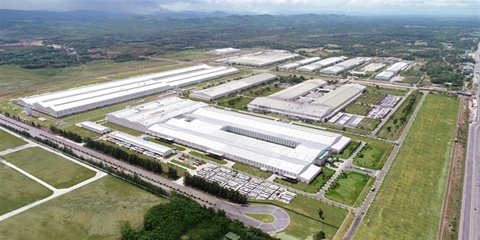
ĐÀ NẴNG GREEN-LIGHTS US$105 MILLION THAI DEVELOPMENT DEAL
The central city has approved an investment proposal by Thailand’s WHA Group to develop infrastructure for the 400ha WHA Đà Nẵng Industrial Park project on two communes of Thăng Bình and Đồng Dương, with an investment of more than VNĐ2.7 trillion (US$105 million). The city said it approved WHA Industrial Development International's status as an investor in the project, which is expected to take place between 2027 and 2034.
VIETNAM ECONOMY INVESTMENT
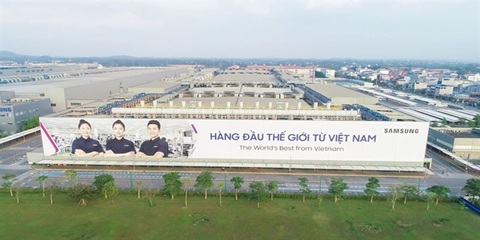
MOBILE PHONE EXPORTS RISE 20% TO $51.8 BILLION IN FIRST NINE MONTHS
Exports of mobile phones and components rose 20 per cent year-on-year to nearly US$51.8 billion in the first nine months of 2026, with China, the US and Republic of Korea accounting for more than half of the total. Shipments to the three markets reached a combined $26.18 billion, or 50.6 per cent of total exports of the product group during the period, according to data from the Vietnam Department of Customs under the Ministry of Finance.
INFRASTRUCTURE / CONSTRUCTION / LOGISTIC / PORT
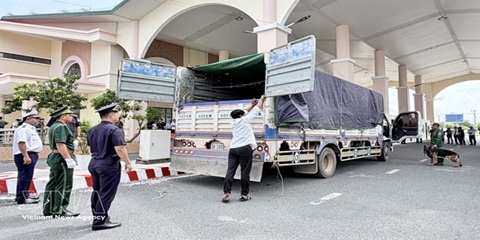
VIỆT NAM-CAMBODIA TRADE GATHERS PACE TOWARDS $20 BILLION TARGET
Trade between Việt Nam and Cambodia continues to grow, remaining a bright spot and a key pillar of bilateral cooperation as the two countries aim to raise two-way trade to US$20 billion in the coming years. After setting a record of more than $11.3 billion last year, bilateral trade reached about $8.7 billion in the first eight months of this year, up 8.3 per cent year on year.
VIETNAM ECONOMY INVESTMENT
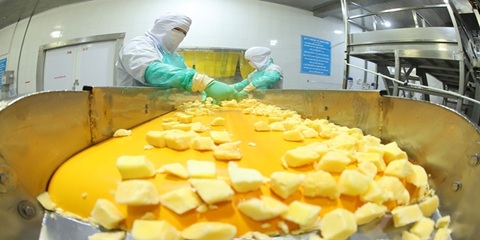
FRUIT AND VEGETABLE EXPORTS POISED TO HIT $10 BILLION IN 2026
Fruit and vegetable exports are on track to reach nearly US$10 billion in 2026, after rising 19.9 per cent year on year to nearly US$7.4 billion in the first nine months, driven by strong seasonal demand and abundant tropical fruit supplies. The Ministry of Agriculture and Environment said the growth reflected stronger international demand for fresh produce and processed agricultural products.
Events Sponsors






















