Want to be in the loop?
subscribe to
our notification
Business News
MAJOR INFRASTRUCTURE PROJECTS BECOME MAIN DRIVER FOR BANK PROFITS
The banking sector's profit outlook for 2026 reflects not only the recovery of credit demand, but also a fundamental shift in the composition of interest-earning assets, with major infrastructure projects emerging as a strategic and long-term pillar.
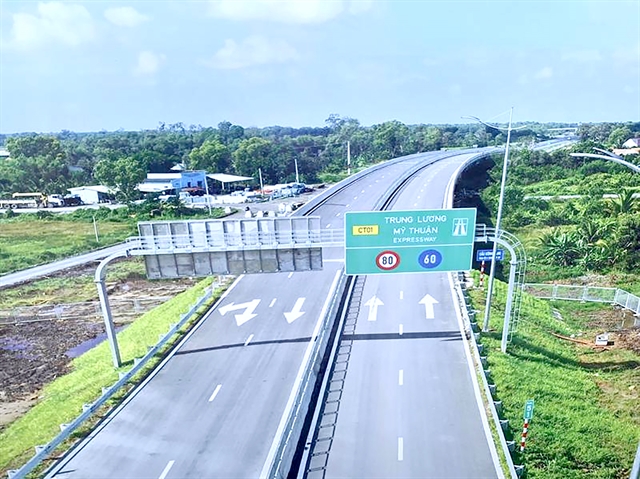
An artist's rendition of a section of the HCM City–Trung Lương–Mỹ Thuận expressway project. VietinBank and five other banks have arranged a loan package worth VNĐ27.1 trillion for the project, with VietinBank's lending capped at VNĐ5.4 trillion. — VNA/VNS Photo
HÀ NỘI — The race to finance major infrastructure projects worth hundreds of billions of US dollars is opening up new opportunities for profit growth in the banking sector.
According to experts, the banking sector's profit outlook for 2026 reflects not only the recovery of credit demand but also a fundamental shift in the composition of interest-earning assets, with major infrastructure projects emerging as a strategic, long-term pillar of lending and long-term pillar.
Analysts from Vietcombank Securities Company forecast that banking sector profits for the third quarter and the full year of 2026 will remain on an upward trajectory, driven primarily by interest income.
The analysts said that state-owned banks and large private banks involved in infrastructure financing would be the main beneficiaries.
They projected credit growth of 15.6 per cent for VietinBank in 2026, with an expected net interest margin (NIM) of 2.7 per cent supported, by policy measures.
VietinBank’s pre-tax profit is forecast to rise by 18 per cent in the third quarter and 26 per cent for the full year, driven in part by active debt recovery and the transfer of the VietinBank Tower project, which is estimated to generate a profit of approximately VNĐ5 trillion.
At BIDV, credit growth is projected to reach 16.1 per cent, driven primarily by the wholesale banking segment. NIM is expected to stand at 2.1 per cent, and the non-performing loan ratio is anticipated to fall to 1.3 per cent by year-end.
These forecasts coincide with a plan to increase charter capital from VNĐ72.8 trillion to a maximum of VNĐ99.6 trillion during 2026-27.
As for private banks, Techcombank is positioning itself as a major lender to key infrastructure projects, with projected credit growth of 23.5 per cent. The bank maintains an advantage in funding costs and is seeking to increase non-interest income through the establishment of TCLife, a capital contribution to MDP and expansion into the digital asset and gold markets.
MB and VPBank rank among the industry leaders in credit growth, with rates projected at around 35 per cent. MB maintains a NIM of 3.9 per cent, while VPBank benefits from strong momentum generated by its subsidiaries.
HDBank has also set a credit growth target of 35 per cent, with third-quarter pre-tax profit forecast to rise by 53 per cent, driven by contributions from HD Saison.
Funding the future
The drive to shift banking capital flows towards medium- and long-term lending stems from the massive capital demand of the country’s key infrastructure projects.
Research by VIS Rating and the Credit Guarantee and Investment Facility indicates that Việt Nam requires approximately $245 billion for critical infrastructure between 2025 and 2030, with public investment expected to cover $176 billion.
Given that private investment has accounted for over 50 per cent of total registered fixed-asset capital in recent years, the banking system is developing new financing arrangements to help shoulder the financial burden.
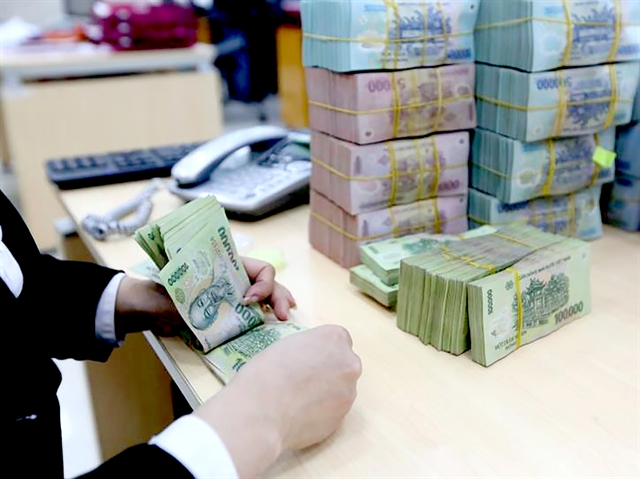
The growing demand for infrastructure investment is prompting banks to expand medium- and long-term financing. — VNA/VNS Photo
To address the mismatch between short-term funding and the long-term borrowing needs of infrastructure projects, the State Bank of Vietnam (SBV) has raised the maximum ratio of short-term funds used for medium- and long-term loans from 30 per cent to 40 per cent.
At the same time, it has issued regulations on syndicated lending, proposed mechanisms for allowing exceptions to lending limits for critically important projects and exempted certain credit indicators for projects with significant spillover effects.
Nguyễn Xuân Bắc, deputy director of the SBV’s Department of Credit for Economic Sectors, said the key to attracting capital lies in project feasibility and mechanisms that ensure a fair sharing of risks and benefits among the State, enterprises and the public.
Data from VietinBank show, that as of August 31, outstanding loans to public-private partnership projects stood at VNĐ36.2 trillion across 26 projects, representing 1.7 per cent of the bank's total outstanding loans.
Trần Văn Tần, a member of VietinBank’s board of directors, said the bank had financed numerous major projects, including the VNĐ8.7 trillion Hải Vân Tunnel and Cả Pass, the VNĐ7.99 trillion Bắc Giang–Lạng Sơn BOT project and the VNĐ1.1 trillion Pháp Vân–Cầu Giẽ BOT project.
Tần said VietinBank and five other banks had arranged a loan package worth VNĐ27.1 trillion, with VietinBank's lending capped at VNĐ5.4 trillion, for the HCM City–Trung Lương–Mỹ Thuận expressway project. According to Tần, co-financing is key to mitigating concentration risk.
He also recommended promptly and thoroughly resolving issues surrounding loss-making BOTtoll stations affected by factors beyond investors' control, and finalising a mechanism for sharing revenue shortfalls.
Source: VNS
Related News

TECHNOLOGY
HCM CITY SEEKS NEW GROWTH MODEL IN AI ERA
HCM City is looking to strengthen its economic competitiveness by developing new growth drivers, improving workforce capabilities and enhancing international cooperation amid the rapid transformation of global value chains and the growing influence of artificial intelligence (AI). These priorities were highlighted at a thematic session on global economic transformation and economic restructuring experiences of countries and megacities, held on October 27 as part of the Autumn Economic Forum 2026 in HCM City.

TECHNOLOGY
FOUR PRIORITIES FOR VIETNAM-AUSTRALIA COOPERATION IN DIGITAL TECHNOLOGY AND AI
Deputy Minister of Science and Technology Le Xuan Dinh called for selecting projects based on actual needs, linking research with commercialization, ensuring the effective operation of the V-Bridge platform, and clearly defining responsibilities and implementation timelines. The aim is to turn commitments to cooperate in digital technology, artificial intelligence (AI) and semiconductors into concrete products, projects and investment opportunities.
TECHNOLOGY
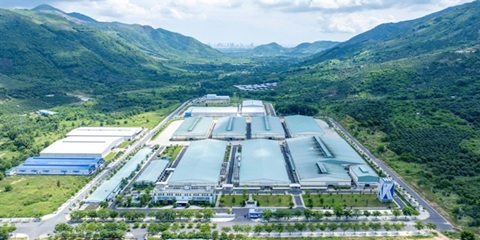
KHÁNH HÒA EYES $15.5 MILLION HI-TECH PLANT
The south-central province of Khánh Hòa has granted an investment certificate for a VNĐ390 billion (US$15.5 million) high-tech plant to produce graphene, biochips and electronic components, as the province seeks to attract investment in advanced materials and biotechnology. The Hememics Vietnam project is backed by US firm Hememics Biotechnologies Inc, Vietnamese investor Viet Khanh JSC and others.

VIETNAM ECONOMY INVESTMENT
HCM CITY SEEKS US$19 BILLION IN FOREIGN INVESTMENT IN 2026
HCM City is prioritising high-quality foreign investment linked to technology, finance and sustainable development as it seeks to strengthen its position as a regional economic hub. More than 500 domestic and international business leaders gathered at the CEO 500 conference on October 26 to discuss investment opportunities and new growth drivers for HCM City amid changing global capital flows and technological advances.
GARMENT / TEXTILE
JAPANESE FDI SUPPORTS GREEN TRANSITION IN VIỆT NAM'S MANUFACTURING SECTOR
Japanese Foreign Direct Investment (FDI) is strengthening Việt Nam's manufacturing capacity and accelerating the green transition, as more Japanese companies expand production and adopt sustainable industrial solutions. Việt Nam has become an important market and strategic manufacturing base in Southeast Asia for Japanese investors, reflecting their long-term confidence in the country’s economic potential and sustainable growth prospects.

VIETNAM ECONOMY INVESTMENT
FROM SCALE TO VALUE: VIỆT NAM’S AGRO-FORESTRY EXPORTS NEED CONTROL OF THE VALUE CHAIN
Việt Nam has become a major supplier to global agricultural and forestry markets, but its export strength has yet to translate into matching market power. While the country has improved its production capacity and moved further into processing, the high-value links in many supply chains, such as technology, branding, standards, data and decision-making, remain largely in foreign hands.
Events Sponsors