Want to be in the loop?
subscribe to
our notification
Business News
LOW BANK RATES FAIL TO STIMULATE STRONG CAPITAL INFLUX INTO SECURITIES MARKET
Interest rates for mobilisation at banks have reached historically low levels. However, it is premature to anticipate a significant influx of capital from banks into the securities market at this time.
The domestic stock market in Việt Nam, comprising the HOSE, HNX, and UPCoM exchanges, has shown improvement in transaction value since the beginning of the second quarter. The average session value has risen from US$476 million in the first quarter to $677 million in the second quarter and further to $1.01 billion in the third quarter of 2023.
This growth can be attributed to the decrease in deposit interest rates and a more favourable macroeconomic context, encouraging investors to seek higher-risk and higher-profit investment opportunities in the stock market.
Although interest rates have reached historically low levels, even lower than during the COVID-19 pandemic when the State Bank implemented monetary policy measures to support businesses and individuals, the stock market has not witnessed trading sessions with values exceeding $2 billion as it did during the pandemic.
Trần Minh Hoàng, Head of Analysis at Vietcombank Securities Company (VCBS), explains that the current context differs from the previous period, making it unlikely for a significant capital shift towards securities.
Hoàng suggests that the Government and the State Bank are currently directing capital towards production and business activities while limiting speculative investments to prevent asset bubbles. Although credit growth for the entire economy reached 7.4 per cent by the end of October 2023, significantly lower than the 11.6 per cent increase during the same period in 2022 and far from the 14 per cent credit growth target for 2023, banks still have excess liquidity. Hoàng believes that low interest rates need to be maintained for a longer period to observe a substantial capital flow shift to the stock market.
Lê Phạm Duy Nhân, Head of the Portfolio Management Department at Vietcombank Fund Management Company (VCBF), anticipates credit growth for the banking system to reach 11-12 per cent in line with GDP growth projections of over 5 per cent. While savings interest rates have dropped, allowing for reduced lending rates, credit growth has been slow due to challenging global and domestic macroeconomic conditions. Banks need to exercise caution in lending to minimise the risks of bad debt, which has recently increased significantly.
Nhân emphasises that for industry-wide credit growth to accelerate, it will take time for government support policies to penetrate the economy. Positive signals from major export markets are also necessary for Việt Nam, given its highly open economy.
Observing the current market, investor Nguyễn Xuân Bách notes attractive price ranges for many stocks, particularly in industries benefiting from expansion and real estate businesses with an advantage in land resources. However, cash flows into the market are not yet substantial, mainly consisting of short-term and alternating movements. Bách advises investors to be cautious, analyse industry trends, and carefully select available stocks. Patience is crucial in finding the best buying points and avoiding hasty investments.
Lê Phạm Duy Nhân reveals that VCBF is maintaining a high proportion of stocks in long-term favoured industries such as information technology, industrial parks, logistics, and utilities due to their potential for stable profit growth. The retail and consumer sectors also present attractive opportunities due to their lower valuations resulting from weak domestic demand and declining profits.
Nevertheless, Nhân emphasises the importance of asset preservation, especially since the market has recently experienced a recovery. Short or long-term trading strategies should be based on individual preferences and stock types, but investors should allocate capital appropriately for their investments.
Source: VNS
Related News

BANKING / FINANCE / INSURANCE / TAX
REMITTANCES TO HCM CITY RISE NEARLY 40% IN Q3
Remittances to HCM City reached more than US$2.83 billion in the third quarter of this year, up 39.5 per cent from the previous quarter and 3.6 per cent year-on-year. This was the first quarter showing positive annual growth this year, helping narrow the decline in remittance inflows over the first nine months. According to the State Bank of Vietnam (SBV)’s Regional Branch 2, remittances transferred to HCM City through credit institutions and economic organisations totalled $2.835 billion in Q3, an increase of more than $802 million from the previous quarter.

TECHNOLOGY
TECH SECTOR GROWTH OPENS UP OPPORTUNITIES FOR VIỆT NAM TO GO GLOBAL
The growth of the electronics, semiconductor and high-tech sectors worldwide is opening up a variety of opportunities for Vietnamese enterprises to integrate more deeply into the global supply chain. However, to become suppliers for these corporations, domestic enterprises must meet rigorous standards regarding quality, technology, productivity and order fulfilment capabilities.
VIETNAM ECONOMY INVESTMENT
FOREIGN INVESTORS SEEKING A SYNCHRONISED MANUFACTURING ECOSYSTEM
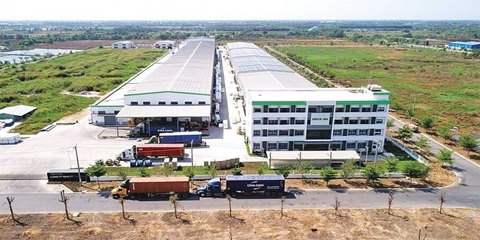
Instead of focusing only on land costs and incentives as usual, foreign investors are seeking a synchronised manufacturing ecosystem, from stable power supply and logistics to shared infrastructure and the convenience of completing residence procedures for experts to serve their long-term investment in the country.

MEMBER CORNER / PROMOTIONS
SENTRYSAFE FHW40200 – PROTECT YOUR VALUABLES, ENJOY PEACE OF MIND!
Looking for a reliable solution to protect your important documents, cash, and valuables from fire and water damage? Genuine SENTRYSAFE - Reliable protection for your valuables and peace of mind! Contact Sen Wai Vietnam for more information and personalized product recommendations.
PROPERTY / INDUSTRIAL ZONE
HCM CITY ATTRACTS US$5.7 BILLION INTO EXPORT PROCESSING AND INDUSTRIAL ZONES
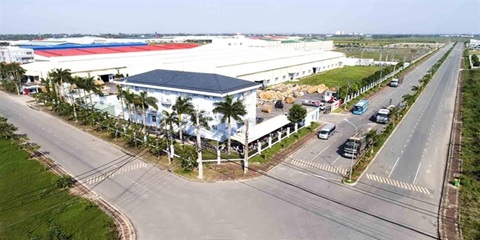
HCM City attracted US$5.7 billion in domestic and foreign investment into its export processing and industrial zones during the first nine months of 2026. The figure exceeded the city's full-year target by 31 per cent, highlighting strong momentum in high-quality industrial investment under Resolution No.10-NQ/TW. Total investment reached 131 per cent of the 2026 target of $4.25 billion and represented a 29 per cent increase compared with the same period in 2025, according to the city's Export Processing and Industrial Zones Authority (HEPZA).
INFRASTRUCTURE / CONSTRUCTION / LOGISTIC / PORT
DONG THAP PROVINCE STEPS UP INDUSTRIAL EXPANSION AND INFRASTRUCTURE CONNECTIVITY
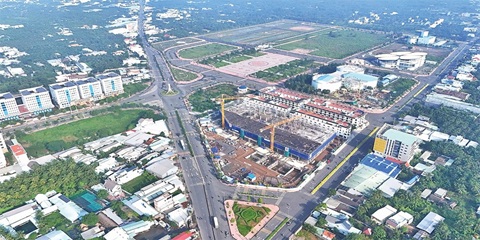
Accelerating public investment, strengthening inter-regional connectivity, and expanding industrial land are helping Dong Thap efficiently bolster competitiveness and drive economic growth. Following the 2025 merger of the former Dong Thap and Tien Giang provinces, the expanded Dong Thap province in the Mekong Delta faces mounting pressure to accelerate infrastructure development and strengthen connectivity among local economic zones, urban areas, industrial parks (IPs), and production centres.
Events Sponsors






















