Want to be in the loop?
subscribe to
our notification
Business News
LOGISTICS SERVICE INDUSTRY READY FOR OPPORTUNITIES FROM EVFTA
Vietnam’s logistics service industry is preparing infrastructure and techniques to grasp opportunities from the Europe-Vietnam Free Trade Agreement (EVFTA) to attract foreign investors with a wave of factories.
Insiders predict that the agreement would be a lever for Vietnam to receive foreign direct investment (FDI) capital sources from European countries, bringing many advantages for the local logistics service in the future.
Many businesses have been developing and expanding industrial parks in cities and provinces nationwide, including HCM City, the southern provinces of Binh Duong, Long An, Dong Nai and Ba Ria - Vung Tau and northern localities.
Vietnam’s industrial real estate market has become busy with the increase of land lease contracts and factories concentrated in industrial parks and provinces with deep-water seaports across the country. Therefore, this increase will lead to a greater supply of logistics transport services in the country.
Experts said that this is understandable because manufacturing enterprises are still leaving China due to the impact from COVID-19, as well as trade conflicts with the US and manufacturers' strategies to minimise reliance on one market. This gives Vietnam an opportunity to become a new global production hub and an essential foundation for the strong development of logistics services.
In this trend, authorities in the central province of Ha Tinh have recently approved a plan for logistics centre development and Son Duong Port service at Vung Ang Economic Zone.
The 159ha logistics centre is located behind Son Duong Port to become an important link in the supply chain connecting the Son Duong-Vung Ang port complex with other areas. This location is not only a key logistics centre of the province, but also a hub in the central region connecting with the East-West Economic Corridor and serving international trade activities.
Meanwhile, the major city of Hai Phong, the largest import and export gateway to the northern region of Vietnam, has also conducted planning on a logistics service system in the city. In 2019, cargo transported via this port reached nearly 130 million tonnes.
Authorities in the southern province of Ba Ria-Vung Tau early this week rolled out a plan to spend VND20 trillion (US$850 million) from now through 2025 on infrastructure to achieve their goal of comprehensive development. In which it has a master plan including 69 ports, of which 48 are operational with a capacity of more than 141 million tonnes a year. The total area of the specialised warehousing in the plan is 2,312ha, and the current availability is around 224ha.
According to Bui Le Anh Hieu, Marketing Director of Long Hậu Joint Stock Company, which is the owner of Long Hau Industrial Park (IP) in the southern province of Long An, the demand of warehouses will sharply increase after the EVFTA comes into effect.
“The Long Hau IP has attracted many businesses building warehouses, and all has been operating well. We have earmarked a large area in the Long Hau IP 3 to wait for foreign investors after the EVFTA,” Hieu said.
“Recently, we received a lot of attention from investors in building cold storage and warehouses, so the EVFTA will likely cause a shortage of warehouses in the future,” he added.
Marko Walde, Chief Representative of the German Chamber of Commerce and Industry in Vietnam (AHK Vietnam), said Vietnam is Germany's second largest trading partner in Asia with more than 4,000 German businesses exporting to this country. However, in order to promote the attraction of FDI from Europe, one of the important factors is to prepare high quality labour force and skilled workers for manufacturing and logistics.
He said this is also a big challenge for Vietnam today when the number of high-quality workers is not sufficient to meet the actual needs. Vietnam needs to strengthen vocational training centres and courses to adapt to modern production lines that require expertise and skills.
Nguyen Tuong, Deputy General Secretary of Vietnam Logistics Association (VLA), said logistics enterprises currently lack technology manpower while foreign logistics enterprises do not have advantages in warehousing.
“Therefore, to compete fairly at home, the Vietnamese logistics industry must make more efforts in administration and order management, especially with the Government’s support to have a specific roadmap for logistics reform,” Tuong said.
He also said that it’s needed to select a number of reputable businesses in shipping and logistics services, who will receive the Government’s specific policies to set up a long-term strategy such as tax, interest rate reduction and support for loans.
"The Government should call on other industries to support this industry. Along with that, it is necessary to develop railway transportation in logistics activities.”
Surce: VIR
Related News

MEMBER CORNER / PROMOTIONS
AN ELECTRIFYING NIGHT WITH THE "QUEEN OF DANCE" THU MINH AT THE GRAND HO TRAM!
The stage at The Grand Ballroom is set to catch fire as Vietnam’s undisputed "Queen of Dance," Thu Minh, takes the spotlight. Renowned for her powerhouse vocals, magnetic stage presence, and sultry, high-energy performances, Thu Minh promises an evening of pure musical euphoria. The energy escalates with an exclusive appearance by special guest and The Voice champion, Vu Thao My.

HR / LABOUR/ EMPLOYMENT
HIGH-QUALITY HUMAN RESOURCES NEEDED TO ATTRACT NEW TECH INVESTMENT CAPITAL
Besides infrastructure, Việt Nam must also rapidly develop a highly skilled workforce to attract investment in AI, semiconductors and advanced manufacturing, experts have said. Don Lam, CEO and co-founder of investment management company VinaCapital, said that global technology investors were increasingly looking at the readiness of the entire ecosystem, with high-quality human resources a decisive factor.

HR / LABOUR/ EMPLOYMENT
HIRING OUTLOOK STRENGTHENS IN Q4 AS SKILLS SHORTAGES PERSIST
Hiring intentions among employers in Việt Nam strengthened in the fourth quarter, with 52 per cent of surveyed companies planning to increase headcount between October and December, according to a ManpowerGroup survey released this week. Việt Nam's hiring outlook was stronger than the Asia Pacific and Middle East (APME) regional average of 33 per cent and the global average of 29 per cent, ranking third in the region and 11th globally among 42 markets surveyed.

BANKING / FINANCE / INSURANCE / TAX
LARGE BANKS FORECAST TO GAIN HIGHER PROFITABILITY IN H2 2026
The return on average assets (ROAA) of the banking sector will likely remain stable at around 1.5 per cent in the second half of 2026, but profitability divergence among banks will increase, with large banks outperforming peers on stronger margins and diversified earnings, analysts forecast. In a recent report on the banking sector, analysts from the Vietnam Investors Service Rating said the sector’s ROAA rose by 10 basis points quarter-on-quarter to 1.51 per cent in the first half of this year, driven by net interest margin (NIM) improvements at some State-owned banks and large private banks.
GARMENT / TEXTILE
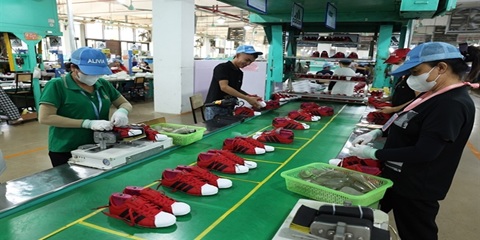
VIỆT NAM'S FOOTWEAR, BAG EXPORTS TO US TOP $8 BILLION IN EIGHT MONTHS
Việt Nam's exports of footwear and handbags to the US exceeded US$8 billion in the first eight months of 2026, as the US and EU remained the country's biggest markets despite sluggish growth in footwear shipments. Exports from Việt Nam's leather and footwear sector reached more than $2.45 billion in August, down 9 per cent from July but up 3 per cent from a year earlier, according to preliminary statistics.
VIETNAM ECONOMY INVESTMENT
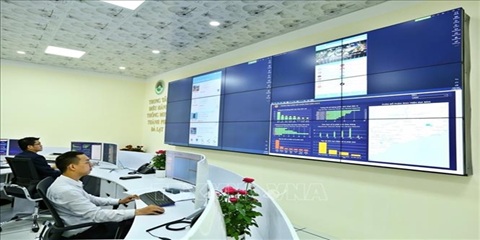
LÂM ĐỒNG TARGETS DIGITAL ECONOMY TO ACCOUNT FOR 30 PER CENT OF GRDP BY 2030
Lâm Đồng Province aims to raise the digital economy’s contribution to around 30 per cent of its gross regional domestic product (GRDP) by 2030, as part of a five-year plan to develop digital economy and society issued recently. Under Plan No. 15358/KH-UBND, the province targets more than 60 per cent of small- and medium-sized enterprises (SMEs) to adopt digital technologies by 2030 while increasing the value of cashless payments to 30 times its GRDP.
Events Sponsors






















