Want to be in the loop?
subscribe to
our notification
Business News
LOGISTICS SECTOR POISED FOR NEW GROWTH PHASE
Vietnam’s logistics sector is set for a new phase of growth as enterprises accelerate expansion strategies in response to key policy shifts aimed at shaping future market trends.
Vietnamese freight forwarder Bee Logistics has re-evaluated its medium-term development strategy towards 2030 to better align with fresh policy directions from the government. The company review followed the recent issuance of four strategic resolutions focused on science and technology, international integration, legal reform, and private economic development.
Vu Ho Ninh, director of the northern region at Bee Logistics, said the firm plans to expand its office network domestically and internationally, while maintaining close ties with industry associations and local authorities to stay abreast of regional planning and investment policy changes. The company will also continue to advance digital transformation, pursue green growth, and invest in infrastructure to support long-term sustainable development in line with the new resolutions.
“For us, the resolutions carry major significance,” Ninh told VIR. “We already operate more than 40 branches and offices across key economic centres in Vietnam and overseas. But to extend our reach, regional connectivity and infrastructure remain vital.”
For instance, with prioritised expressway investments such as Lang Son–Cao Bang or Phu Tho–Tuyen Quang thanks in part to Resolution No.66/NQ-TW, goods from new industrial parks in northern mountainous areas can reach seaports one to two days faster, greatly reducing transit time and operating costs, Ninh said.
He added that Resolution 66, which focuses on legal reform, would also help reduce risks and streamline logistics processes, particularly in customs, taxation, and inspection procedures that rely on business-friendly legal frameworks.
At Bee Logistics, most orders are now tracked and managed through an integrated transport management system. The company’s warehouse operations are gradually adopting Internet of Things technology and radio-frequency identification for real-time inventory tracking.
In March, the company inaugurated the Bee Distribution Centre in the central region – deemed one of the most modern logistics hubs in the area – with 26,000sq.m of space and storage capacity for up to 30,000 pallets. The facility is equipped with a warehouse management system, transport management software, barcode scanning technology, and automation tools to optimise warehousing and supply chain activities.
Other logistics players are making similar moves. T&M Forwarding, which has nearly three decades of experience in international logistics, sees this period as a pivotal time for transformation, restructuring, and expansion.
Chu Kieu Lien, Hanoi manager at T&M Forwarding, said modern logistics cannot be separated from digital transformation and the application of smart technologies such as AI, big data, and blockchain. She said the newly issued resolutions are expected to give further impetus to this shift.
“In line with these policy directions, T&M Forwarding will broaden its service offerings and transport routes, and expand its network of agents and partners in key markets such as the United States, ASEAN, Northeast Asia, and the EU,” Lien said. “We also aim to deepen strategic cooperation with shipping lines, airlines, and international warehouse networks to strengthen our position in the global supply chain – especially in e-commerce logistics and services for foreign-invested enterprises.”
Vietnam Maritime Corporation (VIMC) is also aligning with this national strategy. Over the coming years, the group plans to enhance port operations, expand logistics services, and invest in a more modern, environmentally friendly fleet. It is currently partnering with leading global shipping companies to boost international maritime connectivity.
Nguyen Canh Tinh, newly appointed chairman of VIMC, said, “From now to 2030, we will prioritise strategic infrastructure projects, including deepwater ports, international transit hubs, and inland container depots in key economic zones. We will also invest in next-generation vessels and high-tech ships, with a focus on modernising our container fleet to increase VIMC’s maritime transport capacity.”
VIMC is encouraging green and energy transformation, such as using more renewable energy, cutting emissions, and complying with international sustainability standards. “These efforts are essential to keeping pace with trends in the global maritime industry,” he said.
The group is also developing major logistics centres in Haiphong, Danang, and Ho Chi Minh City to strengthen the maritime supply chain. These facilities are expected to play a key role in connecting international routes and enhancing the competitiveness of Vietnam’s maritime sector in regional and global markets.
Tinh said VIMC will boost cooperation with reputable seaports and global shipping lines to expand international shipping routes and logistics markets, directly linking its port network with the world. The corporation is also prioritising the attraction of strategic investors and financial partners to participate in large-scale seaport projects.
According to logistics experts, the four resolutions are not only long-term strategies for regional development, but also timely responses to structural imbalances and rising logistical pressures on the economy.
Vietnam’s logistics costs remain high, accounting for approximately 16.5 per cent of GDP – far above the global average of 11–12 per cent, according to the Vietnam Logistics Report 2024. Logistics expert Le Tuong attributed this gap to limited regional connectivity, fragmented infrastructure, and overlapping transport planning.
“These resolutions are reshaping regional master planning and helping develop logistics infrastructure – a critical step in removing longstanding bottlenecks,” he said. “Logistics is vital to linking Vietnam with global markets, especially as we enter more free trade agreements. The key now is turning policy into practice – building a robust logistics industry that raises the country’s position in global supply and value chains.”
Source: VIR
Related News
MEMBER CORNER / PROMOTIONS
AN ELECTRIFYING NIGHT WITH THE "QUEEN OF DANCE" THU MINH AT THE GRAND HO TRAM!
The stage at The Grand Ballroom is set to catch fire as Vietnam’s undisputed "Queen of Dance," Thu Minh, takes the spotlight. Renowned for her powerhouse vocals, magnetic stage presence, and sultry, high-energy performances, Thu Minh promises an evening of pure musical euphoria. The energy escalates with an exclusive appearance by special guest and The Voice champion, Vu Thao My.
HR / LABOUR/ EMPLOYMENT
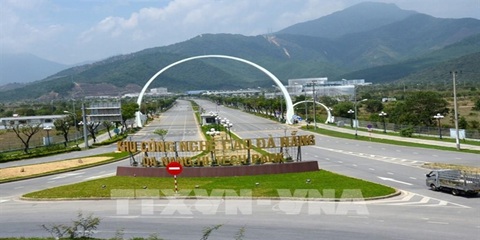
HIGH-QUALITY HUMAN RESOURCES NEEDED TO ATTRACT NEW TECH INVESTMENT CAPITAL
Besides infrastructure, Việt Nam must also rapidly develop a highly skilled workforce to attract investment in AI, semiconductors and advanced manufacturing, experts have said. Don Lam, CEO and co-founder of investment management company VinaCapital, said that global technology investors were increasingly looking at the readiness of the entire ecosystem, with high-quality human resources a decisive factor.

HR / LABOUR/ EMPLOYMENT
HIRING OUTLOOK STRENGTHENS IN Q4 AS SKILLS SHORTAGES PERSIST
Hiring intentions among employers in Việt Nam strengthened in the fourth quarter, with 52 per cent of surveyed companies planning to increase headcount between October and December, according to a ManpowerGroup survey released this week. Việt Nam's hiring outlook was stronger than the Asia Pacific and Middle East (APME) regional average of 33 per cent and the global average of 29 per cent, ranking third in the region and 11th globally among 42 markets surveyed.
BANKING / FINANCE / INSURANCE / TAX
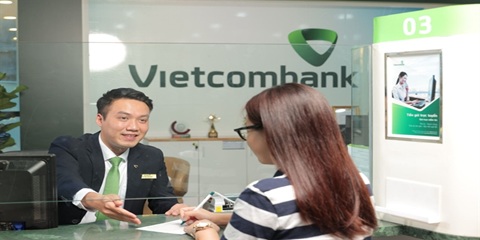
LARGE BANKS FORECAST TO GAIN HIGHER PROFITABILITY IN H2 2026
The return on average assets (ROAA) of the banking sector will likely remain stable at around 1.5 per cent in the second half of 2026, but profitability divergence among banks will increase, with large banks outperforming peers on stronger margins and diversified earnings, analysts forecast. In a recent report on the banking sector, analysts from the Vietnam Investors Service Rating said the sector’s ROAA rose by 10 basis points quarter-on-quarter to 1.51 per cent in the first half of this year, driven by net interest margin (NIM) improvements at some State-owned banks and large private banks.
GARMENT / TEXTILE
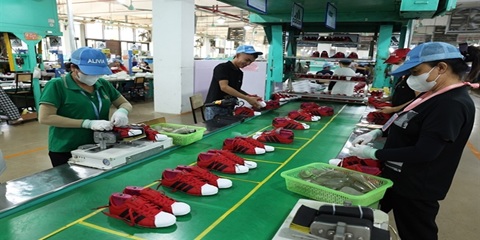
VIỆT NAM'S FOOTWEAR, BAG EXPORTS TO US TOP $8 BILLION IN EIGHT MONTHS
Việt Nam's exports of footwear and handbags to the US exceeded US$8 billion in the first eight months of 2026, as the US and EU remained the country's biggest markets despite sluggish growth in footwear shipments. Exports from Việt Nam's leather and footwear sector reached more than $2.45 billion in August, down 9 per cent from July but up 3 per cent from a year earlier, according to preliminary statistics.
VIETNAM ECONOMY INVESTMENT
LÂM ĐỒNG TARGETS DIGITAL ECONOMY TO ACCOUNT FOR 30 PER CENT OF GRDP BY 2030
Lâm Đồng Province aims to raise the digital economy’s contribution to around 30 per cent of its gross regional domestic product (GRDP) by 2030, as part of a five-year plan to develop digital economy and society issued recently. Under Plan No. 15358/KH-UBND, the province targets more than 60 per cent of small- and medium-sized enterprises (SMEs) to adopt digital technologies by 2030 while increasing the value of cashless payments to 30 times its GRDP.
Events Sponsors






















