Want to be in the loop?
subscribe to
our notification
Business News
LOGISTICS INVESTORS HEAT UP THE MARKET
The race to expand logistics market share continues to heat up, as both domestic and foreign enterprises increase investments in this field.
The very first logistics centre from Vietnam-Singapore Industrial Parks (VSIP) is now being constructed in the south-central province of Quang Ngai, and will be completed and put into use by the end of this year.
Being built according to Lotus standards of the Vietnam Green Building Council, the 6-hectare Sembcorp Logistics Park will boast three modern single-storey warehouse blocks.
Singapore’s Sembcorp Development, a wholly owned subsidiary of Sembcorp Industries, and its state-owned joint venture partner in Vietnam, Becamex IDC Corporation, in August also announced the addition of four new VSIPs.
According to Charles Chong, director of Sembcorp in Vietnam, the country has developed strongly in recent years and will continue to be an important manufacturing country in the Asian region.
“With the positive growth momentum of production activities and investment attraction, along with the government’s infrastructure upgrade plan, the central region promises to become the next development region in the country,” Chong said.
In September, VSIP commenced the development of VSIP Can Tho in Vinh Thanh district. It will span 900ha and create jobs for 100,000 workers when complete, attracting $3.5 billion in investment.
Meanwhile, after the Cainiao P.A.T Logistics Centre with an area in Ben Luc district of the Mekong Delta province of Long An came into operation in mid-2022, Alibaba Group has marked a new step in the race to expand market share in the logistics field with its member company Cainiao Network, which continues to develop a second logistics chain in Trang Bom district in the southern province of Dong Nai.
This project was approved by Dong Nai People’s Committee earlier this year.
According to Xing Zhang, general director of Cainiao Network Vietnam, the Dong Nai Smart Logistics Centre has a total area of 16.8ha. “With high-standard logistics facilities, the centre will serve as a regional distribution hub to support logistics activities in the Southern Key Economic Region. We believe that Cainiao Dong Nai will help businesses take advantage of their competitive advantage to achieve higher growth,” said Zhang.
Meanwhile, in mid-September, Frasers Property Vietnam and Gelex Group started construction of Yen Phong 2C Industrial Centre in the northern province of Bac Ninh, with 34,500sq.m of ready-built factories and high-quality logistics. This project will be put into operation in 2024.
Frasers Property Vietnam currently owns more than one million square metres of factories and warehouses in key industrial areas in both the south and north and is accelerating investment in new projects.
With the growth rate of import-export and e-commerce always at double digits, Vietnam is becoming an attractive destination for logistics activities in the Asia-Pacific region.
According to Tran Thanh Hai, deputy director of the Foreign Trade Agency under Ministry of Industry and Trade, in recent years Vietnam’s logistics industry has made significant progress with average growth of 14-16 per cent per year, with a scale of $40-42 billion per year.
“The number of businesses and the quality of logistics services are increasing, contributing significantly to the result of import and export of goods reaching an all-time high of $732.5 billion in 2022, confirming positioning Vietnam’s important position on the international trade map,” Hai said.
According to a World Bank Report published in 2023, Vietnam ranks 43rd in the logistics efficiency index, and among the top five countries in ASEAN.
Michael Kokalari, director of Macroeconomic Analysis and Market Research at VinaCapital, said that the rapid growth of the logistics industry in Vietnam is sustainable, due to the continuous expansion of the manufacturing sector driven by the production of high-tech products.
“The continuous influx of foreign capital has helped build a foundation for Vietnam’s industry that is essentially guaranteed for many years to come. Vietnam also is one of the destinations to benefit from the China+1 strategy of multinational companies,” Kokalari said.
He confirmed that there are three potential strategies: investing in top logistics companies to develop them into an integrated platform that can provide customers with cost advantages; identifying specific assets that require capital to upgrade and driving growth by increasing operational efficiency; or via mergers and acquisitions.
“Also, an attractive sector in Vietnam’s logistics industry is customs clearance services, in which well-qualified agencies can speed up the customs clearance of domestic and foreign goods by ensuring compliance with complex regulations is required,” he added.
Source: VIR
Related News

BANKING / FINANCE / INSURANCE / TAX
REMITTANCES TO HCM CITY RISE NEARLY 40% IN Q3
Remittances to HCM City reached more than US$2.83 billion in the third quarter of this year, up 39.5 per cent from the previous quarter and 3.6 per cent year-on-year. This was the first quarter showing positive annual growth this year, helping narrow the decline in remittance inflows over the first nine months. According to the State Bank of Vietnam (SBV)’s Regional Branch 2, remittances transferred to HCM City through credit institutions and economic organisations totalled $2.835 billion in Q3, an increase of more than $802 million from the previous quarter.
TECHNOLOGY
TECH SECTOR GROWTH OPENS UP OPPORTUNITIES FOR VIỆT NAM TO GO GLOBAL
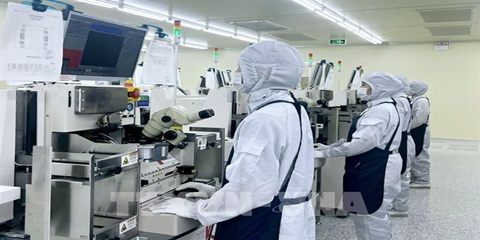
The growth of the electronics, semiconductor and high-tech sectors worldwide is opening up a variety of opportunities for Vietnamese enterprises to integrate more deeply into the global supply chain. However, to become suppliers for these corporations, domestic enterprises must meet rigorous standards regarding quality, technology, productivity and order fulfilment capabilities.
VIETNAM ECONOMY INVESTMENT
FOREIGN INVESTORS SEEKING A SYNCHRONISED MANUFACTURING ECOSYSTEM
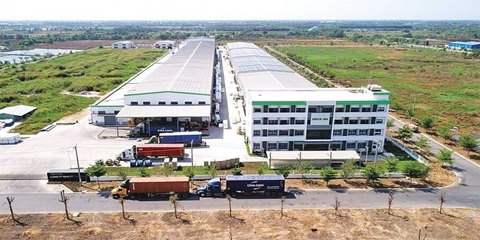
Instead of focusing only on land costs and incentives as usual, foreign investors are seeking a synchronised manufacturing ecosystem, from stable power supply and logistics to shared infrastructure and the convenience of completing residence procedures for experts to serve their long-term investment in the country.
MEMBER CORNER / PROMOTIONS
SENTRYSAFE FHW40200 – PROTECT YOUR VALUABLES, ENJOY PEACE OF MIND!
Looking for a reliable solution to protect your important documents, cash, and valuables from fire and water damage? Genuine SENTRYSAFE - Reliable protection for your valuables and peace of mind! Contact Sen Wai Vietnam for more information and personalized product recommendations.
PROPERTY / INDUSTRIAL ZONE
HCM CITY ATTRACTS US$5.7 BILLION INTO EXPORT PROCESSING AND INDUSTRIAL ZONES
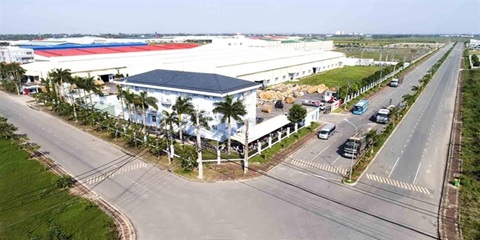
HCM City attracted US$5.7 billion in domestic and foreign investment into its export processing and industrial zones during the first nine months of 2026. The figure exceeded the city's full-year target by 31 per cent, highlighting strong momentum in high-quality industrial investment under Resolution No.10-NQ/TW. Total investment reached 131 per cent of the 2026 target of $4.25 billion and represented a 29 per cent increase compared with the same period in 2025, according to the city's Export Processing and Industrial Zones Authority (HEPZA).
INFRASTRUCTURE / CONSTRUCTION / LOGISTIC / PORT
DONG THAP PROVINCE STEPS UP INDUSTRIAL EXPANSION AND INFRASTRUCTURE CONNECTIVITY
Accelerating public investment, strengthening inter-regional connectivity, and expanding industrial land are helping Dong Thap efficiently bolster competitiveness and drive economic growth. Following the 2025 merger of the former Dong Thap and Tien Giang provinces, the expanded Dong Thap province in the Mekong Delta faces mounting pressure to accelerate infrastructure development and strengthen connectivity among local economic zones, urban areas, industrial parks (IPs), and production centres.
Events Sponsors






















