Want to be in the loop?
subscribe to
our notification
Business News
LOGISTICS EMERGES AS NEW GROWTH ENGINE FOR VIỆT NAM’S MARINE ECONOMY
There are currently 320 port terminals with a combined berth length of 102 kilometres, while cargo throughput reached 1.17 billion tonnes in 2025.
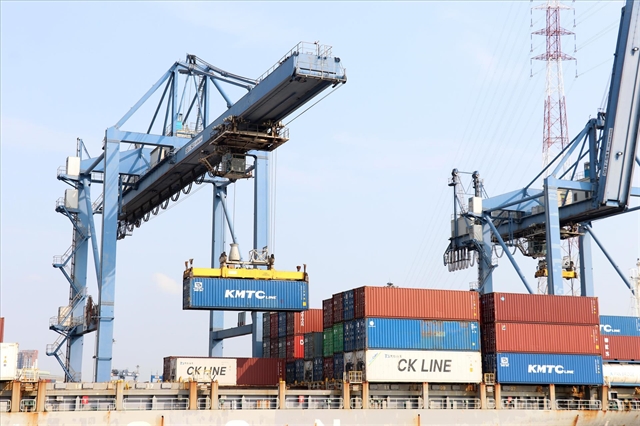
Cargo is handled at Tân Cảng Cát Lái in HCM City, Việt Nam's largest container port and one of the world's busiest ports by cargo throughput. — VNA/VNS Photo Tiến Lực
HÀ NỘI — As Việt Nam looks to tap the potential of its marine economy, logistics is increasingly emerging as a key driver of growth for coastal regions.
According to the Ministry of Agriculture and Environment, the marine economy currently contributes around 50 per cent of the country's gross regional domestic product (GRDP), with many coastal localities ranking among the nation's top performers in terms of income per capita.
The structure of the marine economy is also evolving.
While offshore oil and gas and fisheries remain important pillars, emerging sectors such as offshore renewable energy, industrial-scale aquaculture and maritime logistics are opening new opportunities for growth.
Among them, logistics is attracting growing attention as Việt Nam seeks to strengthen its position in regional and global supply chains.
The country's maritime sector has expanded rapidly in recent years. There are currently 320 port terminals with a combined berth length of 102 kilometres, while cargo throughput reached 1.17 billion tonnes in 2025.
The national fleet ranks tenth globally in cargo transport capacity, operating 1,434 vessels with a combined deadweight tonnage (DWT) of about 9.4 million tonnes.
Major ports such as Cát Lái and Cái Mép–Thị Vải have helped strengthen Việt Nam's position in regional supply chains. While Cát Lái has become the country's largest container port, Cái Mép–Thị Vải is among the few ports in the region capable of handling ultra-large container vessels and offering direct services to Europe and North America.
Experts say these assets provide a strong foundation for developing a modern logistics ecosystem capable of supporting trade, manufacturing and emerging marine industries.
Several coastal localities are already positioning logistics as a key pillar of their development strategies.
In Khánh Hòa Province, authorities are promoting plans to build a modern, green and smart logistics ecosystem centred on Vân Phong, Cam Ranh and major transport gateways.
The province aims to leverage its seaport system, Cam Ranh International Airport and links with the Central Highlands and south-central coastal region to become a logistics hub for central Việt Nam.
Huỳnh Tấn Hải, deputy director of the provincial Department of Industry and Trade, said the logistics development plan would help translate the province's marine economic ambitions into concrete projects while enhancing competitiveness and creating new growth momentum.
According to Hải, the strategy aims to develop a smart and sustainable logistics ecosystem that is aligned with digital transformation trends and deeper international economic integration.
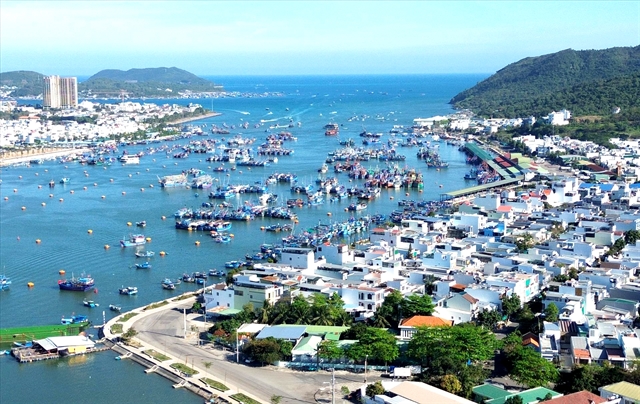
A coastal area in Khánh Hòa Province. The province aims to become a logistics hub for central Việt Nam as part of its long-term marine economic development strategy. — VNA/VNS Photo
Further south, HCM City is pursuing even bigger ambitions through the planned Cần Giờ International Transhipment Port, a project widely viewed as a strategic gateway for integrating Việt Nam more deeply into global shipping networks.
The US$5.45 billion port is designed to handle vessels of up to 250,000 DWT and process around 16.9 million TEU annually. When completed, it is expected to become one of the largest transhipment hubs in the region.
According to Lê Văn Danh, deputy director of the city's Department of Industry and Trade, HCM City is promoting the development of the Cái Mép–Thị Vải–Cần Giờ port cluster under a digital mega-port model to improve operational efficiency and strengthen the competitiveness of the logistics sector.
For the city, logistics is no longer simply a supporting service but a strategic industry that can reinforce its role as an international trade and transport hub.
Push from FTZs
The logistics push is also being reinforced by plans to establish free trade zones (FTZs) along the coastline.
Hải Phòng and Đà Nẵng have been at the forefront of efforts to pilot FTZ models associated with seaports and logistics services, while HCM City and Khánh Hòa are studying similar initiatives tied to the Cần Giờ and Vân Phong development plans.
Economists say such zones could transform ports from cargo-handling facilities into integrated logistics, manufacturing and services hubs capable of attracting global investment and generating higher-value economic activity.
Nguyễn Đình Hòa, an expert at the HCM City Institute for Economic and Management Research, said Việt Nam's logistics development reflected a broader shift in planning thinking, from fragmented local development towards regional connectivity and integration with international supply chains.
He pointed to the evolution of the southern port system, from the historic Sài Gòn Port to Cát Lái and later the Cái Mép–Thị Vải deep-water port complex, as evidence of increasingly coordinated regional planning.
According to Hòa, the planned Cần Giờ transshipment port could become another milestone, helping Việt Nam compete more effectively with established logistics hubs such as Singapore and Malaysia's Tanjung Pelepas.
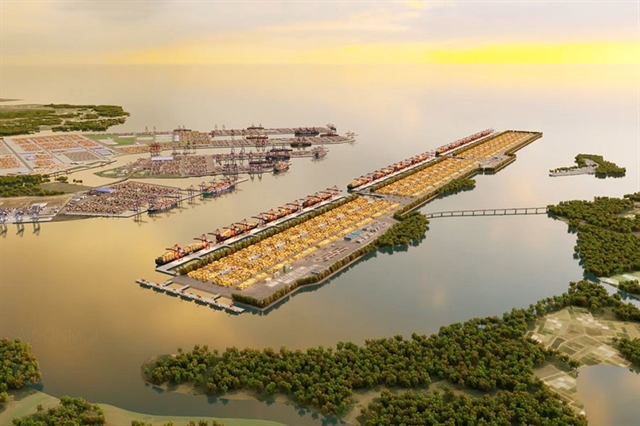
An artist's impression of the Cần Giờ International Transhipment Port. The project is expected to play a key role in HCM City's ambition to become an international logistics and maritime hub. — Photo courtesy of Portcoast
However, experts caution that infrastructure investment alone will not be enough.
A review by the Ministry of Agriculture and Environment found that current marine spatial planning regulations do not clearly allocate sea areas for specific activities such as offshore wind power, oil and gas development, aquaculture, tourism and maritime transport. The lack of clear zoning can create overlapping interests, increase investment risks and delay project implementation.
Vũ Mạnh Hùng, director general of the Department of Sectoral Economics under the Party Central Committee’s Policy and Strategy Commission, said future marine economic development would depend on a more integrated approach to marine governance, stronger legal frameworks and better coordination between ports, logistics centres, industrial zones and coastal cities.
According to analysts, the challenge now is to turn ambitious plans into an integrated logistics ecosystem that connects ports, industries and markets. If successful, logistics could help transform Việt Nam's coastline into a stronger driver of growth in the decades ahead. — VNS
Source: VNS
Related News

BANKING / FINANCE / INSURANCE / TAX
REMITTANCES TO HCM CITY RISE NEARLY 40% IN Q3
Remittances to HCM City reached more than US$2.83 billion in the third quarter of this year, up 39.5 per cent from the previous quarter and 3.6 per cent year-on-year. This was the first quarter showing positive annual growth this year, helping narrow the decline in remittance inflows over the first nine months. According to the State Bank of Vietnam (SBV)’s Regional Branch 2, remittances transferred to HCM City through credit institutions and economic organisations totalled $2.835 billion in Q3, an increase of more than $802 million from the previous quarter.
TECHNOLOGY
TECH SECTOR GROWTH OPENS UP OPPORTUNITIES FOR VIỆT NAM TO GO GLOBAL
The growth of the electronics, semiconductor and high-tech sectors worldwide is opening up a variety of opportunities for Vietnamese enterprises to integrate more deeply into the global supply chain. However, to become suppliers for these corporations, domestic enterprises must meet rigorous standards regarding quality, technology, productivity and order fulfilment capabilities.
VIETNAM ECONOMY INVESTMENT
FOREIGN INVESTORS SEEKING A SYNCHRONISED MANUFACTURING ECOSYSTEM
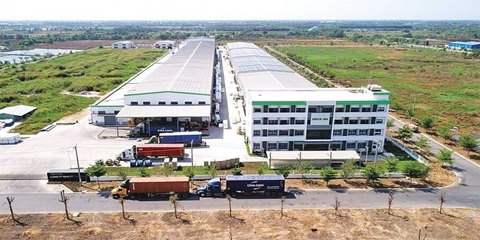
Instead of focusing only on land costs and incentives as usual, foreign investors are seeking a synchronised manufacturing ecosystem, from stable power supply and logistics to shared infrastructure and the convenience of completing residence procedures for experts to serve their long-term investment in the country.
MEMBER CORNER / PROMOTIONS
SENTRYSAFE FHW40200 – PROTECT YOUR VALUABLES, ENJOY PEACE OF MIND!
Looking for a reliable solution to protect your important documents, cash, and valuables from fire and water damage? Genuine SENTRYSAFE - Reliable protection for your valuables and peace of mind! Contact Sen Wai Vietnam for more information and personalized product recommendations.
PROPERTY / INDUSTRIAL ZONE
HCM CITY ATTRACTS US$5.7 BILLION INTO EXPORT PROCESSING AND INDUSTRIAL ZONES
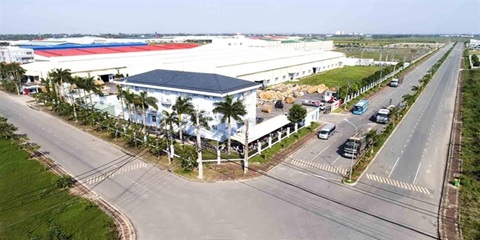
HCM City attracted US$5.7 billion in domestic and foreign investment into its export processing and industrial zones during the first nine months of 2026. The figure exceeded the city's full-year target by 31 per cent, highlighting strong momentum in high-quality industrial investment under Resolution No.10-NQ/TW. Total investment reached 131 per cent of the 2026 target of $4.25 billion and represented a 29 per cent increase compared with the same period in 2025, according to the city's Export Processing and Industrial Zones Authority (HEPZA).
INFRASTRUCTURE / CONSTRUCTION / LOGISTIC / PORT
DONG THAP PROVINCE STEPS UP INDUSTRIAL EXPANSION AND INFRASTRUCTURE CONNECTIVITY
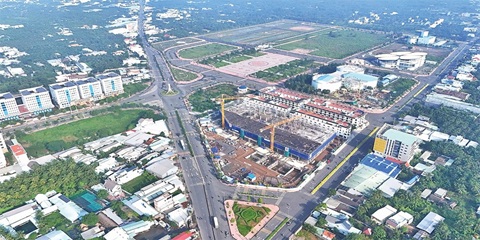
Accelerating public investment, strengthening inter-regional connectivity, and expanding industrial land are helping Dong Thap efficiently bolster competitiveness and drive economic growth. Following the 2025 merger of the former Dong Thap and Tien Giang provinces, the expanded Dong Thap province in the Mekong Delta faces mounting pressure to accelerate infrastructure development and strengthen connectivity among local economic zones, urban areas, industrial parks (IPs), and production centres.
Events Sponsors






















