Want to be in the loop?
subscribe to
our notification
Business News
LOGISTIC BOOMS WITH MILLION-DOLLAR DEALS, FOREIGN FIRMS LOOK TO SPREAD
The logistics market in Việt Nam is booming with million-dollar merger deals being signed and many foreign companies striving to increase market share.
But many local logistic companies are still thinking too small and are finding themselves suffering at the hands of bigger competitors.
Pieter Pennings, consulting director of CEL Consulting, said local businesses are feeling the pressure from larger, foreign companies.
He also believes Vietnamese companies need to expand their tech network in order to keep up with the competition.
Earlier this month, Singapore-based Symphony International Holdings spent US$42.6 million to buy 28.57 per cent of Indo Trans Logistics Joint Stock Company (ITL Corp) from Singapore Post.
Previously, the subsidiary of Japanese Sumitomo Group, SSJ Consulting, spent nearly $40 million to buy 10 per cent of voting shares in Vietnamese logistics firm Gemadept Corporation (Gemadept).
The transaction is expected to take place in the next two weeks. SSJ Consulting has two main shareholders, Sumitomo Group, holding 51 per cent and Japan Overseas Infrastructure Investment, holding 46 per cent.
At the 2019 Annual General Meeting of Shareholders, Gemadept approved the cancellation of a number of business lines with limit on foreign ownership under 49 per cent to welcome new foreign investors.
Logistics is defined as the pillar field of Gemadept. In 2018, Gemadept sold part of its ownership in two subsidiaries to South Korean firm CJ Logistics and collected about $125 million. In mid-2017, another South Korean firm Tae Kwang Industrial Group also offered to buy 51 per cent of Gemadept shares, with an expected value of $444 million.
Also during this time, there was another “silent and quiet” M&A deal, in which Best Inc, a global franchise company in the field of express delivery where Alibaba holds a minority stake, purchased VNC Post Company, from VinaCapital.
Symphony International Holdings, SSJ Consulting, Sumitomo Corporation, Best Inc, CJ Logistics are all well-known names in multi-industry investment in Asia. They obviously are eyeing logistics market shares in Việt Nam and in Southeast Asia.
Over the past 35 years, Symphony has been looking for opportunities to collaborate with exclusive suppliers in the region.
Investing in ITL Corp would benefit the company as the middle class is growing in Asia, Anil Thadani, Director of Symphony, told Đầu Tư (Investment) newspaper.
ILT Corp, established in 1999, has a wide network in the logistics industry in Việt Nam and is expanding to Cambodia, Laos, Myanmar and Thailand. ITL Corp provides aviation services, international transportation services, express delivery, e-commerce services and warehousing services with an international standard premise system of more than 150,000 sq.m nationwide.
In 2018, ITL Corp achieved a 50 per cent growth compared to 2017, three times higher than the average growth of the logistics industry. The company aims to develop cross-border e-commerce in the next five years.
Via the deal between Sumitomo and Gemadept, Sumitomo hopes to build a logistics system connecting factories to ports to serve the export of manufactured products.
Sumitomo will develop a mobile application that allows container drivers to pre-register the time of loading and unloading goods at ports and to handle other paperwork.
Gemadept currently owns six ports and accounts for more than 10 per cent of logistics market share in Việt Nam, while Sumitomo is managing three industrial parks in Hà Nội and a logistics facility in Việt Nam.
Sumitomo representative told Đầu Tư that an estimated 14 million containers of goods were transported to and from Việt Nam each year. With an average growth rate of 7 per cent per year, this figure could increase to 23 million containers by 2025 and logistics would become a promising sector in Việt Nam.
Local frailness
Vietnamese logistics businesses are under high competitive pressure, said Pieter Pennings, consulting director of CEL Consulting.
The country currently has more than 1,300 logistics enterprises, of which only a minority of 2 – 3 per cent are foreign firms, but they hold 70-80 per cent of the industry's market share.
Việt Nam logistics enterprises mostly provide small services, due to their weak capacity. Due to the large gap between service quality of Việt Nam and foreign firms, customers still choose to use the services of foreign providers, according to Pieter.
Foreign logistics enterprises can easily provide their services to large corporations because they can offer full-package logistics services, while local businesses only provide sporadic and disjointed services.
Especially, very few domestic firms own effective information technology systems compared to competitors from abroad.
The logistics industry is expected to account for 8-10 per cent of Việt Nam's GDP by 2025. Enterprises in the group of countries that are investing heavily in Việt Nam such as Japan, South Korea, China, Singapore and France will continue their investment more continuously.
According to Pennings, foreign investors will focus to expand their business horizontally (expanding the network) and vertically (expanding service packages, increasing the capacity of providing package services). However, the characteristics of Việt Nam’s industry sector may be different from the experience of investors and this is the parts that Vietnamese partners can support.
Source: VNS
Related News

MEMBER CORNER / PROMOTIONS
AN ELECTRIFYING NIGHT WITH THE "QUEEN OF DANCE" THU MINH AT THE GRAND HO TRAM!
The stage at The Grand Ballroom is set to catch fire as Vietnam’s undisputed "Queen of Dance," Thu Minh, takes the spotlight. Renowned for her powerhouse vocals, magnetic stage presence, and sultry, high-energy performances, Thu Minh promises an evening of pure musical euphoria. The energy escalates with an exclusive appearance by special guest and The Voice champion, Vu Thao My.

HR / LABOUR/ EMPLOYMENT
HIGH-QUALITY HUMAN RESOURCES NEEDED TO ATTRACT NEW TECH INVESTMENT CAPITAL
Besides infrastructure, Việt Nam must also rapidly develop a highly skilled workforce to attract investment in AI, semiconductors and advanced manufacturing, experts have said. Don Lam, CEO and co-founder of investment management company VinaCapital, said that global technology investors were increasingly looking at the readiness of the entire ecosystem, with high-quality human resources a decisive factor.

HR / LABOUR/ EMPLOYMENT
HIRING OUTLOOK STRENGTHENS IN Q4 AS SKILLS SHORTAGES PERSIST
Hiring intentions among employers in Việt Nam strengthened in the fourth quarter, with 52 per cent of surveyed companies planning to increase headcount between October and December, according to a ManpowerGroup survey released this week. Việt Nam's hiring outlook was stronger than the Asia Pacific and Middle East (APME) regional average of 33 per cent and the global average of 29 per cent, ranking third in the region and 11th globally among 42 markets surveyed.

BANKING / FINANCE / INSURANCE / TAX
LARGE BANKS FORECAST TO GAIN HIGHER PROFITABILITY IN H2 2026
The return on average assets (ROAA) of the banking sector will likely remain stable at around 1.5 per cent in the second half of 2026, but profitability divergence among banks will increase, with large banks outperforming peers on stronger margins and diversified earnings, analysts forecast. In a recent report on the banking sector, analysts from the Vietnam Investors Service Rating said the sector’s ROAA rose by 10 basis points quarter-on-quarter to 1.51 per cent in the first half of this year, driven by net interest margin (NIM) improvements at some State-owned banks and large private banks.
GARMENT / TEXTILE
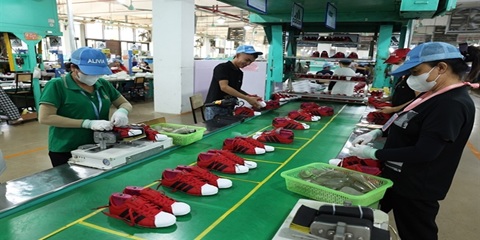
VIỆT NAM'S FOOTWEAR, BAG EXPORTS TO US TOP $8 BILLION IN EIGHT MONTHS
Việt Nam's exports of footwear and handbags to the US exceeded US$8 billion in the first eight months of 2026, as the US and EU remained the country's biggest markets despite sluggish growth in footwear shipments. Exports from Việt Nam's leather and footwear sector reached more than $2.45 billion in August, down 9 per cent from July but up 3 per cent from a year earlier, according to preliminary statistics.
VIETNAM ECONOMY INVESTMENT
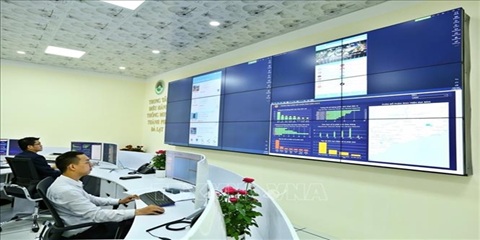
LÂM ĐỒNG TARGETS DIGITAL ECONOMY TO ACCOUNT FOR 30 PER CENT OF GRDP BY 2030
Lâm Đồng Province aims to raise the digital economy’s contribution to around 30 per cent of its gross regional domestic product (GRDP) by 2030, as part of a five-year plan to develop digital economy and society issued recently. Under Plan No. 15358/KH-UBND, the province targets more than 60 per cent of small- and medium-sized enterprises (SMEs) to adopt digital technologies by 2030 while increasing the value of cashless payments to 30 times its GRDP.
Events Sponsors






















