Want to be in the loop?
subscribe to
our notification
Business News
LOANS CENTRAL TO PUBLIC DEBT RESTRUCTURING
Deputy Prime Minister Le Minh Khai has signed and released Decision No.448/QD-TTg approving Vietnam’s programme on public debt management for 2022-2024 as well as a strategy on public debt borrowing and payments for the remainder of this year.
The prime target is to ensure sufficient loans via diversified sources of capital and borrowing models both at home and abroad, in order to meet the demand of balancing the state budget, including loans for implementing the fiscal policies in support of the nation’s Programme on Socioeconomic Development and Recovery.
The government also aims to “closely control debt safety norms, ensuring public debt stays within the limit permitted by the National Assembly,” said the decision.
Under Decision 448, total loans for the 2022-2024 period will be a maximum of $88.87 billion, including $83.78 billion for the central budget and $5.09 billion for refinancing. The total debt to be paid by the government in this period is estimated to be $48.52 billion, including direct payment of $42.21 billion and refinancing payment of $6.31 billion.
“It is necessary to take the initiative in debt payment with overdue debts not allowed to happen as it will affect the government’s international commitments,” read the decision.
In 2022 alone, the government will have to use $14.6 billion for debt payments. As for public debt borrowing and payment for this year, the government will borrow a maximum sum of $29.28 billion, including $28.12 billion for the central coffers and $1.16 billion for refinancing.
“The capital will be mobilised flexibly from government bond issuances with an average tenor of under nine years - if necessary, such bond issuances can be conducted with foreign currencies; from official development assistance and foreign concessional loans; and if necessary, capital can be borrowed from other legal financial sources or from government bond issuances for the State Bank of Vietnam,” said Decision 448.
Meanwhile, the government will this year pay a total debt of about $14.6 billion, including $13 billion for direct payment and $1.6 billion for debts in refinanced projects.
A number of high-profile international organisations have proposed support for the country to push up socioeconomic development.
In late March, World Bank vice president for East Asia and Pacific Manuela V. Ferro paid a five-day visit to Vietnam, reaffirming the institution’s commitment to supporting Vietnam in realising its goals of becoming a high-income economy by 2045 and reaching net-zero emissions by 2050.
“We are committed to working with Vietnam as it charts a renewed course towards ambitious development goals,” Ferro said. “Our partnership will focus on strategic areas that promote productivity-led, climate-resilient, inclusive growth, contributing to the World Bank’s global and local expertise.”
Ferro and Prime Minister Pham Minh Chinh also agreed to jointly produce a report, Vietnam 2045, that will offer pathways and solutions for Vietnam to realise its aspiration of becoming a high-income economy. The report will take stock of the pace of reforms laid out in 2016’s Vietnam 2035 roadmap, analyse how Vietnam’s economic trajectory has been affected by the pandemic and other global trends, and provide recommendations to inform policy reform discussions leading up to the 14th Party Congress, scheduled for 2026.
Meanwhile, the Asian Development Bank (ADB) has also been offering its support for Vietnam. It is offering two climate financing initiatives that provide highly concessional funds and support Vietnam’s accelerated replacement of coal with renewable energy.
Last year, the ADB also approved a $60 million financing package to improve the climate resilience of transport and water supply infrastructure in Vietnam’s south-central coastal provinces of Binh Dinh and Quang Nam, especially in remote upland districts with large ethnic minority communities. The package includes $58 million in regular ADB loans and a $2 million grant from its High-Level Technology Fund.
Source: VIR
Related News

MEMBER CORNER / PROMOTIONS
AN ELECTRIFYING NIGHT WITH THE "QUEEN OF DANCE" THU MINH AT THE GRAND HO TRAM!
The stage at The Grand Ballroom is set to catch fire as Vietnam’s undisputed "Queen of Dance," Thu Minh, takes the spotlight. Renowned for her powerhouse vocals, magnetic stage presence, and sultry, high-energy performances, Thu Minh promises an evening of pure musical euphoria. The energy escalates with an exclusive appearance by special guest and The Voice champion, Vu Thao My.

HR / LABOUR/ EMPLOYMENT
HIGH-QUALITY HUMAN RESOURCES NEEDED TO ATTRACT NEW TECH INVESTMENT CAPITAL
Besides infrastructure, Việt Nam must also rapidly develop a highly skilled workforce to attract investment in AI, semiconductors and advanced manufacturing, experts have said. Don Lam, CEO and co-founder of investment management company VinaCapital, said that global technology investors were increasingly looking at the readiness of the entire ecosystem, with high-quality human resources a decisive factor.

HR / LABOUR/ EMPLOYMENT
HIRING OUTLOOK STRENGTHENS IN Q4 AS SKILLS SHORTAGES PERSIST
Hiring intentions among employers in Việt Nam strengthened in the fourth quarter, with 52 per cent of surveyed companies planning to increase headcount between October and December, according to a ManpowerGroup survey released this week. Việt Nam's hiring outlook was stronger than the Asia Pacific and Middle East (APME) regional average of 33 per cent and the global average of 29 per cent, ranking third in the region and 11th globally among 42 markets surveyed.

BANKING / FINANCE / INSURANCE / TAX
LARGE BANKS FORECAST TO GAIN HIGHER PROFITABILITY IN H2 2026
The return on average assets (ROAA) of the banking sector will likely remain stable at around 1.5 per cent in the second half of 2026, but profitability divergence among banks will increase, with large banks outperforming peers on stronger margins and diversified earnings, analysts forecast. In a recent report on the banking sector, analysts from the Vietnam Investors Service Rating said the sector’s ROAA rose by 10 basis points quarter-on-quarter to 1.51 per cent in the first half of this year, driven by net interest margin (NIM) improvements at some State-owned banks and large private banks.
GARMENT / TEXTILE
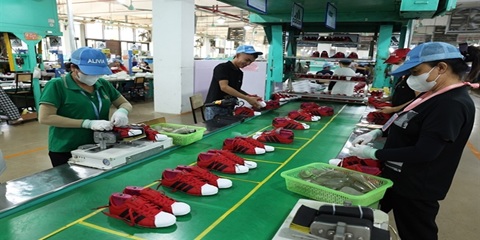
VIỆT NAM'S FOOTWEAR, BAG EXPORTS TO US TOP $8 BILLION IN EIGHT MONTHS
Việt Nam's exports of footwear and handbags to the US exceeded US$8 billion in the first eight months of 2026, as the US and EU remained the country's biggest markets despite sluggish growth in footwear shipments. Exports from Việt Nam's leather and footwear sector reached more than $2.45 billion in August, down 9 per cent from July but up 3 per cent from a year earlier, according to preliminary statistics.
VIETNAM ECONOMY INVESTMENT
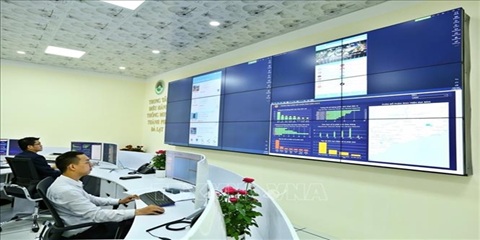
LÂM ĐỒNG TARGETS DIGITAL ECONOMY TO ACCOUNT FOR 30 PER CENT OF GRDP BY 2030
Lâm Đồng Province aims to raise the digital economy’s contribution to around 30 per cent of its gross regional domestic product (GRDP) by 2030, as part of a five-year plan to develop digital economy and society issued recently. Under Plan No. 15358/KH-UBND, the province targets more than 60 per cent of small- and medium-sized enterprises (SMEs) to adopt digital technologies by 2030 while increasing the value of cashless payments to 30 times its GRDP.
Events Sponsors






















