Want to be in the loop?
subscribe to
our notification
Business News
LENDING SLOWDOWN THREATENS TO DELAY REAL ESTATE RECOVERY
Commercial banks are taking a firm grip on lending activities, especially for the real estate sector.
Vietnam has witnessed a downward trend of credit growth in the beginning month of 2024, with lending decreasing by 0.33 per cent against the end of last year, as of March 18.
Phan Duc Tu, chairman of BIDV’s Board of Directors, said, “Over the first 80 days of 2024, BIDV has disbursed loans totalling $18.95 billion to the economy. However, the figure is lower than its debt repayment of $19.55 billion. As of March 11, the bank’s outstanding balance contracted approximately 1 per cent compared with the end of 2023.”
Nguyen Duc Vinh, CEO of VPBank, reported a similar trend. “VPBank has more than 40,000 enterprises, with a credit limit of $9.67 billion. However, currently, only over $2.42 billion has been disbursed due to various reasons,” he said.
Agribank chairman Pham Duc An said, “After the first three months of 2024, Agribank’s income and expenditure gap decreased by $80.6 million compared with the same period last year.”
There are several reasons behind the slowdown in lending. Among them, corporate customers are qualified for loans, but they do not have manufacturing plans or good consumption markets. The collateral mechanism lacks flexibility. Furthermore, there is no guarantee from regulatory bodies when providing loans to businesses suffering losses.
In the real estate sector, the hottest segment for bank loans, debt servicing capacity will remain weak even as cash flow improves due to high leverage and substantial debt maturities in 2024. The sector’s debt/earnings before interest, taxes, depreciation, and amortisation ratio rose to 8.7-fold in 2023 from 7-fold a year ago, as debt growth surpassed profit growth, according to a report released by VIS Rating last week.
The report noted that around $5.24 billion worth of developer-issued bonds are maturing in 2024, the highest level in the last five years. Developers who are embroiled in legal issues and/or speculative projects are the most at risk of poor sales and cash proceeds, weak debt coverage, and defaults, and hence, are most in need of refinancing.
Phan Thi Van Anh, director and senior analyst of VIS Rating, said, “The banking sector’s capital level will generally move sideways in 2024. Only a few banks have announced plans to increase capital. In general, the capital adequacy ratio of the banking sector will remain at a low level of about 11-12 per cent.”
“The bad debt coverage ratio of small- and medium-sized private banks will be lower than the sector’s average. The main reason is that it takes longer to improve the provision ratio after a sharp decline in asset quality in 2023,” she added.
In addition, the State Bank of Vietnam (SBV) has recently drafted a number of amendments to current circulars on operational safety ratios and on lending activities to be consistent with the Law on Credit Institutions.
Nguyen Thu Ha, deputy director of SSI Investment Consulting and Development Center, said, “The amendments show SBV’s determination in keeping a strict management perspective on the lending activities for borrowers whose purpose is to make deposits under land/project transferring contract. Accordingly, the clause on putting such disbursement into an escrow account was kept unchanged in the new draft, opposing developer requests.”
There were also stricter requirements on disclosing related parties in the loan contract to address the issue of related lending activities, Ha added.
“These are in line with our expectations that one of the key focuses of the SBV going forward would be mitigating related lending activities to ensure the system’s safety. Although the purpose of this clause is clear, effective enforcement essentially hinges on both the truthful statements of the borrowers, as well as the time and effort banks spend during the verification processes,” Ha said.
Source: VNS
Related News

BANKING / FINANCE / INSURANCE / TAX
REMITTANCES TO HCM CITY RISE NEARLY 40% IN Q3
Remittances to HCM City reached more than US$2.83 billion in the third quarter of this year, up 39.5 per cent from the previous quarter and 3.6 per cent year-on-year. This was the first quarter showing positive annual growth this year, helping narrow the decline in remittance inflows over the first nine months. According to the State Bank of Vietnam (SBV)’s Regional Branch 2, remittances transferred to HCM City through credit institutions and economic organisations totalled $2.835 billion in Q3, an increase of more than $802 million from the previous quarter.

TECHNOLOGY
TECH SECTOR GROWTH OPENS UP OPPORTUNITIES FOR VIỆT NAM TO GO GLOBAL
The growth of the electronics, semiconductor and high-tech sectors worldwide is opening up a variety of opportunities for Vietnamese enterprises to integrate more deeply into the global supply chain. However, to become suppliers for these corporations, domestic enterprises must meet rigorous standards regarding quality, technology, productivity and order fulfilment capabilities.
VIETNAM ECONOMY INVESTMENT
FOREIGN INVESTORS SEEKING A SYNCHRONISED MANUFACTURING ECOSYSTEM
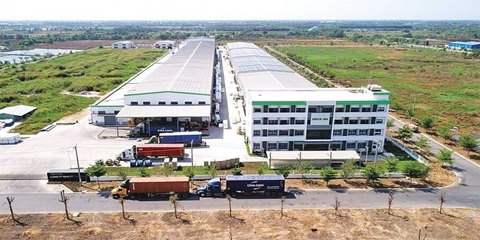
Instead of focusing only on land costs and incentives as usual, foreign investors are seeking a synchronised manufacturing ecosystem, from stable power supply and logistics to shared infrastructure and the convenience of completing residence procedures for experts to serve their long-term investment in the country.
MEMBER CORNER / PROMOTIONS
SENTRYSAFE FHW40200 – PROTECT YOUR VALUABLES, ENJOY PEACE OF MIND!
Looking for a reliable solution to protect your important documents, cash, and valuables from fire and water damage? Genuine SENTRYSAFE - Reliable protection for your valuables and peace of mind! Contact Sen Wai Vietnam for more information and personalized product recommendations.
PROPERTY / INDUSTRIAL ZONE
HCM CITY ATTRACTS US$5.7 BILLION INTO EXPORT PROCESSING AND INDUSTRIAL ZONES
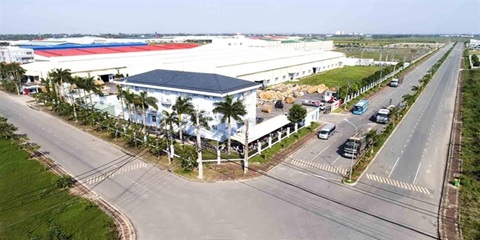
HCM City attracted US$5.7 billion in domestic and foreign investment into its export processing and industrial zones during the first nine months of 2026. The figure exceeded the city's full-year target by 31 per cent, highlighting strong momentum in high-quality industrial investment under Resolution No.10-NQ/TW. Total investment reached 131 per cent of the 2026 target of $4.25 billion and represented a 29 per cent increase compared with the same period in 2025, according to the city's Export Processing and Industrial Zones Authority (HEPZA).
INFRASTRUCTURE / CONSTRUCTION / LOGISTIC / PORT
DONG THAP PROVINCE STEPS UP INDUSTRIAL EXPANSION AND INFRASTRUCTURE CONNECTIVITY
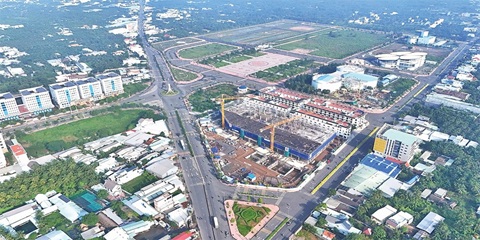
Accelerating public investment, strengthening inter-regional connectivity, and expanding industrial land are helping Dong Thap efficiently bolster competitiveness and drive economic growth. Following the 2025 merger of the former Dong Thap and Tien Giang provinces, the expanded Dong Thap province in the Mekong Delta faces mounting pressure to accelerate infrastructure development and strengthen connectivity among local economic zones, urban areas, industrial parks (IPs), and production centres.
Events Sponsors






















