Want to be in the loop?
subscribe to
our notification
Business News
LEGAL STANDING INCREASED WITH ENTERPRISE LAW
As the new Law on Enterprises comes with comprehensive adjustments to the issuance of shares, preferential rights for existing shareholders, and simplifies participation of foreign players in the market, experts predict a much more dynamic business environment in the years to come.
The new Law on Enterprises 2020 has come into effect on January 1, with positive changes expected to help protect the rights and interests of investors as well as create a basis to attract foreign investment flows and support businesses in Vietnam.
Le Van Luong, deputy head of the Analysis and Investment Advisory Department at Bao Viet Securities Company, commented that compared to the old version of the law, the new one has removed the provision that shareholders must hold their shares for at least six consecutive months to use several rights.
The change allows shareholders to immediately exercise their legitimate rights, avoiding a situation where the management board of a company can take advantage of the 6-month timeframe and possibly harm the interests of shareholders.
In its Article 115, the Law on Enterprises 2020 also grants additional rights to groups of shareholders owning more than 5 per cent of the common shares, previously only granted to those who own more than 10 per cent of the shares.
This, Luong said, will “increase the ability of shareholders to supervise the company’s operations and help businesses increase their efficiency and transparency.”
Luong noted several points of Article 128, which stipulate that only strategic and professional investors can participate in purchasing bonds issued in separate issuances.
“The new law is expected to help the Vietnamese stock market solve problems with the participation of foreign investors and economic organisations, thereby helping the country reach the status of an emerging market soon,” Luong explained.
To solve issues related to accessing foreign investment capital for stocks that have run out due to conditional business lines, the Law on Enterprises now contains provisions on non-voting depository receipts, which help foreign investors buy more shares in Vietnamese companies without raising their power.
Holistic adjustments
When the new law had been published, Luong found that Article 195.3 prohibits subsidiaries of the same parent company, which is 65 per cent owned by the state, from jointly purchasing shares from another company. “This will create difficulties in investing in those subsidiaries’ shares and requires them to stay well informed to avoid violating this regulation,” Luong said.
The Investment and Trade Working Group of the Vietnam Business Forum 2020 (VBF) found that the new law retains the requirement that charter capital in cash must be contributed within 90 days of business establishment. However, for in-kind and asset contributions, the 90-day timeframe may not include the time required for transportation, import, and other administrative proceedings.
In addition, investors will have rights and obligations corresponding to the committed capital contribution from the date of establishment to the last day of the statutory capital contribution period.
If an investor does not contribute the committed capital, he/she will only have the rights corresponding to the contributed amount or will automatically cease to be a member of the company.
The working group of the VBF proposed the government to provide additional guidance on the deadlines for in-kind contributions. For example, the decree guiding the implementation of the new Law on Enterprises may require that in-kind contributions are made within a reasonable time, as agreed by investors after notifying the licensing authority.
Furthermore, the new law stipulates that the existing shareholders of a joint-stock company (JSC) will have a pre-emptive right to newly issued shares in the form of a private placement, except in the case of a merger. This means that it will be necessary to agree to relinquish the pre-buying privilege of all existing shareholders to issue new shares privately.
In that case, it seems that the above waiver consent may have to be included in the application for the increase of charter capital as a private offering, which would become a burden for JSCs wishing to add capital and new investors through private placements.
Besides this, there would be no difference between the issuance of shares to existing shareholders and a private placement if the pre-emptive rights were granted to existing shareholders in both cases.
“We recommend clarifying that a JSC can make an individual offering upon approval by the general meeting of shareholders instead of having to ask for the approval of each shareholder,” the VBF’s working group suggested.
Enabling environment
The Law on Enterprises may not include major changes in administrative procedures like the previous laws from 1999, 2005, and 2014, but the new law moves further in the direction of improving the legal framework, helping Vietnamese corporate governance conform with the high global standards.
Dau Anh Tuan, director of the Vietnam Chamber of Commerce and Industry’s Department of Legislation, said that the new law includes positive changes. The regulations continue to simplify market entry procedures, especially by creating a foundation for these to be interconnected between different groups.
According to Tuan, “the most important change of the Law on Enterprises aims to enhance the quality of corporate governance in Vietnam.”
While previous laws focused on removing barriers to market entry, the new one focuses on strengthening corporate governance, with many changes such as increasing minority shareholder rights.
While in the past, 10 per cent of ownership was required for a minority shareholder to request corporate governance documents, now this ratio was dropped to 5 per cent. That means shareholders with less capital will have more power, which Tuan thinks “is a positive change, contributing to the quality of Vietnamese corporate governance and protecting shareholders with less capital who then may put more money into the company.”
As the new laws on enterprises and investment have come into effect, “it is very important to note that the guiding documents and decrees for these two laws have not been passed yet,” he emphasised, as he pointed out that such decrees are critical in the implementation process. Nevertheless, he expected that both laws will foster a more favourable business environment.
The Law on Enterprises continues to liberate doing business in Vietnam as stipulated in the 2013 Constitution, following the spirit that citizens can invest and do business in all legal professions.
Source: VIR
Related News

BANKING / FINANCE / INSURANCE / TAX
REMITTANCES TO HCM CITY RISE NEARLY 40% IN Q3
Remittances to HCM City reached more than US$2.83 billion in the third quarter of this year, up 39.5 per cent from the previous quarter and 3.6 per cent year-on-year. This was the first quarter showing positive annual growth this year, helping narrow the decline in remittance inflows over the first nine months. According to the State Bank of Vietnam (SBV)’s Regional Branch 2, remittances transferred to HCM City through credit institutions and economic organisations totalled $2.835 billion in Q3, an increase of more than $802 million from the previous quarter.

TECHNOLOGY
TECH SECTOR GROWTH OPENS UP OPPORTUNITIES FOR VIỆT NAM TO GO GLOBAL
The growth of the electronics, semiconductor and high-tech sectors worldwide is opening up a variety of opportunities for Vietnamese enterprises to integrate more deeply into the global supply chain. However, to become suppliers for these corporations, domestic enterprises must meet rigorous standards regarding quality, technology, productivity and order fulfilment capabilities.

VIETNAM ECONOMY INVESTMENT
FOREIGN INVESTORS SEEKING A SYNCHRONISED MANUFACTURING ECOSYSTEM
Instead of focusing only on land costs and incentives as usual, foreign investors are seeking a synchronised manufacturing ecosystem, from stable power supply and logistics to shared infrastructure and the convenience of completing residence procedures for experts to serve their long-term investment in the country.
MEMBER CORNER / PROMOTIONS
SENTRYSAFE FHW40200 – PROTECT YOUR VALUABLES, ENJOY PEACE OF MIND!
Looking for a reliable solution to protect your important documents, cash, and valuables from fire and water damage? Genuine SENTRYSAFE - Reliable protection for your valuables and peace of mind! Contact Sen Wai Vietnam for more information and personalized product recommendations.
PROPERTY / INDUSTRIAL ZONE
HCM CITY ATTRACTS US$5.7 BILLION INTO EXPORT PROCESSING AND INDUSTRIAL ZONES
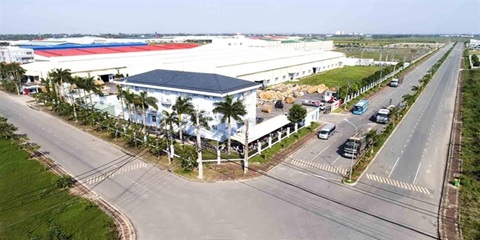
HCM City attracted US$5.7 billion in domestic and foreign investment into its export processing and industrial zones during the first nine months of 2026. The figure exceeded the city's full-year target by 31 per cent, highlighting strong momentum in high-quality industrial investment under Resolution No.10-NQ/TW. Total investment reached 131 per cent of the 2026 target of $4.25 billion and represented a 29 per cent increase compared with the same period in 2025, according to the city's Export Processing and Industrial Zones Authority (HEPZA).

INFRASTRUCTURE / CONSTRUCTION / LOGISTIC / PORT
DONG THAP PROVINCE STEPS UP INDUSTRIAL EXPANSION AND INFRASTRUCTURE CONNECTIVITY
Accelerating public investment, strengthening inter-regional connectivity, and expanding industrial land are helping Dong Thap efficiently bolster competitiveness and drive economic growth. Following the 2025 merger of the former Dong Thap and Tien Giang provinces, the expanded Dong Thap province in the Mekong Delta faces mounting pressure to accelerate infrastructure development and strengthen connectivity among local economic zones, urban areas, industrial parks (IPs), and production centres.
Events Sponsors






















