Want to be in the loop?
subscribe to
our notification
Business News
LAWMAKERS APPROVE LAW ON DIGITAL TECHNOLOGY INDUSTRY
The National Assembly passed the Law on Digital Technology Industry at its ongoing 9th sitting held in Ha Noi on Saturday.
With this move, Viet Nam has become the first country in the world to enact a standalone law specifically dedicated to digital technology industry, according to the Ministry of Science and Technology whish is responsible for drafting the law,
The law, scheduled to take effect on January 1, 2026, is expected to promote the national digital transformation process, paving the way for domestic tech enterprises to grow sustainably, integrate deeply into the global market, and contribute to establishing a new position for Vietnam on the world stage.
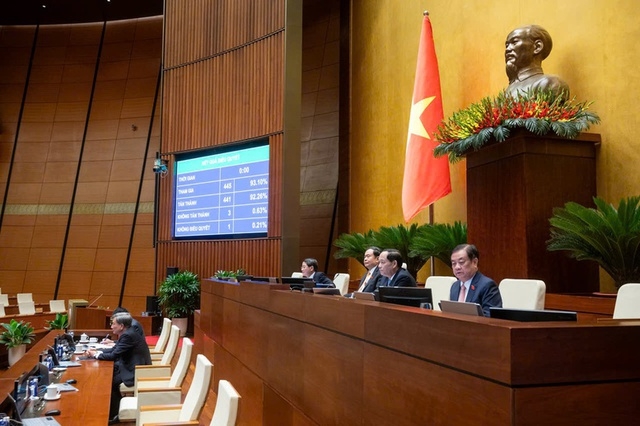
The law focuses on increasing the proportion of domestically produced technology products through strategic measures and targeted support policies.
Foreign-invested enterprises are encouraged to transfer technology and collaborate with local companies, with incentives such as multi-year corporate income tax reductions if they meet these criteria.
Domestic startups are eligible for support covering 50 percent of the costs for acquiring advanced technologies and developing prototypes, aimed at enhancing their capacity to produce "Make in Viet Nam" products.
Notably, the government will establish a network of representatives for Viet Nam's digital technology industry in key global markets, in coordination with international cooperation programs to support Vietnamese enterprises in gradually evolving into multinational companies, capable of competing on equal footing with major global tech corporations.
With the goal of building a robust digital technology enterprise ecosystem and reaching 150,000 businesses by 2035, the law introduces a comprehensive set of support policies. Small and medium-sized enterprises will receive assistance with infrastructure investment costs, training of high-quality human resources, and will be given priority in bidding for public procurement projects.
In terms of finance, the government will provide investment capital for special projects and funding for technological innovation, helping businesses enhance their creativity and competitiveness.
Digital technology production projects and supporting enterprises will enjoy tax incentives similar to those in specially disadvantaged areas, while foreign investment will be facilitated to strengthen production capacity.
The development of dedicated digital technology zones with attractive incentive policies will create an enabling environment for startups and sustainable growth, contributing to the realization of this strategic goal.
The law implements comprehensive solutions and policies for workforce development. High-quality digital technology professionals will be exempted from personal income tax for the first five years of working in Viet Nam, providing a strong financial incentive for long-term contributions.
Foreign experts will be granted five-year visas and exempted from work permit requirements, which is expected to simplify administrative procedures and attract international talent to facilitate technology transfer and knowledge sharing.
The law is grounded in principles that put people at the center, ensuring transparency, safety, and non-discrimination. It requires that artificial intelligence (AI) systems remain under human oversight. AI is categorized into high-risk, high-impact, and non-high-risk groups, with high-risk systems subject to strict technical standards and rigorous monitoring.
In addition, to harness the vast economic potential of digital assets while ensuring transparency, security, and compliance with international standards, the law introduces, for the first time, a definition and legal framework for digital assets, which include both tokenized and virtual assets and are classified based on their intended use and technology, thereby establishing a clear legal foundation for their management and regulation.
The same day, the National Assembly also adopted Law on Corporate Income Tax, Excise Tax Law, Law on Management and Investment of State Capital in Enterprises, and Law amending and supplementing a number of articles of the Law on Standards and Technical Regulations.
Source: VCCI
Related News

CHARITY / EXHIBITION / OTHER EVENTS
INVESTMENT OPPORTUNITIES IN CA MAU PROVINCE: 96 PROJECTS AND 20 STRATEGIC PROJECTS
We are pleased to share with you information on investment projects currently seeking investors in Ca Mau Province. Should your esteemed company or association be interested, we kindly invite you to review the project information and complete the registration form via the links provided. The Ho Chi Minh City Investment and Trade Promotion Centre (ITPC) will consolidate the expressions of interest and facilitate connections with the leadership of Ca Mau Province at a meeting tentatively scheduled for 13 November 2026 in Ho Chi Minh City.

MEMBER CORNER / PROMOTIONS
BẰNG KIỀU LIVESHOW - A SYMPHONY OF LOVE UNDER THE GOLDEN GLOW
A masterclass in live music that takes the audience on a soulful journey through immortal love songs, guided by the peerless artistry and emotive storytelling of renowned singer Bằng Kiều. The highlight of the night is his seamless musical chemistry with special guest Triệu Hồng Ngọc, promising passionate and deeply resonant duets inside the magnificent Grand Ballroom.
INFRASTRUCTURE / CONSTRUCTION / LOGISTIC / PORT
ĐÀ NẴNG GREEN-LIGHTS US$105 MILLION THAI DEVELOPMENT DEAL
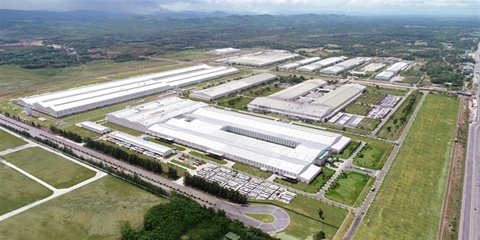
The central city has approved an investment proposal by Thailand’s WHA Group to develop infrastructure for the 400ha WHA Đà Nẵng Industrial Park project on two communes of Thăng Bình and Đồng Dương, with an investment of more than VNĐ2.7 trillion (US$105 million). The city said it approved WHA Industrial Development International's status as an investor in the project, which is expected to take place between 2027 and 2034.

VIETNAM ECONOMY INVESTMENT
MOBILE PHONE EXPORTS RISE 20% TO $51.8 BILLION IN FIRST NINE MONTHS
Exports of mobile phones and components rose 20 per cent year-on-year to nearly US$51.8 billion in the first nine months of 2026, with China, the US and Republic of Korea accounting for more than half of the total. Shipments to the three markets reached a combined $26.18 billion, or 50.6 per cent of total exports of the product group during the period, according to data from the Vietnam Department of Customs under the Ministry of Finance.

INFRASTRUCTURE / CONSTRUCTION / LOGISTIC / PORT
VIỆT NAM-CAMBODIA TRADE GATHERS PACE TOWARDS $20 BILLION TARGET
Trade between Việt Nam and Cambodia continues to grow, remaining a bright spot and a key pillar of bilateral cooperation as the two countries aim to raise two-way trade to US$20 billion in the coming years. After setting a record of more than $11.3 billion last year, bilateral trade reached about $8.7 billion in the first eight months of this year, up 8.3 per cent year on year.

VIETNAM ECONOMY INVESTMENT
FRUIT AND VEGETABLE EXPORTS POISED TO HIT $10 BILLION IN 2026
Fruit and vegetable exports are on track to reach nearly US$10 billion in 2026, after rising 19.9 per cent year on year to nearly US$7.4 billion in the first nine months, driven by strong seasonal demand and abundant tropical fruit supplies. The Ministry of Agriculture and Environment said the growth reflected stronger international demand for fresh produce and processed agricultural products.
Events Sponsors






















