Want to be in the loop?
subscribe to
our notification
Business News
LARGE INDUSTRIAL ZONES SET UP TO ATTRACT FDI
Several large-scale industrial zones were being set up from the beginning of this year to capture the opportunity of attracting both foreign and domestic manufacturers in the wave of post-pandemic production and business recovery.
VSIP Group, at the end of March, started the construction of the VSIP 3 Industrial Zone, which covered more than 1,000 hectares in Hoi Nghia Commune, Tan Uyen Town and Tan Lap Commune, Bac Tan Uyen District, Binh Duong Province
To date, the industrial zone attracted more than 30 companies, both domestic and foreign, to study the production opportunity, with an expected total investment of around US$1.8 billion.
Recently, the Dai An Urban – Industrial Zone Development Corporation Joint Stock Company and Indian partners signed a cooperation agreement for developing a 960-hectare pharmaceutical park project worth around $10-12 billion in Hai Duong Province.
The park was expected to be where famous pharmaceutical companies in the world gathered for research and production.
Saigon Telecom Technology Joint Stock Company (Saigontel) and VinaCapital signed a memorandum of understanding with Singapore – based Aurous about cooperation in investing in a 700-ha urban–industry complex in Bac Giang with an estimated investment of around $2.5 billion.
According to SSI Research, the demand for hiring industrial land will be strong this year, fuelled by a production shift to Viet Nam together with the completion of infrastructure projects such as Bien Hoa – Vung Tau, Dau Giay – Phan Thiet, North-South expressways, Thi Vai – Cai Mep and Gemalink ports.
SSI Research forecast that industrial land rents in Viet Nam would increase by 8-9 per cent in the Southern region and 6-8 per cent in the North this year due to a scarcity of supply amid the rising demand.
Su Ngoc Khuong, senior director of Savills Viet Nam, said that the positive growth prospect of the Vietnamese economy after the pandemic attracted investors and created conditions for the industrial real estate market to be robust in the first months of this year.
To attract multinational corporations, Viet Nam needed to develop not only large-scale industrial parks but also the transportation and logistics infrastructure systems and hasten administrative reforms to improve the investment climate, Khuong said.
Localities and Vietnamese firms need to prepare high-quality human resources, especially for hi-tech industries, to meet the demand of multinational corporations, an important factor to attract them, as the Government prioritises attracting investment in hi-tech industries, not labour-intensive.
According to David Jackson, CEO of Colliers Viet Nam, Viet Nam needed to renew the industrial park development model to build eco-industrial parks.
This model would play an important role in the sustainable development strategy, reducing resource exploitation and limiting the impact on the environment but not affecting the performance of businesses, adding that this model would also contribute to the countries and global effort to combat climate change.
Specific steps to be taken were to improve the technology transfer capacity of enterprises, apply advanced technologies and minimise emissions, he added.
He said that industrial zones should enhance linkage to develop production and logistics chains to improve competitiveness, lower production costs and increase sustainability.
Source: VIR
Related News

CHARITY / EXHIBITION / OTHER EVENTS
INVESTMENT OPPORTUNITIES IN CA MAU PROVINCE: 96 PROJECTS AND 20 STRATEGIC PROJECTS
We are pleased to share with you information on investment projects currently seeking investors in Ca Mau Province. Should your esteemed company or association be interested, we kindly invite you to review the project information and complete the registration form via the links provided. The Ho Chi Minh City Investment and Trade Promotion Centre (ITPC) will consolidate the expressions of interest and facilitate connections with the leadership of Ca Mau Province at a meeting tentatively scheduled for 13 November 2026 in Ho Chi Minh City.

MEMBER CORNER / PROMOTIONS
BẰNG KIỀU LIVESHOW - A SYMPHONY OF LOVE UNDER THE GOLDEN GLOW
A masterclass in live music that takes the audience on a soulful journey through immortal love songs, guided by the peerless artistry and emotive storytelling of renowned singer Bằng Kiều. The highlight of the night is his seamless musical chemistry with special guest Triệu Hồng Ngọc, promising passionate and deeply resonant duets inside the magnificent Grand Ballroom.
INFRASTRUCTURE / CONSTRUCTION / LOGISTIC / PORT
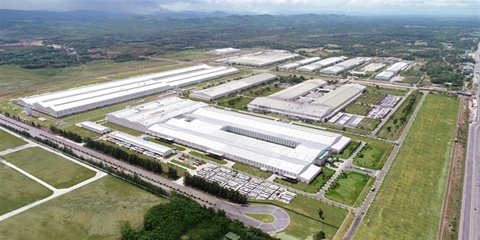
ĐÀ NẴNG GREEN-LIGHTS US$105 MILLION THAI DEVELOPMENT DEAL
The central city has approved an investment proposal by Thailand’s WHA Group to develop infrastructure for the 400ha WHA Đà Nẵng Industrial Park project on two communes of Thăng Bình and Đồng Dương, with an investment of more than VNĐ2.7 trillion (US$105 million). The city said it approved WHA Industrial Development International's status as an investor in the project, which is expected to take place between 2027 and 2034.
VIETNAM ECONOMY INVESTMENT
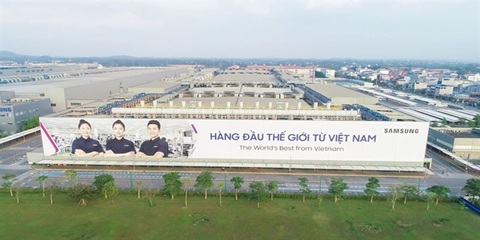
MOBILE PHONE EXPORTS RISE 20% TO $51.8 BILLION IN FIRST NINE MONTHS
Exports of mobile phones and components rose 20 per cent year-on-year to nearly US$51.8 billion in the first nine months of 2026, with China, the US and Republic of Korea accounting for more than half of the total. Shipments to the three markets reached a combined $26.18 billion, or 50.6 per cent of total exports of the product group during the period, according to data from the Vietnam Department of Customs under the Ministry of Finance.
INFRASTRUCTURE / CONSTRUCTION / LOGISTIC / PORT
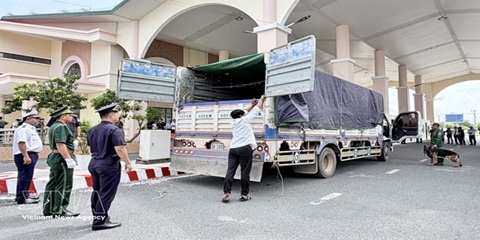
VIỆT NAM-CAMBODIA TRADE GATHERS PACE TOWARDS $20 BILLION TARGET
Trade between Việt Nam and Cambodia continues to grow, remaining a bright spot and a key pillar of bilateral cooperation as the two countries aim to raise two-way trade to US$20 billion in the coming years. After setting a record of more than $11.3 billion last year, bilateral trade reached about $8.7 billion in the first eight months of this year, up 8.3 per cent year on year.
VIETNAM ECONOMY INVESTMENT
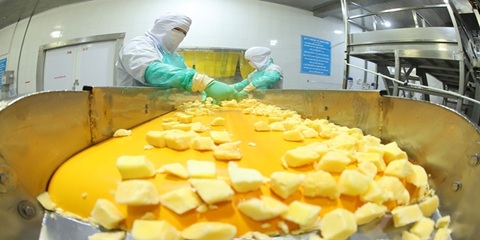
FRUIT AND VEGETABLE EXPORTS POISED TO HIT $10 BILLION IN 2026
Fruit and vegetable exports are on track to reach nearly US$10 billion in 2026, after rising 19.9 per cent year on year to nearly US$7.4 billion in the first nine months, driven by strong seasonal demand and abundant tropical fruit supplies. The Ministry of Agriculture and Environment said the growth reflected stronger international demand for fresh produce and processed agricultural products.
Events Sponsors






















