Want to be in the loop?
subscribe to
our notification
Business News
LÂM ĐỒNG BUILDS TRANSPORT INFRASTRUCTURE AS FOUNDATION FOR GROWTH
Following last year's provincial mergers, Lâm Đồng has become Việt Nam’s largest province by area, opening up significant development potential across industry, agriculture, tourism, services and the marine economy.
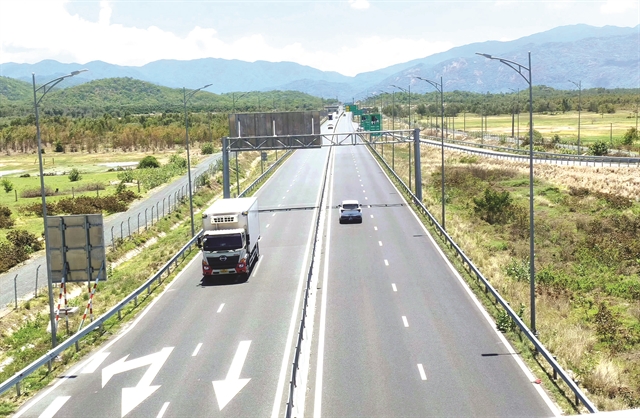
The Vĩnh Hảo–Phan Thiết Expressway through eastern Lâm Đồng Province strengthens regional connectivity, shortens travel times and supports socio-economic development. — VNA/VNS Photo
LÂM ĐỒNG — With its mountains, highlands and long coastline brought together under one administrative roof, the enlarged Lâm Đồng is now Việt Nam’s largest province by area – and a place where stronger transport links could help turn its diverse economic strengths into a more integrated engine of growth.
Against this backdrop, the province is prioritising an integrated transport network to strengthen regional connectivity, expand development space and lay the foundation for sustainable socio-economic growth.
According to the provincial Department of Construction, the enlarged Lâm Đồng stretches from the former Đắc Nông Province in the Central Highlands to the former Bình Thuận Province on the south-central coast, and is now served by all four major modes of transport: road, railway, waterway and aviation.
Road transport remains the backbone of the network, with more than 22,582 kilometres of roads, including nearly 180km of expressways in operation, more than 1,459km of national highways and over 1,521km of provincial roads, alongside extensive urban, commune and rural networks.
The system has gradually improved connections among agricultural production areas, industrial parks, urban centres, seaports, border gates and tourism destinations, facilitating the movement of goods and supporting economic development.
In 2026, the province is concentrating resources on major transport projects aimed at strengthening inter-regional links.
Key projects include the Tân Phú–Bảo Lộc and Bảo Lộc–Liên Khương expressways, as well as the Gia Nghĩa–Chơn Thành section of the western North–South Expressway.
Once completed, the routes are expected to shorten travel and freight transport times between the Central Highlands and the southern key economic region, lower logistics costs and improve competitiveness.
They are also expected to attract greater investment in processing industries, high-tech agriculture, tourism and services.
Accelerating construction
Construction preparations for the Tân Phú–Bảo Lộc and Bảo Lộc–Liên Khương expressways are being accelerated, with investors and contractors mobilising workers and equipment so work can expand as soon as cleared land becomes available.
Twenty construction fronts have been established across the two projects.
The Tân Phú–Bảo Lộc Expressway has seven construction fronts, with 110 workers and 68 pieces of equipment mobilised.
So far, 111 hectares out of the required 402ha have been handed over, equivalent to 27 per cent.
The Bảo Lộc–Liên Khương Expressway has 13 construction fronts, involving 149 workers and 75 pieces of equipment. Land handover has reached 471ha out of 621ha, or nearly 76 per cent.
During a recent inspection, Vice Chairman of the provincial People’s Committee Nguyễn Hồng Hải asked local authorities to work closely with investors and the Land Fund Development Centre to accelerate compensation and site clearance.
He called for priority to be given to bridges, interchanges and sections where construction conditions are already in place, while contractors should be ready to increase manpower and equipment and open additional construction fronts as soon as sites are handed over.
Relevant departments and agencies were also asked to promptly address obstacles to ensure progress on key projects.
Alongside the expressways, Lâm Đồng is coordinating upgrades to major routes including National Highways 27, 28 and 55, while completing National Highway 28B.
The province is also preparing investment in the Gia Nghĩa–Bảo Lâm arterial road and the national coastal road.
The planned addition of the Phan Thiết–Bảo Lộc–Gia Nghĩa Expressway to the national road network is expected to create a strategic transport corridor linking the Central Highlands with the South Central Coast.
The route would help the province better connect its inland production centres with coastal areas, while tapping the potential of seaports and the marine economy following the merger.
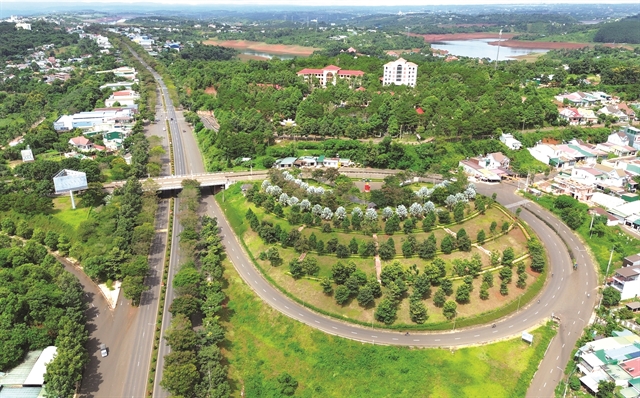
The Gia Nghĩa interchange connecting National Highway 14 and March 23 Road in western Lâm Đồng Province has been developed with modern infrastructure. — VNA/VNS Photo
Connecting regions
Lâm Đồng is also seeking to make better use of rail and aviation infrastructure as part of its broader strategy to develop a multimodal transport network.
The province has about 196km of railway lines, including sections of the North–South railway, the Đà Lạt–Trại Mát railway and the Bình Thuận–Phan Thiết branch.
The planned North–South high-speed railway will run for more than 156km through the province.
Local authorities are accelerating compensation and site clearance and preparing resettlement areas to meet the project's implementation schedule.
In aviation, Liên Khương International Airport remains an important air gateway to the Central Highlands, with capacity of around two million passengers a year.
Work to repair its runway and taxiways has just been completed.
The project is expected to improve the airport's operational capacity and strengthen connections between Lâm Đồng and major economic and tourism centres at home and abroad.
Meanwhile, Phan Thiết Airport is being developed under the approved plan, with a targeted capacity of two million passengers annually by 2030.
The airport is expected to provide another growth driver for the province's eastern coastal area, supporting tourism, services, logistics and the marine economy while strengthening connections between the coast and the Central Highlands.
According to the provincial Department of Construction, transport infrastructure has received increasing investment in recent years, improving both passenger travel and freight movement and contributing to socio-economic development.
Alongside physical infrastructure, Lâm Đồng is stepping up digital transformation in transport management and urban planning.
The province is developing digital databases, geographic information system maps and an online planning information portal, while digitising construction plans.
These measures are expected to improve state management and make planning information more accessible to residents and businesses.
Unlocking potential
Looking ahead, the province will continue prioritising an integrated, modern transport network with stronger regional connectivity.
Besides accelerating major expressway projects, it plans to mobilise resources to upgrade national and provincial highways and rural roads, put Phan Thiết Airport into operation according to schedule, expand domestic and international air routes and develop logistics and multimodal transport services.
By treating transport infrastructure as a foundation for development, Lâm Đồng aims to create stronger connections among production areas, industrial centres, tourism destinations, seaports and airports.
With support from the central Government and efforts to address bottlenecks related to mechanisms, funding and site clearance, the expanding network is expected to help Lâm Đồng unlock its potential following its merger with Đắc Nông and Bình Thuận provinces, attract investment and improve competitiveness.
Improved connectivity will give Lâm Đồng greater scope to bring together the economic strengths of its Central Highlands and coastal areas, turning its vast geographical scale into a more integrated development space and creating stronger foundations for investment, competitiveness and the province’s goal of double-digit economic growth in the new development period. — VNS
Source: VNS
Related News

GARMENT / TEXTILE
GARMENT, TEXTILE INDUSTRY LOOKS TO AI, ROBOTS TO BOOST COMPETITIVENESS
The textile and garment industry is seeking to accelerate the adoption of artificial intelligence (AI), robotics and automation to improve productivity, meet increasingly stringent international standards and move towards higher value-added production. Đỗ Nam Bình, deputy director of the Industry Agency under the Ministry of Industry and Trade, said textiles and garments remained a strategic sector of the Vietnamese economy with significant contribution to export earnings, job creation and the country’s integration into global supply chains.

VIETNAM MONTHLY STATISTICAL DATA
INFOGRAPHIC SOCIAL-ECONOMIC PERFORMANCE IN OCTOBER OF 2026
The monthly statistical data presents current economic and social statistics on a variety of subjects illustrating crucial economic trends and developments, including production of agriculture, forestry and fishery, business registration situation, investment, government revenues and expenditures, trade, prices, transport and tourism and so on.
CHARITY / EXHIBITION / OTHER EVENTS
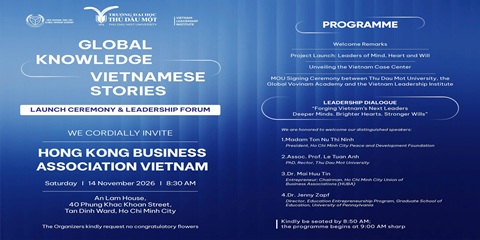
INVITATION | GLOBAL KNOWLEDGE - VIETNAMESE STORIES
The Organizing Committee is pleased to cordially invite you to attend the program “Global Knowledge – Vietnam Stories”, hosted by Thu Dau Mot University, in partnership with Global Vovinam Academy and Vietnam Leadership Institute. The program will feature a Partnership Announcement Ceremony and a Leadership Dialogue under the theme “Forging Vietnam's Next Leaders: Brighter Hearts. Stronger Wills. Deeper Minds."

MEMBER CORNER / PROMOTIONS
FLY TO HONG KONG WITH A USD40 OFFER FROM CATHAY PACIFIC
From familiar sights like the iconic ding ding trams to the breathtaking Victoria Harbour, think you’ve seen it all? Venture beyond the usual to uncover local neighbourhoods, an ever-evolving culinary scene, and vibrant festivals that define this Asia's World City. This November, experience the energy of one of the world’s most unique destinations with Cathay Pacific with promo code FLYTOHK40 for USD40 off on flights to Hong Kong.
GARMENT / TEXTILE
VIETNAM MANUFACTURING GROWTH EASES IN OCTOBER AS EXPORT ORDERS FALL
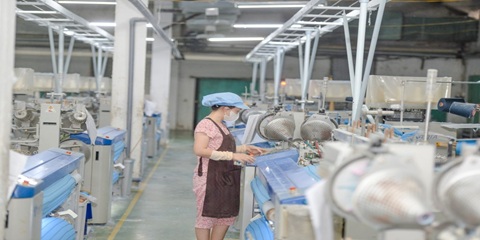
The S&P Global Vietnam Manufacturing Purchasing Managers' Index ticked up to 52.3 points in October from 51.9 points in September, pointing to a further modest monthly strengthening in the health of the sector at the start of the fourth quarter. Business conditions have now improved in 16 consecutive months. The overall improvement in operating conditions was limited by slower rises in output and new orders.
INFRASTRUCTURE / CONSTRUCTION / LOGISTIC / PORT
HUNG YEN BOOSTS INFRASTRUCTURE TO TAP COASTAL GROWTH POTENTIAL
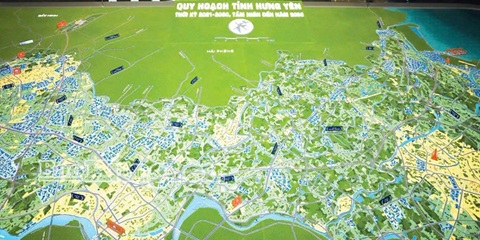
Hung Yen is shaping its development space to connect the northern industrial and urban areas with the coastal economic zone. Under the provincial master plan for the 2021–2030 period, with a vision to 2050, as adjusted under Decision No.579/QD-UBND, the province has established a structure comprising three regions, two corridors, three longitudinal axes, and four horizontal axes.
Events Sponsors