Want to be in the loop?
subscribe to
our notification
Business News
LABOUR QUALITY SHOULD BE IMPROVED TO SHARPEN COMPETITIVENESS
[23-11-2015] In the newsletter on Labour market published by the Ministry of Labour, Invalids and Social Affairs (MOLISA) in collaboration with the Vietnam General Statistics Office recently, indicators of market prospects and demand for labour from now until the end of 2015 were released, many of which are very significant indicators.
Along with the development of economy, labour demand generally increases in all types of businesses and services. According to the statistics of the MOLISA, in 2015 the demand for labour in business sector increased by about 360,000 people (up 3.27 percent) compared to 2014, bringing the total number of workers employed in the country up to 12.3 million. It is expected that by the end of 2015 the percentage of waged workers on the total of employed of around 40 percent.
Labour supply, in general throughout the country is still abundant. In Quarter III/2015, labour force in the working age is estimated at 54.31 million (representing 76.01 percent of the population aged 15 or more). Entering Quarter IV/ 2015 this figure is estimated at 54.43 million (representing 76.11 percent of the population aged 15 and over); along with raising the percentage of workers with jobs, the unemployment rate also continued to decline. As of Quarter IV/2015, the unemployment rate was only 2.38 percent. Structure of urban workers increased slightly, accounting for 30.5 percent.
According to figures from published newsletter, in Quarter II/2015 the country had 52.53 million people employed, up by 103,000 people compared to the previous quarter. The Labour movement from rural to urban areas tends to decrease. The number of workers employed in urban areas is about 15.73 million, decreased 663,000 people compared to the first quarter, making the proportion of employment in urban areas fell from 31.26 percent in Quarter I/2015 to 29.94 percent in Quarter II/2015. However, workers with jobs in rural areas increased in Quarter II / 2015 when the region had 36.81 million people employed, up by 766,000 people compared to Quarter I / 2015, making the proportion of employed people in rural areas increased from 68.74 percent in Quarter I / 2015 to 70.06 percent in Quarter II / 2015.
Specifically, the areas having the most increasing workforce are: processing, manufacturing increased by 223,000 people; information and communication 178,000 people; construction 113,000 people; commerce and repair 77,000 people; hired labour for household and household economy 25,000 people. The sectors having the most reduced Labour force are: education and training sector decreased by 181,000 people; agriculture, forestry and fisheries 114,000 people; social and political organizations, defense and security 98,000 people; transport, warehousing 84,000 people. The share of waged employment in total employment continues to rise in Quarter II / 2015 reaches 38.81 percent. Despite slight fluctuations in the proportion of self-employed workers (decrease) Labour and unpaid family workers (increase), overall proportion of vulnerable employment in total employment has remained high (57.09 percent).
On average income of salaried employment in Quarter II/ 2015 decreased by VND435,000 (8.9 percent) from the previous quarter in which women workers have a lower income, but the reduction is higher than with male workers (corresponding to VND334,000 and 576,000 respectively). The Labour force employed in state enterprises had the highest average monthly salary (VND6.15 million / person), the labour force working in the cooperative sector having lowest income levels (VND2.84 million).
According to Mr Doan Mau Diep, Deputy Minister of Labour, Invalids and Social Affairs, in Quarter II / 2015 the biggest bright spot is the rise of the economy has led to lower Labour pressure. Employment in the processing sector rose, but labourers in agriculture, forestry and fishery declined. Many of the programs are implemented effectively, such as: Over 90,000 workers are exported, exceeding the target by 2015, unemployment support policies have been put into practice.
Deputy Minister Doan Mau Diep said, after December 31, 2015, the first 8 sectors will be prioritized to move freely within ASEAN are: accountants, architects, engineers, dentists, doctors, nurses, transport and tourism employees. This will put pressure on the labour market of Vietnam when joining the TPP and ASEAN Economic Community. The drawback of Vietnam’s labour force is low-skilled, this would be very difficult to compete directly with foreign labour.
So the deputy minister stressed Vietnam should focus on improving the quality of human resources; better organizing the labour market; providing information on employment for workers; mastering labour structure to have adjustment and reducing the unemployment rate to prepare for the accession process of ASEAN Community by the end of 2015.
Source: VCCI
Related News

CHARITY / EXHIBITION / OTHER EVENTS
INVESTMENT OPPORTUNITIES IN CA MAU PROVINCE: 96 PROJECTS AND 20 STRATEGIC PROJECTS
We are pleased to share with you information on investment projects currently seeking investors in Ca Mau Province. Should your esteemed company or association be interested, we kindly invite you to review the project information and complete the registration form via the links provided. The Ho Chi Minh City Investment and Trade Promotion Centre (ITPC) will consolidate the expressions of interest and facilitate connections with the leadership of Ca Mau Province at a meeting tentatively scheduled for 13 November 2026 in Ho Chi Minh City.

MEMBER CORNER / PROMOTIONS
BẰNG KIỀU LIVESHOW - A SYMPHONY OF LOVE UNDER THE GOLDEN GLOW
A masterclass in live music that takes the audience on a soulful journey through immortal love songs, guided by the peerless artistry and emotive storytelling of renowned singer Bằng Kiều. The highlight of the night is his seamless musical chemistry with special guest Triệu Hồng Ngọc, promising passionate and deeply resonant duets inside the magnificent Grand Ballroom.
INFRASTRUCTURE / CONSTRUCTION / LOGISTIC / PORT
ĐÀ NẴNG GREEN-LIGHTS US$105 MILLION THAI DEVELOPMENT DEAL
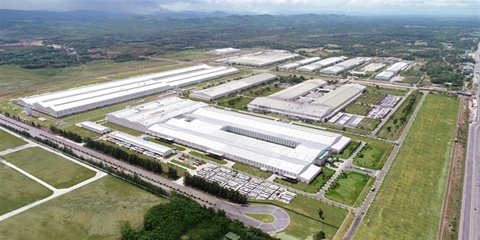
The central city has approved an investment proposal by Thailand’s WHA Group to develop infrastructure for the 400ha WHA Đà Nẵng Industrial Park project on two communes of Thăng Bình and Đồng Dương, with an investment of more than VNĐ2.7 trillion (US$105 million). The city said it approved WHA Industrial Development International's status as an investor in the project, which is expected to take place between 2027 and 2034.
VIETNAM ECONOMY INVESTMENT
MOBILE PHONE EXPORTS RISE 20% TO $51.8 BILLION IN FIRST NINE MONTHS
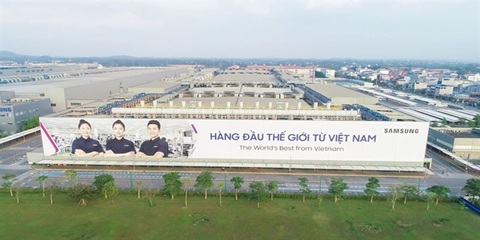
Exports of mobile phones and components rose 20 per cent year-on-year to nearly US$51.8 billion in the first nine months of 2026, with China, the US and Republic of Korea accounting for more than half of the total. Shipments to the three markets reached a combined $26.18 billion, or 50.6 per cent of total exports of the product group during the period, according to data from the Vietnam Department of Customs under the Ministry of Finance.

INFRASTRUCTURE / CONSTRUCTION / LOGISTIC / PORT
VIỆT NAM-CAMBODIA TRADE GATHERS PACE TOWARDS $20 BILLION TARGET
Trade between Việt Nam and Cambodia continues to grow, remaining a bright spot and a key pillar of bilateral cooperation as the two countries aim to raise two-way trade to US$20 billion in the coming years. After setting a record of more than $11.3 billion last year, bilateral trade reached about $8.7 billion in the first eight months of this year, up 8.3 per cent year on year.
VIETNAM ECONOMY INVESTMENT
FRUIT AND VEGETABLE EXPORTS POISED TO HIT $10 BILLION IN 2026
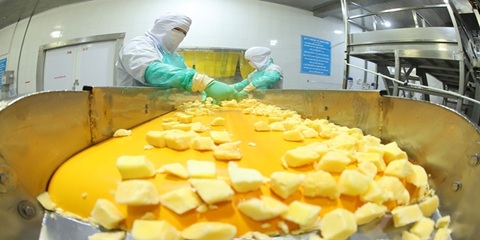
Fruit and vegetable exports are on track to reach nearly US$10 billion in 2026, after rising 19.9 per cent year on year to nearly US$7.4 billion in the first nine months, driven by strong seasonal demand and abundant tropical fruit supplies. The Ministry of Agriculture and Environment said the growth reflected stronger international demand for fresh produce and processed agricultural products.
Events Sponsors






















