Want to be in the loop?
subscribe to
our notification
Business News
KEY PUBLIC INVESTMENT DRIVING SUSTAINABLE GROWTH IN VIETNAM
In the first seven months of 2025, public investment in Vietnam improved significantly, as the disbursement rate rose from nearly 9% in the first quarter to almost 44% by the end of July, much higher than during the same period last year. The Government has identified public investment as the primary tool to drive growth while exports and consumption face numerous risks.
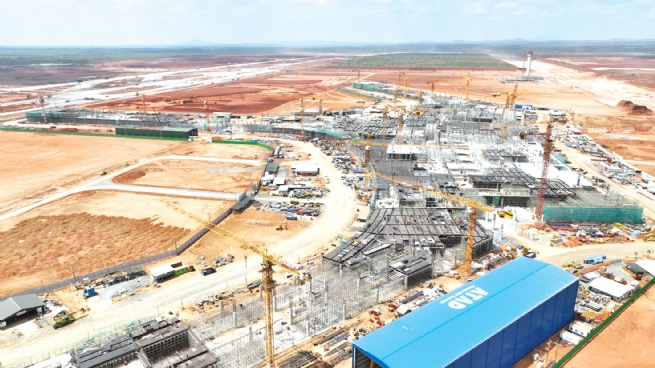
The construction site of Long Thanh International Airport, one of the country’s largest public investment projects
Many major projects are being prioritized for implementation
In reality, public investment continues to play a crucial role in Vietnam’s strategy for economic recovery and growth, especially in major national infrastructure projects and strategic economic areas such as the Central region, the Mekong Delta and the Southern key economic zone. With strong political will, the Government has closely directed efforts to prioritize capital allocation and speed up disbursement progress for key projects, aiming to create spillover effects and improve national competitiveness.
One of the key projects is the North-South Expressway (East) for the 2021-2025 period, comprising 12 component subprojects with a total length of nearly 729 km, running through several provinces from Ha Tinh to Ca Mau. This is a vital transportation route, strategically important for inter-regional connectivity and lowering logistics costs. Several sections, including Nghi Son-Dien Chau, Dien Chau-Bai Vot, and Vinh Hao-Phan Thiet, have recorded construction progress surpassing planned targets. Projects such as Bai Vot-Ham Nghi and Ham Nghi-Vung Ang have relatively high disbursement rates - 74% and 85% of the 2024 plan respectively - and are expected to maintain strong disbursement momentum in 2025.
In the Central and Central Highlands regions, projects such as the Khanh Hoa-Buon Ma Thuot Expressway and Chu Lai International Airport are seeing accelerated disbursement, aiming to transform the regional economic structure and promote the development of industry, logistics, and seaport services.
The Mekong Delta, which is heavily impacted by climate change, is also seeing a major wave of public investment in disaster response infrastructure, transport development, and agricultural transformation. The region is implementing 9 key transport projects with a total capital of about VND106,000 billion. Among them, 6 out of 9 projects - including major highways and bridges such as the Chau Doc-Can Tho-Soc Trang Expressway, Dai Ngai Bridge, and Cao Lanh-An Huu - are scheduled to begin operation in the 2026-2027 period. For the Chau Doc-Can Tho-Soc Trang Expressway, local authorities are tasked with resolving site clearance and material supply issues to deploy three shifts with four construction teams, aiming for completion in 2025.
In the Southern key economic region, Long Thanh International Airport - one of the largest public investment projects in the country - is being built on schedule, with many major components such as the T3 passenger terminal, runway system, and traffic connections beginning to accelerate. The project is expected to help Ho Chi Minh City and the Southeast region ease pressure on aviation infrastructure while promoting tourism and logistics.
However, despite increased implementation efforts, many projects remain behind schedule. The Khanh Hoa-Buon Ma Thuot Expressway, with a total length of approximately 117 km divided into many packages, is expected to be completed by 2027. As of now, site clearance has reached about 96%, with the remaining 4% mainly involving natural forest areas and technical infrastructure that needs to be relocated. Nevertheless, construction progress remains slow due to unfavorable weather, material shortages, and delays in site handover in certain areas. By July 2025, the project had only reached about 58% of the contract value, falling 27% behind schedule.
Similarly, the Chu Lai International Airport project, with a total investment of about VND2,006.56 billion, aims to raise its capacity to 30 million passengers per year by 2030. The Prime Minister has requested the project be completed within two years from February 2025. However, progress remains sluggish. Local authorities are working urgently with relevant ministries and agencies to address issues related to site clearance, land-use conversion, and completion of investment procedures.
In many provinces such as Phu Tho, Thanh Hoa, and Ha Giang, the disbursement rate has been rapid, driven by strong political will and innovative implementation. However, in major cities like Ho Chi Minh City and Hanoi, slow progress in site clearance, planning adjustments, and inter-agency coordination has resulted in disbursement rates falling below the national average. The Government has directed these localities to commit to specific timelines, publicly disclose leadership accountability, and reallocate capital from underperforming areas to those with better implementation capacity to ensure efficient resource utilization.
No disruption to the implementation and disbursement of public investment capital
In recent times, the Government has implemented a series of synchronized solutions, including the establishment of monitoring mechanisms, special administrative task forces, and flexible adjustments to the capital plan. If this momentum is sustained and existing bottlenecks are effectively addressed, achieving 100% disbursement of the 2025 public investment capital plan is entirely feasible. This would make a significant contribution to supporting Vietnam’s goal of attaining a GDP growth rate of over 8%.
According to the World Bank's assessment, to enhance the effectiveness of public investment, Vietnam not only needs to increase its investment scale but, more importantly, must improve the quality and efficiency of investment management to drive sustainable development. Specifically, improving both the allocative efficiency and operational efficiency of public investment is essential. As noted in the World Bank’s Public Investment for a High Performing Economy (July 2025) report, persistent issues include unclear project prioritization, overlapping procedures, and limited flexibility in the use of ODA resources. Therefore, the World Bank recommended that Vietnam review and restructure the list of priority public investment projects in alignment with national development goals; adopt consistent evaluation criteria and standardized project templates to ensure quality from the planning stage. It is necessary to strengthen ex-post evaluation to gauge socio-economic effectiveness; simplify procedures for regional, inter-sectoral, or inter-provincial projects, and reduce redundant approval layers.
To address persistent weaknesses that hinder public investment programs, the World Bank recommended that Vietnam strengthen institutional capacity and processes alongside legal reforms. This includes improving project preparation before inclusion in the Medium-Term Public Investment Plan (MTIP) and establishing mechanisms to eliminate low-quality projects. Project delays could be reduced by integrating resettlement plans earlier in the project cycle and advancing decentralization. Reducing uncertainty for businesses by providing clear information about future public investment locations would help them plan more effectively.
To ensure that the disbursement rate of public investment capital in 2025 reaches 100% of the Prime Minister’s assigned plan and supports an annual growth rate of 8% or more, the Ministry of Finance has urged ministries, and central and local agencies to implement a series of key measures. These include ensuring no disruption during the reorganization of administrative units at all levels; expediting project investment procedures within their authority; proactively reviewing and cutting funds from slow-disbursing projects; reallocating capital to projects with strong disbursement capacity and urgent needs, especially strategic infrastructure works; and resolving ongoing site clearance challenges.
For important national and key transport projects, it is essential to accelerate implementation, strengthen inspection and supervision, assign responsibilities clearly, and ensure close coordination across all levels and sectors for scientific and efficient execution. The goal is to complete 3,000 km of expressways and over 1,000 km of coastal roads by 2025. It is urgent to adjust the 2025 state budget investment plan for projects already approved under the 2021-2025 medium-term investment plan, to allocate additional capital for the Lao Cai-Hanoi-Hai Phong railway project. Priority should be given to the implementation and disbursement of capital for key national projects, including the Ninh Binh–Hai Phong Expressway, Hanoi Ring Road 4, Gia Nghia-Chon Thanh Expressway, Tan Phu-Bao Loc Expressway, Bao Loc-Lien Khuong Expressway, Ho Chi Minh City Ring Road 3, and Ho Chi Minh City-Moc Bai Expressway.
Source: VCCI
Related News

BANKING / FINANCE / INSURANCE / TAX
REMITTANCES TO HCM CITY RISE NEARLY 40% IN Q3
Remittances to HCM City reached more than US$2.83 billion in the third quarter of this year, up 39.5 per cent from the previous quarter and 3.6 per cent year-on-year. This was the first quarter showing positive annual growth this year, helping narrow the decline in remittance inflows over the first nine months. According to the State Bank of Vietnam (SBV)’s Regional Branch 2, remittances transferred to HCM City through credit institutions and economic organisations totalled $2.835 billion in Q3, an increase of more than $802 million from the previous quarter.
TECHNOLOGY
TECH SECTOR GROWTH OPENS UP OPPORTUNITIES FOR VIỆT NAM TO GO GLOBAL
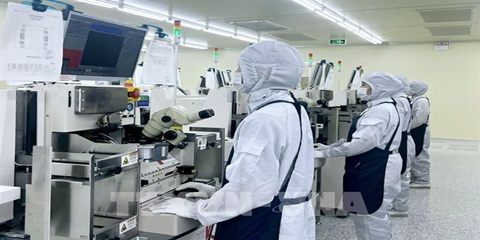
The growth of the electronics, semiconductor and high-tech sectors worldwide is opening up a variety of opportunities for Vietnamese enterprises to integrate more deeply into the global supply chain. However, to become suppliers for these corporations, domestic enterprises must meet rigorous standards regarding quality, technology, productivity and order fulfilment capabilities.
VIETNAM ECONOMY INVESTMENT
FOREIGN INVESTORS SEEKING A SYNCHRONISED MANUFACTURING ECOSYSTEM
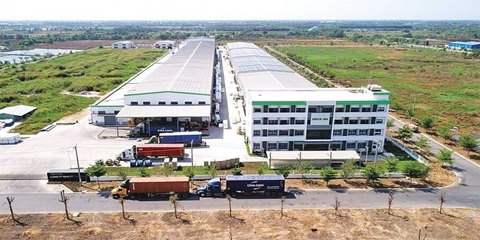
Instead of focusing only on land costs and incentives as usual, foreign investors are seeking a synchronised manufacturing ecosystem, from stable power supply and logistics to shared infrastructure and the convenience of completing residence procedures for experts to serve their long-term investment in the country.
MEMBER CORNER / PROMOTIONS
SENTRYSAFE FHW40200 – PROTECT YOUR VALUABLES, ENJOY PEACE OF MIND!
Looking for a reliable solution to protect your important documents, cash, and valuables from fire and water damage? Genuine SENTRYSAFE - Reliable protection for your valuables and peace of mind! Contact Sen Wai Vietnam for more information and personalized product recommendations.
PROPERTY / INDUSTRIAL ZONE
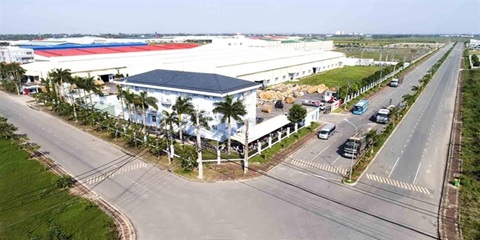
HCM CITY ATTRACTS US$5.7 BILLION INTO EXPORT PROCESSING AND INDUSTRIAL ZONES
HCM City attracted US$5.7 billion in domestic and foreign investment into its export processing and industrial zones during the first nine months of 2026. The figure exceeded the city's full-year target by 31 per cent, highlighting strong momentum in high-quality industrial investment under Resolution No.10-NQ/TW. Total investment reached 131 per cent of the 2026 target of $4.25 billion and represented a 29 per cent increase compared with the same period in 2025, according to the city's Export Processing and Industrial Zones Authority (HEPZA).
INFRASTRUCTURE / CONSTRUCTION / LOGISTIC / PORT
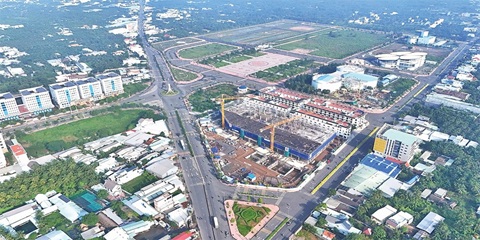
DONG THAP PROVINCE STEPS UP INDUSTRIAL EXPANSION AND INFRASTRUCTURE CONNECTIVITY
Accelerating public investment, strengthening inter-regional connectivity, and expanding industrial land are helping Dong Thap efficiently bolster competitiveness and drive economic growth. Following the 2025 merger of the former Dong Thap and Tien Giang provinces, the expanded Dong Thap province in the Mekong Delta faces mounting pressure to accelerate infrastructure development and strengthen connectivity among local economic zones, urban areas, industrial parks (IPs), and production centres.
Events Sponsors






















