Want to be in the loop?
subscribe to
our notification
Business News
INVESTMENT OPPORTUNITIES IN LOGISTICS SERVICES
In spite of holding numerous advantages for strong development of logistics industry, Vietnam's logistics growth is still very modest. In early 2017, the Prime Minister of Vietnam issued Decision 200/QD-TTg with a view to increasing the share of logistics services to GDP to 8 - 10 per cent in 2025, four times more than now.
Logistics costs: Three times that of Singapore
According to the World Bank (WB), Vietnam ranked 64th out of 160 economies in logistics development in the world and fourth in ASEAN after Singapore, Malaysia and Thailand. With an annual growth rate of 16 - 20 per cent, this is one of the fastest-growing sectors in Vietnam in recent years.
However, also according to the WB, logistics costs in Vietnam were estimated at 25 per cent of GDP, significantly higher than that of Thailand's 19 per cent, China's 18 per cent, Malaysia's 13 per cent, and nearly three times higher than those of the United States and Singapore.
Statistics from the Vietnam Logistics Business Association (VLA) showed that logistics service is currently valued US$20-22 billion a year, accounting for 20.9 per cent of the nation’s gross domestic product (GDP), a relatively high rate in the economy and a heavy burden on enterprises. Transportation, the most important part of logistics, accounts for 40 - 60 per cent of costs.
Quantifying shipping costs in cost structure, Dr Tran Dinh Thien, Director of the Vietnam Institute of Economics, commented, “In Vietnam, transportation costs account for more than two thirds of the value of goods, compared to only a half in other countries.”
Vietnam has about 3,000 logistics firms, of which 1,300 are regular, including foreign invested firms, according to VLA.
Although domestic firms account for 80 per cent, they hold just 20 per cent of the market share. They mainly provide small supply chains in the Vietnamese territory.
Operating on seaports, warehouses, transport means, and handling equipment supplied by domestic companies, about 30 foreign multinational corporations with superior advantages in technology and human resources, without having to invest in infrastructure can handle almost all international shipping services.
High hopes on ambitious goals
In February 2017, the Prime Minister approved an Action Plan for Vietnam Logistics Service Competitiveness Improvement and Development to 2025. Accordingly, by 2025, the share of logistics industry to GDP will reach 8 - 10 per cent in 2025, the industry will expand 15 - 20 per cent a year, the ratio of logistics outsource services will be brought to 50 - 60 per cent, and logistics cost will be reduced to 16 - 20 per cent of GDP. The country’s Logistics Performance Index (LPI) will be in the Top 50 of the world.
In order to realise these objectives, the Government defines six main tasks: Perfecting logistics services policies and laws; completing logistics infrastructure; improving business capacity and service quality; developing logistics services market; training and raising awareness and quality of human resources; and others.
Particularly, Vietnam will improve policies; attract more funds for logistics infrastructure development; strengthen cooperation with foreign partners to expand logistics infrastructure connectivity; invest to upgrade logistics infrastructure to connect Vietnamese ports with neighbouring countries; raise funds for building Grade-A logistics centres in Hanoi and Ho Chi Minh City and Grade-B logistics centres in Lang Son, Lao Cai, Hai Phong, Da Nang, Quy Nhon, Can Tho and other localities.
The Government will encourage and guide enterprises in some industries like garment and textile, leather and footwear, wooden furniture, agricultural products, foods and mechanical engineering to apply advanced supply chain management models. It will also encourage industrial parks and export processing zones to build logistics-based industrial zone model; integrate downstream logistics services with agricultural and industrial production, import and export; support the construction of strong logistics corporations to make inroads in foreign countries and export logistic services.
To develop the logistics services market and promote logistics services, Vietnam will issue mechanisms to draw freight from Laos, Cambodia, Thailand and South China to transit Vietnam to other countries and vice versa; and support improving the performance, marketing and input sources for Cai Mep-Thi Vai Port Complex.
VLA Chairman Le Duy Hiep said this decision will leverage the comprehensive development of logistics services. This is also a good opportunity for domestic and foreign businesses to invest in this potential service in Vietnam.
Source: VCCI
Related News

MEMBER CORNER / PROMOTIONS
SENTRYSAFE CHW20201 - EFFECTIVE WATER RESISTANCE, MAXIMUM PROTECTION
In unexpected flooding situations, the most important thing is to keep your valuables dry and intact. SentrySafe CHW20201 is specially designed with superior water-resistant capabilities, helping protect documents, cash, and important belongings even when fully submerged. Proven in real testing: After water submersion, the documents inside remain dry - undamaged.

MEMBER CORNER / PROMOTIONS
AN ELECTRIFYING NIGHT WITH THE "QUEEN OF DANCE" THU MINH AT THE GRAND HO TRAM!
The stage at The Grand Ballroom is set to catch fire as Vietnam’s undisputed "Queen of Dance," Thu Minh, takes the spotlight. Renowned for her powerhouse vocals, magnetic stage presence, and sultry, high-energy performances, Thu Minh promises an evening of pure musical euphoria. The energy escalates with an exclusive appearance by special guest and The Voice champion, Vu Thao My.
HR / LABOUR/ EMPLOYMENT
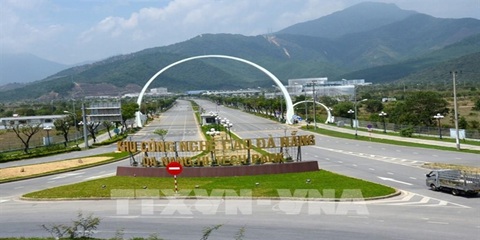
HIGH-QUALITY HUMAN RESOURCES NEEDED TO ATTRACT NEW TECH INVESTMENT CAPITAL
Besides infrastructure, Việt Nam must also rapidly develop a highly skilled workforce to attract investment in AI, semiconductors and advanced manufacturing, experts have said. Don Lam, CEO and co-founder of investment management company VinaCapital, said that global technology investors were increasingly looking at the readiness of the entire ecosystem, with high-quality human resources a decisive factor.
HR / LABOUR/ EMPLOYMENT
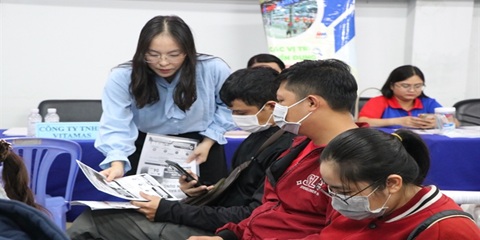
HIRING OUTLOOK STRENGTHENS IN Q4 AS SKILLS SHORTAGES PERSIST
Hiring intentions among employers in Việt Nam strengthened in the fourth quarter, with 52 per cent of surveyed companies planning to increase headcount between October and December, according to a ManpowerGroup survey released this week. Việt Nam's hiring outlook was stronger than the Asia Pacific and Middle East (APME) regional average of 33 per cent and the global average of 29 per cent, ranking third in the region and 11th globally among 42 markets surveyed.
BANKING / FINANCE / INSURANCE / TAX
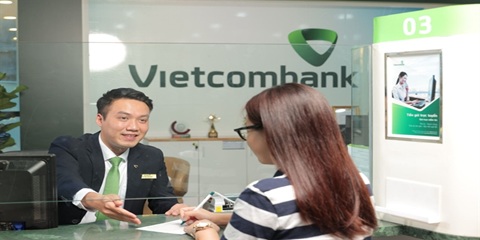
LARGE BANKS FORECAST TO GAIN HIGHER PROFITABILITY IN H2 2026
The return on average assets (ROAA) of the banking sector will likely remain stable at around 1.5 per cent in the second half of 2026, but profitability divergence among banks will increase, with large banks outperforming peers on stronger margins and diversified earnings, analysts forecast. In a recent report on the banking sector, analysts from the Vietnam Investors Service Rating said the sector’s ROAA rose by 10 basis points quarter-on-quarter to 1.51 per cent in the first half of this year, driven by net interest margin (NIM) improvements at some State-owned banks and large private banks.
GARMENT / TEXTILE
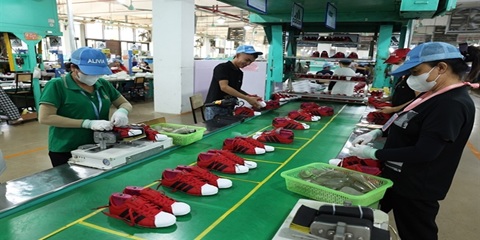
VIỆT NAM'S FOOTWEAR, BAG EXPORTS TO US TOP $8 BILLION IN EIGHT MONTHS
Việt Nam's exports of footwear and handbags to the US exceeded US$8 billion in the first eight months of 2026, as the US and EU remained the country's biggest markets despite sluggish growth in footwear shipments. Exports from Việt Nam's leather and footwear sector reached more than $2.45 billion in August, down 9 per cent from July but up 3 per cent from a year earlier, according to preliminary statistics.
Events Sponsors






















