Want to be in the loop?
subscribe to
our notification
Business News
INVESTMENT, EXPORT, DOMESTIC CONSUMPTION: THREE MAIN PILLARS OF ECONOMIC GROWTH IN 2022
Investment, export and domestic consumption are defined as three main pillars of the country's economic development in 2022, according to economist Vũ Vinh Phú.
Phú told online paper laodongthudo that Việt Nam needed a great amount of investment for its development, adding that effectively attracting domestic and foreign investment capital would lead to the launch of new production factories and agricultural farms and the development of new roads, airports and ports. That would not only help create new jobs for local people but also foster the country's economic growth.
However, Phú said Việt Nam could not attract investment at any cost. It was necessary for the country to seek investment selectively, including projects on developing factories and farms that would apply 4.0 technology in production towards a green and circular economy and churn out products that could compete well in both domestic and international markets.
Phú also explained why he outlined export as the second pillar of economic growth this year. He said that despite many difficulties caused by the prolonged COVID-19 pandemic, Việt Nam remained one of the countries with large export turnover in the region and world. Last year, Việt Nam's trade value topped US$668 billion with exports accounting for $336 billion, up 19 per cent year-on-year.
But, in order to increase its export turnover, Việt Nam should overcome many shortcomings such as goods being mainly exported in raw and processed form, dependence on imported raw materials, high production and export costs, and unstable export markets with dependence on one or two importing countries, Phú said.
The lack of official distribution systems in foreign countries led to many Vietnamese-made goods labelled under foreign branding when exported, he added.
He emphasised the importance of reducing imported raw materials, focusing on product creation and design, and reducing the proportion of processing in exports in order to enhance the efficiency of exports.
It was also necessary for Vietnamese exporters to create long-term trust for the importing country, to do business responsibly, seriously and honestly with partners around the world.
In terms of domestic consumption, the third pillar, many countries around the world assessed that the potential of Việt Nam's domestic market remained huge. With the final consumption of the entire population accounting for 65-70 per cent of GDP growth, the domestic market was attractive to domestic and international investors.
According to Phú, if Việt Nam wants to speed up domestic consumption, the country should restructure its trade system so that goods, especially Vietnamese-made ones, could be presented properly in supermarkets, traditional markets and grocery shops.
Regular and effective inspection should be also included to prevent organisations and individuals from smuggling, committing commercial fraud and manufacturers importing counterfeit goods that might hurt customers and domestic producers.
Việt Nam’s gross domestic product in 2021 expanded by 2.58 per cent over the previous year, despite the adverse impact of the COVID-19 pandemic in all fields, according to the General Statistics Office (GSO).
"This is a great achievement for Việt Nam, especially as in the third quarter of 2021 many key economic localities had to implement prolonged social distancing to prevent the pandemic spreading," said GSO General Director of Nguyễn Thị Hương.
Hương said that GDP in the fourth quarter rose 5.22 per cent over the same period last year. This figure was higher than the growth rate of 4.61 per cent seen in the fourth quarter of 2020, but lower than the average fourth-quarter growth rates in 2011-19.
Final consumption rose by 2.09 per cent against 2020, while accumulated assets increased by 3.96 per cent.
Source: VNS
Related News
BANKING / FINANCE / INSURANCE / TAX
REMITTANCES TO HCM CITY RISE NEARLY 40% IN Q3
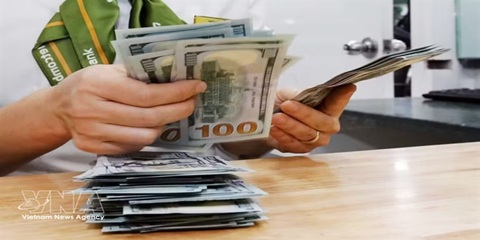
Remittances to HCM City reached more than US$2.83 billion in the third quarter of this year, up 39.5 per cent from the previous quarter and 3.6 per cent year-on-year. This was the first quarter showing positive annual growth this year, helping narrow the decline in remittance inflows over the first nine months. According to the State Bank of Vietnam (SBV)’s Regional Branch 2, remittances transferred to HCM City through credit institutions and economic organisations totalled $2.835 billion in Q3, an increase of more than $802 million from the previous quarter.

TECHNOLOGY
TECH SECTOR GROWTH OPENS UP OPPORTUNITIES FOR VIỆT NAM TO GO GLOBAL
The growth of the electronics, semiconductor and high-tech sectors worldwide is opening up a variety of opportunities for Vietnamese enterprises to integrate more deeply into the global supply chain. However, to become suppliers for these corporations, domestic enterprises must meet rigorous standards regarding quality, technology, productivity and order fulfilment capabilities.
VIETNAM ECONOMY INVESTMENT
FOREIGN INVESTORS SEEKING A SYNCHRONISED MANUFACTURING ECOSYSTEM
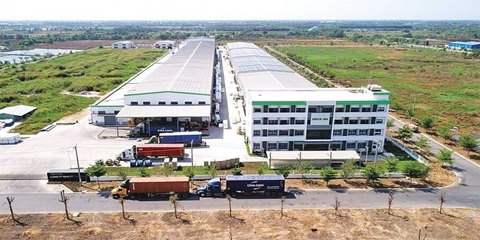
Instead of focusing only on land costs and incentives as usual, foreign investors are seeking a synchronised manufacturing ecosystem, from stable power supply and logistics to shared infrastructure and the convenience of completing residence procedures for experts to serve their long-term investment in the country.
MEMBER CORNER / PROMOTIONS
SENTRYSAFE FHW40200 – PROTECT YOUR VALUABLES, ENJOY PEACE OF MIND!
Looking for a reliable solution to protect your important documents, cash, and valuables from fire and water damage? Genuine SENTRYSAFE - Reliable protection for your valuables and peace of mind! Contact Sen Wai Vietnam for more information and personalized product recommendations.
PROPERTY / INDUSTRIAL ZONE
HCM CITY ATTRACTS US$5.7 BILLION INTO EXPORT PROCESSING AND INDUSTRIAL ZONES
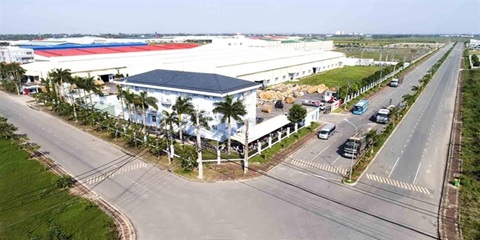
HCM City attracted US$5.7 billion in domestic and foreign investment into its export processing and industrial zones during the first nine months of 2026. The figure exceeded the city's full-year target by 31 per cent, highlighting strong momentum in high-quality industrial investment under Resolution No.10-NQ/TW. Total investment reached 131 per cent of the 2026 target of $4.25 billion and represented a 29 per cent increase compared with the same period in 2025, according to the city's Export Processing and Industrial Zones Authority (HEPZA).
INFRASTRUCTURE / CONSTRUCTION / LOGISTIC / PORT
DONG THAP PROVINCE STEPS UP INDUSTRIAL EXPANSION AND INFRASTRUCTURE CONNECTIVITY
Accelerating public investment, strengthening inter-regional connectivity, and expanding industrial land are helping Dong Thap efficiently bolster competitiveness and drive economic growth. Following the 2025 merger of the former Dong Thap and Tien Giang provinces, the expanded Dong Thap province in the Mekong Delta faces mounting pressure to accelerate infrastructure development and strengthen connectivity among local economic zones, urban areas, industrial parks (IPs), and production centres.
Events Sponsors






















