Want to be in the loop?
subscribe to
our notification
Business News
INTEGRATING LOGISTICS INTO INDUSTRIAL PARKS A PATH TOWARD SUSTAINABLE DEVELOPMENT
In the era of global economic integration, Vietnam’s logistics sector is emerging as a key growth engine, particularly within industrial parks (IPs). Thanks to its strategic geographic location, increasingly modern infrastructure, and a surge in foreign direct investment (FDI), the integration of logistics into IPs not only optimizes supply chains and promotes sustainable development but also strengthens Vietnam’s competitiveness.
Rising logistics demand in IPs
Fueled by the booming e-commerce sector and a series of free trade agreements (FTAs) such as CPTPP, EVFTA, and RCEP, Vietnam is fast becoming a prime destination for global investors, especially in manufacturing and logistics. According to Expert Market Research, Vietnam’s logistics market reached a value of US$80.65 billion in 2024 and is forecast to grow at a compound annual growth rate (CAGR) of 6.4%, reaching US$149.98 billion by 2034.
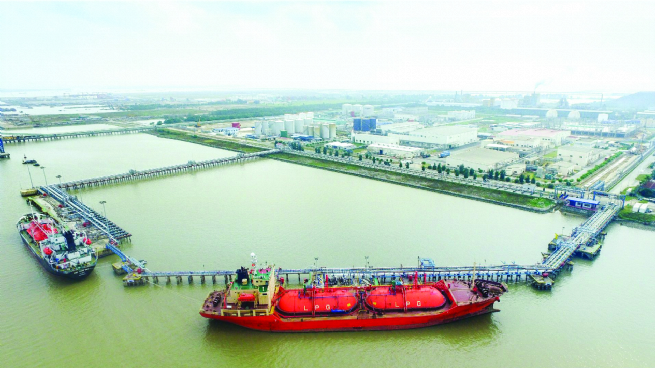
Vietnam is becoming a prime destination for global investors - especially in manufacturing and logistics
Data from Savills shows that Vietnam currently boasts over 38,200 hectares of industrial land across 203 active IPs, with average occupancy rates reaching 80% in the North and 89% in the South as of 2024. These IPs are strategically located near major transport arteries, offering direct access to seaports, highways, and international airports, creating ideal conditions for streamlined cargo movement. This growth has been further fueled by global giants such as Samsung, LG, and Foxconn relocating their manufacturing operations to Vietnam to diversify their supply chains.
However, the Vietnamese logistics industry still faces numerous challenges. According to the Vietnam Logistics Business Association (VLA), logistics costs are expected to account for 15–16% of the country’s GDP by 2025, which is on par with the Asia-Pacific average but still higher than the global benchmark. Domestic enterprises currently hold only about 20% of the logistics market share and face growing pressure from international heavyweights like DHL and Maersk. Additionally, a shortage of high-quality human resources and slow progress in digital transformation continue to hinder the sector’s full potential.
The logistics-IP integration trend
The integration of logistics into IPs is reshaping Vietnam’s industrial landscape, with modern IPs being developed as comprehensive ecosystems that merge manufacturing zones with seaports, warehouses, and logistics services. A standout example is DEEP C Industrial Zones in Hai Phong, which saw a 27% FDI surge in 2024, mainly in high-tech and logistics.
According to Mr. Dao Trong Khoa, Chairman of VLA: “Integrating logistics into IPs not only reduces operational costs but also enables businesses to respond swiftly to market fluctuations, thereby enhancing their competitive edge.”
Emerging trends in this space include the application of digital technologies such as AI, blockchain, and the Internet of Things (IoT) to optimize supply chain management. Green logistics is also gaining traction, with many IPs adopting environmentally friendly transport options and solar-powered warehouses, aligning with the National Green Growth Strategy 2021–2030. The surge in last-mile delivery driven by e-commerce, growing at a rate of 29% annually, is spurring the development of large-scale logistics hubs in Hai Phong and Ho Chi Minh City. As noted by Melissa Cyrill, an expert at Dezan Shira & Associates, “Vietnam is emerging as a regional logistics hub, bolstered by reform-oriented policies and robust infrastructure investments.”
The benefits of integrating logistics into IPs are increasingly evident. Businesses can significantly cut costs related to warehousing, transportation, and labor, while minimizing risks of supply chain disruptions. A synchronized logistics system allows companies to concentrate on core manufacturing activities, boosting productivity and operational efficiency. Moreover, the strategic locations of these IPs, often close to export-import gateways, help reduce transit times, especially critical as electronics and textile exports surge.
This integration also strengthens Vietnam’s global competitiveness. DEEP C Industrial Zones, for example, feature a 50,000 DWT port and Smartport technologies, streamlining cargo handling and cutting shipping costs to help firms like Samsung optimize global supply chains.
Another notable case is VSIP Bac Ninh, strategically located near Hai Phong Port and Noi Bai International Airport. It has attracted electronics and automotive manufacturers while developing AI-powered smart warehouses for efficient inventory management. Meanwhile, IPs such as Long Hau (previously under Long An province, now within Tay Ninh) and Amata (Dong Nai) are stepping up investments in multimodal logistics hubs, directly linked to Cat Lai and Cai Mep–Thi Vai ports. These initiatives are not only reducing transportation costs but also expanding access to global markets, especially for key export industries like textiles, electronics, and agricultural products.
Solutions to accelerate logistics integration
The integration of logistics into IPs is a strategic move for Vietnam to solidify its role as Southeast Asia’s manufacturing and logistics hub. To fully unlock this potential, Vietnam must implement a series of coordinated measures to drive logistics integration within IPs.
First and foremost, it is essential to strengthen supply chain connectivity through close cooperation among logistics providers, manufacturers, and industry associations. Public-private partnership (PPP) models for logistics infrastructure development should be widely adopted to attract investment and improve efficiency.
Infrastructure investment in transportation and logistics remains a top priority. In 2025, the government is advancing 14 key infrastructure projects, including major sections of the North–South Expressway and the Long Thanh International Airport. However, additional focus is needed on constructing modern cold storage facilities and multimodal logistics centers to serve sectors such as seafood and agriculture.
Encouraging the outsourcing of logistics services, which currently accounts for 60-70% of usage, can help businesses streamline operations and concentrate on their core competencies. To build trust and increase adoption, it is critical to enhance the professionalism and capacity of logistics service providers.
A particularly crucial factor in integrating logistics with IPs is the development of a high-quality workforce. Training programs in collaboration between universities and businesses should be expanded, with a focus on green logistics and digital supply chain management.
Finally, embracing digital technology and green logistics is key to reducing costs and meeting international standards. Innovative solutions such as electric transport vehicles, digital supply chain management systems, and blockchain applications are already being deployed in major IPs, improving transparency and operational efficiency.
Source: VCCI
Related News

MEMBER CORNER / PROMOTIONS
AN ELECTRIFYING NIGHT WITH THE "QUEEN OF DANCE" THU MINH AT THE GRAND HO TRAM!
The stage at The Grand Ballroom is set to catch fire as Vietnam’s undisputed "Queen of Dance," Thu Minh, takes the spotlight. Renowned for her powerhouse vocals, magnetic stage presence, and sultry, high-energy performances, Thu Minh promises an evening of pure musical euphoria. The energy escalates with an exclusive appearance by special guest and The Voice champion, Vu Thao My.

HR / LABOUR/ EMPLOYMENT
HIGH-QUALITY HUMAN RESOURCES NEEDED TO ATTRACT NEW TECH INVESTMENT CAPITAL
Besides infrastructure, Việt Nam must also rapidly develop a highly skilled workforce to attract investment in AI, semiconductors and advanced manufacturing, experts have said. Don Lam, CEO and co-founder of investment management company VinaCapital, said that global technology investors were increasingly looking at the readiness of the entire ecosystem, with high-quality human resources a decisive factor.

HR / LABOUR/ EMPLOYMENT
HIRING OUTLOOK STRENGTHENS IN Q4 AS SKILLS SHORTAGES PERSIST
Hiring intentions among employers in Việt Nam strengthened in the fourth quarter, with 52 per cent of surveyed companies planning to increase headcount between October and December, according to a ManpowerGroup survey released this week. Việt Nam's hiring outlook was stronger than the Asia Pacific and Middle East (APME) regional average of 33 per cent and the global average of 29 per cent, ranking third in the region and 11th globally among 42 markets surveyed.

BANKING / FINANCE / INSURANCE / TAX
LARGE BANKS FORECAST TO GAIN HIGHER PROFITABILITY IN H2 2026
The return on average assets (ROAA) of the banking sector will likely remain stable at around 1.5 per cent in the second half of 2026, but profitability divergence among banks will increase, with large banks outperforming peers on stronger margins and diversified earnings, analysts forecast. In a recent report on the banking sector, analysts from the Vietnam Investors Service Rating said the sector’s ROAA rose by 10 basis points quarter-on-quarter to 1.51 per cent in the first half of this year, driven by net interest margin (NIM) improvements at some State-owned banks and large private banks.
GARMENT / TEXTILE
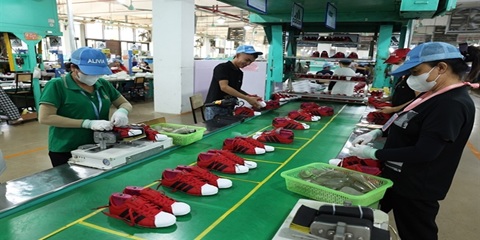
VIỆT NAM'S FOOTWEAR, BAG EXPORTS TO US TOP $8 BILLION IN EIGHT MONTHS
Việt Nam's exports of footwear and handbags to the US exceeded US$8 billion in the first eight months of 2026, as the US and EU remained the country's biggest markets despite sluggish growth in footwear shipments. Exports from Việt Nam's leather and footwear sector reached more than $2.45 billion in August, down 9 per cent from July but up 3 per cent from a year earlier, according to preliminary statistics.
VIETNAM ECONOMY INVESTMENT
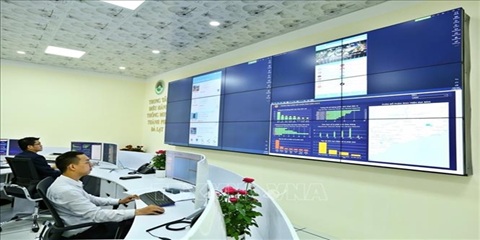
LÂM ĐỒNG TARGETS DIGITAL ECONOMY TO ACCOUNT FOR 30 PER CENT OF GRDP BY 2030
Lâm Đồng Province aims to raise the digital economy’s contribution to around 30 per cent of its gross regional domestic product (GRDP) by 2030, as part of a five-year plan to develop digital economy and society issued recently. Under Plan No. 15358/KH-UBND, the province targets more than 60 per cent of small- and medium-sized enterprises (SMEs) to adopt digital technologies by 2030 while increasing the value of cashless payments to 30 times its GRDP.
Events Sponsors






















