Want to be in the loop?
subscribe to
our notification
Business News
INFRASTRUCTURE UNDERTAKINGS UNLOCKED VIA PRIVATE FUNDING
More private enterprises are eager to participate in the nation’s crucial transport infrastructure projects, helping to push such undertakings forward and help the state save money.
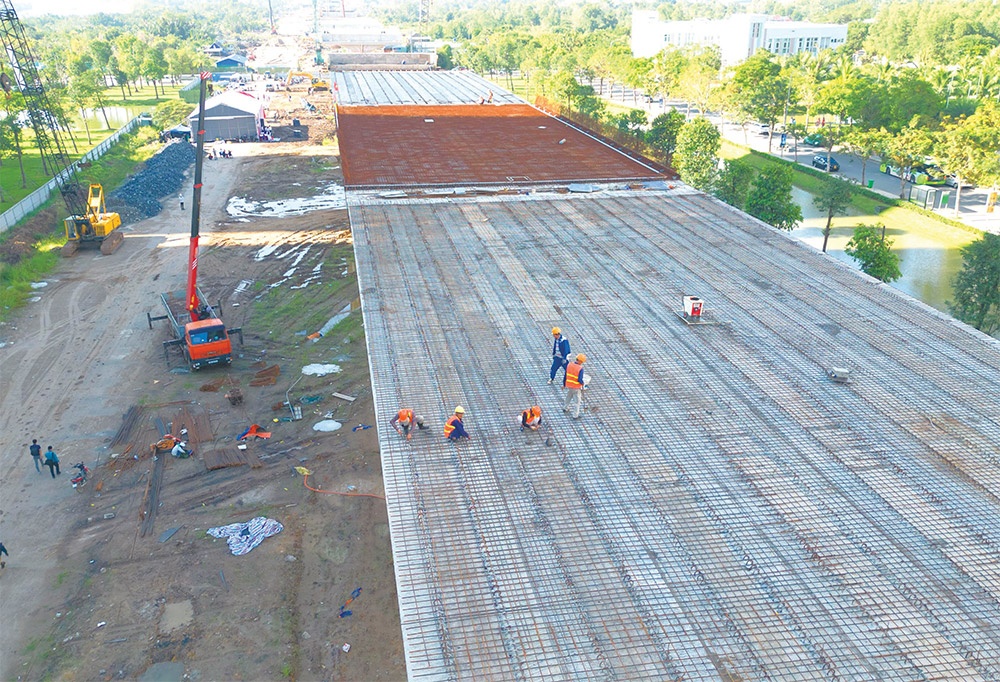
Infrastructure undertakings unlocked via private funding, Photo: Le Toan
Last week, THACO Group expressed its desire to invest in the North-South high-speed railway. The company will contribute 20 per cent of the total capital, nearly $12.27 billion, through equity and legally mobilised domestic capital. The remaining amount, around $50 billion, will be borrowed from domestic and foreign credit institutions that the government guarantee and support all loan interest for 30 years, secured by assets formed from the project.
The company will divide the venture into two implementation phases and complete them within seven years. In addition, THACO wishes to be given priority in allocating land for urban development according to the transit-oriented development model.
Almost two weeks ago, VinSpeed, a subsidiary of Vingroup, was the first private enterprise to propose participation in the same railway. The enterprise seeks direct funding, instead of public capital or a public-private partnership (PPP).
Vietnam is currently encouraging the private economy to participate in key areas of the economy if it has sufficient capacity. If implemented properly, this could be a premise for the formation of private enterprises capable of undertaking national-scale projects like corporations in other developed economies, according to economist Le Xuan Nghia.
“In addition, participating in key initiatives such as high-speed railways help businesses affirm their brands, enhance their reputation, accumulate experience, gradually master technology, and rise in the global value chain,” Nghia said.
“With the implementation of the North-South high-speed railway, Vietnamese enterprises have the opportunity to receive transfer and learn to master core technologies, creating a strong transformation for the railway industry,” Nghia added. “Therefore, when mastering technology, Vietnam can build a railway industry with very high added value, not inferior to the current vehicle industry.”
Meanwhile, in mid-May, the groundbreaking ceremony of the Tu Lien Bridge across the Red River took place in Hanoi. It will connect Dong Anh district and Tay Ho district with a design of two twisted cable-stayed pylons. The total preliminary investment is more than $800 million, which will be implemented under an engineering, procurement, and construction contract.
Vingroup is playing an important role in the venture as the main contractor in the construction consortium, along with Pacific Construction Group from China and others. Vincons Construction Development and Investment JSC, a subsidiary of Vingroup, is also participating in the construction process with a package worth about $435 million.
Previously, Vingroup had proposed to fund construction of Tu Lien Bridge under the build-transfer contract, when the project was expected to be implemented under the PPP form. Hanoi People’s Committee decided to use 100 per cent public capital to ensure progress and effective implementation.
Vietnam has seen many modern infrastructure projects created through the enthusiasm of the private sector.
In the north, Sun Group was attached to the Van Don International Airport, which is the first private airport and considered the most modern in the country. Elsewhere, the Phap Van-Cau Gie Expressway project is the mark of Phuong Thanh Transport Construction and Investment.
In the central region, on National Highway No.1, the name of Deo Ca Group is boldly imprinted in the Deo Ca, Cu Mong, and Co Ma road tunnels in Phu Yen and Binh Dinh provinces, as well as the Hai Van 2 tunnel in Danang. In the South, Deo Ca Group has also left its mark on the Trung Luong-My Thuan Expressway.
Tran Ngoc Chinh, chairman of the Vietnam Urban Planning and Development Association, commented that in recent years, the private sector has demonstrated its capacity in developing key infrastructure projects. These projects were implemented quickly and decisively, without capital increases, to save huge resources for the country.
“Private enterprises are capable of performing well in important tasks for national construction. Therefore, the government should provide policies to attract funding such as preferential loans and appropriate policy mechanisms to meet the common and harmonious development requirements of the country, businesses, and individuals,” he said.
Tran Chung, chairman of the Association of Investors in Vietnam Road Traffic Works, said that mobilising private resources for huge-scale projects is the correct policy.
“With the target of GDP growth of over 8 per cent in 2025 and double digits following that, infrastructure investment is expected to be a strong driving force for the entire economy,” Chung said.
“A modern and synchronous transport and social infrastructure system will serve as the foundation for boosting trade, logistics, production, and livelihoods,” he added.
Source: VIR
Related News

MEMBER CORNER / PROMOTIONS
AN ELECTRIFYING NIGHT WITH THE "QUEEN OF DANCE" THU MINH AT THE GRAND HO TRAM!
The stage at The Grand Ballroom is set to catch fire as Vietnam’s undisputed "Queen of Dance," Thu Minh, takes the spotlight. Renowned for her powerhouse vocals, magnetic stage presence, and sultry, high-energy performances, Thu Minh promises an evening of pure musical euphoria. The energy escalates with an exclusive appearance by special guest and The Voice champion, Vu Thao My.
HR / LABOUR/ EMPLOYMENT
HIGH-QUALITY HUMAN RESOURCES NEEDED TO ATTRACT NEW TECH INVESTMENT CAPITAL
Besides infrastructure, Việt Nam must also rapidly develop a highly skilled workforce to attract investment in AI, semiconductors and advanced manufacturing, experts have said. Don Lam, CEO and co-founder of investment management company VinaCapital, said that global technology investors were increasingly looking at the readiness of the entire ecosystem, with high-quality human resources a decisive factor.

HR / LABOUR/ EMPLOYMENT
HIRING OUTLOOK STRENGTHENS IN Q4 AS SKILLS SHORTAGES PERSIST
Hiring intentions among employers in Việt Nam strengthened in the fourth quarter, with 52 per cent of surveyed companies planning to increase headcount between October and December, according to a ManpowerGroup survey released this week. Việt Nam's hiring outlook was stronger than the Asia Pacific and Middle East (APME) regional average of 33 per cent and the global average of 29 per cent, ranking third in the region and 11th globally among 42 markets surveyed.

BANKING / FINANCE / INSURANCE / TAX
LARGE BANKS FORECAST TO GAIN HIGHER PROFITABILITY IN H2 2026
The return on average assets (ROAA) of the banking sector will likely remain stable at around 1.5 per cent in the second half of 2026, but profitability divergence among banks will increase, with large banks outperforming peers on stronger margins and diversified earnings, analysts forecast. In a recent report on the banking sector, analysts from the Vietnam Investors Service Rating said the sector’s ROAA rose by 10 basis points quarter-on-quarter to 1.51 per cent in the first half of this year, driven by net interest margin (NIM) improvements at some State-owned banks and large private banks.
GARMENT / TEXTILE
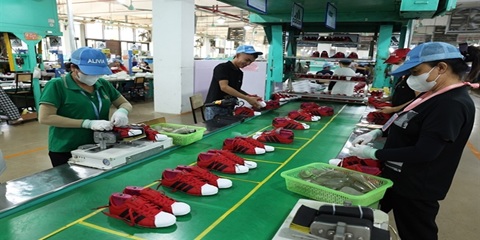
VIỆT NAM'S FOOTWEAR, BAG EXPORTS TO US TOP $8 BILLION IN EIGHT MONTHS
Việt Nam's exports of footwear and handbags to the US exceeded US$8 billion in the first eight months of 2026, as the US and EU remained the country's biggest markets despite sluggish growth in footwear shipments. Exports from Việt Nam's leather and footwear sector reached more than $2.45 billion in August, down 9 per cent from July but up 3 per cent from a year earlier, according to preliminary statistics.
VIETNAM ECONOMY INVESTMENT
LÂM ĐỒNG TARGETS DIGITAL ECONOMY TO ACCOUNT FOR 30 PER CENT OF GRDP BY 2030
Lâm Đồng Province aims to raise the digital economy’s contribution to around 30 per cent of its gross regional domestic product (GRDP) by 2030, as part of a five-year plan to develop digital economy and society issued recently. Under Plan No. 15358/KH-UBND, the province targets more than 60 per cent of small- and medium-sized enterprises (SMEs) to adopt digital technologies by 2030 while increasing the value of cashless payments to 30 times its GRDP.
Events Sponsors






















