Want to be in the loop?
subscribe to
our notification
Business News
INFLATION IN CHECK DUE TO FAVOURABLE FACTORS
Việt Nam’s inflation will be kept around 4 per cent in the second half of the year thanks to many favourable factors.
Nguyễn Bá Minh, head of the Institute of Economics and Finance, is relatively optimistic about short-term inflation.
He held that the unpredictability of the Russia-Ukraine conflict and the COVID-19 pandemic would add uncertainty to the world’s economy, slowing down its recovery pace and driving down global material prices.
The situation would be better back home as agricultural output is expected to keep pace with domestic demand. As farm produce weighs heavily on the Consumer Price Index (CPI), their supply-demand balance would result in inflationary stability.
Another favourable factor is Việt Nam’s inflation-focused monetary policies, which had proved to be highly effective against volatile prices.
“All factors considered, I think the inflation target of 4 per cent is plausible. I estimate annual CPI growth at around 3.3 to 3.9 per cent this year,” he said.
Lê Quốc Phương, former deputy director of the Commercial and Industrial Information Centre under the Ministry of Industry and Trade, asserted that the world's economy would definitely slide into recession in 2022.
He has two scenarios for Việt Nam's economy in the short term amid the global downturn.
Under the first scenario, the recession will come with falling commodity prices worldwide. Lower global prices, coupled with an abundant domestic food supply, will give the country much room for inflation control. The target of 4 per cent is within reach.
Under the second scenario, global prices will continue to increase steadily, resulting in FED's benchmark hikes. The restrictive stance on interest rates will weigh on exchange rates, causing a pass-through effect on domestic prices. The target of 4 per cent will be less likely.
The former deputy director suggested the coordination of flexible monetary policies and fiscal policies and more tax cuts on fuels to curb inflation in case the second scenario unfolds.
Ngô Trí Long, former head of the Ministry of Finance (MoF)'s Price Research Institute, underscored three major factors behind inflationary pressures in Việt Nam in the second half of 2022.
First, Vietnamese economy has high trade openness and is largely dependent on imported materials. Mounting material prices in the world thus would translate into domestic prices.
Second, rising fuel prices, undoubtedly, would add to production bills, lifting inflation.
Third, the stimulus package of VNĐ350 trillion takes root, causing a big shift in aggregate demand. High demand will cause upward pressure on price levels.
He forecast that domestic inflation would overshoot the target by around 0.5 per cent by year-end.
Nguyễn Xuân Định, deputy head of the MoF's General Policy Office, remarked that soaring prices had become the order of the day in many countries. Notably, inflation hit 8.6 per cent in the US, whereas the figure was 9 per cent in the EU.
Meanwhile, core inflation was kept at just 1.25 per cent in Việt Nam in the first six months of 2022.
Amid inflationary pressures from overseas, he called for active and flexible monetary policy to keep inflation in check for the rest of the year.
He urged the authorities to come up with a sufficient supply of essential commodities to avoid shortages, ensuring price stability.
Finally, he suggested the use of price-stabilising funds and tax cuts to ease domestic fuel prices, a large contributor to rising inflation.
Nguyễn Mạnh Hùng, chairman of the Việt Nam Consumers Protection Association, was concerned that the CPI growth of 2.44 per cent in the first half of 2022 was too good to be true.
"We've found a discrepancy between the actual price growth and the reported figure of 2.44 per cent. Food prices rose in many localities but the report said the opposite," he said.
The chairman was relatively uncertain about future, saying that the Russia-Ukraine conflict would continue leading to price fluctuations.
Source: VNS
Related News
BANKING / FINANCE / INSURANCE / TAX
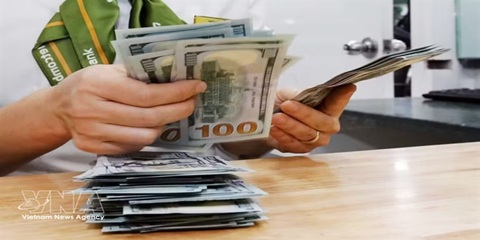
REMITTANCES TO HCM CITY RISE NEARLY 40% IN Q3
Remittances to HCM City reached more than US$2.83 billion in the third quarter of this year, up 39.5 per cent from the previous quarter and 3.6 per cent year-on-year. This was the first quarter showing positive annual growth this year, helping narrow the decline in remittance inflows over the first nine months. According to the State Bank of Vietnam (SBV)’s Regional Branch 2, remittances transferred to HCM City through credit institutions and economic organisations totalled $2.835 billion in Q3, an increase of more than $802 million from the previous quarter.
TECHNOLOGY
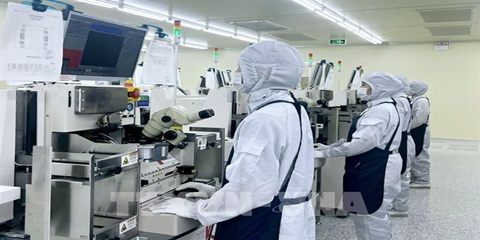
TECH SECTOR GROWTH OPENS UP OPPORTUNITIES FOR VIỆT NAM TO GO GLOBAL
The growth of the electronics, semiconductor and high-tech sectors worldwide is opening up a variety of opportunities for Vietnamese enterprises to integrate more deeply into the global supply chain. However, to become suppliers for these corporations, domestic enterprises must meet rigorous standards regarding quality, technology, productivity and order fulfilment capabilities.
VIETNAM ECONOMY INVESTMENT
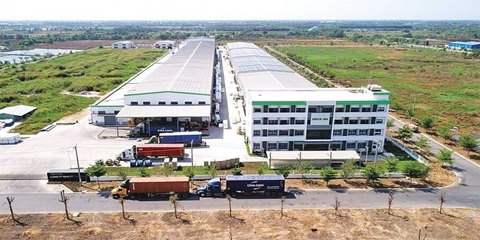
FOREIGN INVESTORS SEEKING A SYNCHRONISED MANUFACTURING ECOSYSTEM
Instead of focusing only on land costs and incentives as usual, foreign investors are seeking a synchronised manufacturing ecosystem, from stable power supply and logistics to shared infrastructure and the convenience of completing residence procedures for experts to serve their long-term investment in the country.

MEMBER CORNER / PROMOTIONS
SENTRYSAFE FHW40200 – PROTECT YOUR VALUABLES, ENJOY PEACE OF MIND!
Looking for a reliable solution to protect your important documents, cash, and valuables from fire and water damage? Genuine SENTRYSAFE - Reliable protection for your valuables and peace of mind! Contact Sen Wai Vietnam for more information and personalized product recommendations.
PROPERTY / INDUSTRIAL ZONE
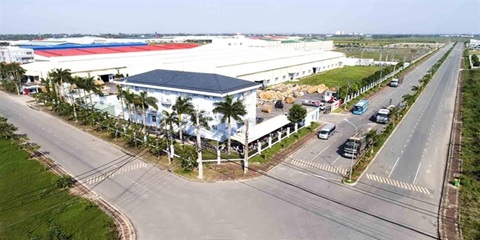
HCM CITY ATTRACTS US$5.7 BILLION INTO EXPORT PROCESSING AND INDUSTRIAL ZONES
HCM City attracted US$5.7 billion in domestic and foreign investment into its export processing and industrial zones during the first nine months of 2026. The figure exceeded the city's full-year target by 31 per cent, highlighting strong momentum in high-quality industrial investment under Resolution No.10-NQ/TW. Total investment reached 131 per cent of the 2026 target of $4.25 billion and represented a 29 per cent increase compared with the same period in 2025, according to the city's Export Processing and Industrial Zones Authority (HEPZA).
INFRASTRUCTURE / CONSTRUCTION / LOGISTIC / PORT
DONG THAP PROVINCE STEPS UP INDUSTRIAL EXPANSION AND INFRASTRUCTURE CONNECTIVITY
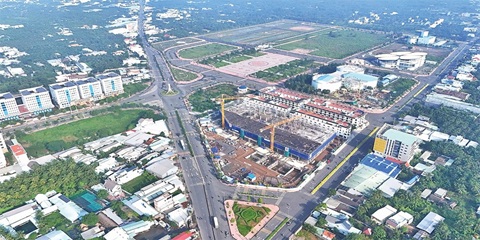
Accelerating public investment, strengthening inter-regional connectivity, and expanding industrial land are helping Dong Thap efficiently bolster competitiveness and drive economic growth. Following the 2025 merger of the former Dong Thap and Tien Giang provinces, the expanded Dong Thap province in the Mekong Delta faces mounting pressure to accelerate infrastructure development and strengthen connectivity among local economic zones, urban areas, industrial parks (IPs), and production centres.
Events Sponsors






















