Want to be in the loop?
subscribe to
our notification
Business News
INFLATION CONTROL UNDER PRESSURE FROM ALL DIRECTIONS
A rebound in domestic consumption and electricity price hikes may put the government’s efforts to control inflation under pressure this year, in addition to salary increases.
The government’s key annual resolution on tasks to implement the country’s socioeconomic development plan and state budget estimates for the year has underlined the need for authorised agencies to closely follow the world’s economic situation in order to take proper action domestically to rein in inflation at 4-4.5 per cent, as set by the National Assembly (NA).
According to the General Statistics Office (GSO), a number of factors are expected to pressurise the government’s efforts in controlling inflation this year, such as a hike in salary both for the public and private sectors, and an increase in consumption in the domestic market and electricity prices.
The government is now considering a rise in regional minimum salary for enterprises in different regions by 6 per cent this year, valid from July 1. This increase level was fixed by the National Salary Council last month, and will be subject to the government’s approval.
If adopted, the wage in Region 1 will be adjusted from around $197.50 to $209 per month. The 6 per cent increase is tantamount to a climb of $10.55 in Region 2, and $9.30 and $8.45 in Regions 3 and 4, respectively.
Region 1 embraces the urban areas of Hanoi and Ho Chi Minh City; Region 2 encompasses the rural areas of these two cities, along with major urban areas in the country such as Can Tho, Danang, and Haiphong; Region 3 covers provincial cities and the districts of Bac Ninh, Bac Giang and Hai Duong provinces; and Region 4 includes the rest of the country.
According to a NA resolution adopted last November, the government will have to implement a new salary regime for the public sector from July. The new salary regime is part of a bigger plan for comprehensive salary reform being drafted by the government in accordance with a 2018 resolution on reforming the country’s wage policies. The new salary regime should have been implemented in 2021 but has been delayed.
Since July 2023, the base salary for cadres, public servants, and armed forces’ personnel has increased by 20.8 per cent to $76 a month.
Under its plan, the NA has agreed to transfer $803.3 million from localities failed to be disbursed for salary reform in the public sector in 2023 to this year for the same purpose.
According to the GSO, psychologically, rises in salaries will often cause a hike in prices in the market, as an increase in fuel and electricity prices often do.
At a meeting on reviewing Vietnam Electricity (EVN) operations in 2023 and tasks for 2024 in Hanoi on January 2, Nguyen Hoang Anh, chairman of the Commission for Management of State Capital at Enterprises, said that EVN suffered from a loss [of about $1.03 billion] in 2023, due to a rise in input material prices and high exchange rates.
“If electricity prices fails to increase, the loss will continue in 2024. The government is considering a mechanism that may allow an electricity price hike of below 5 per cent every three months,” Anh said.
According to the GSO, a hike in power prices has contributed to the consumer price index (CPI) in 2023. Specifically, the price of household electricity rose 4.86 per cent, leading to a 0.16 per cent rise in CPI. If the electricity price is increased in 2024, the CPI will continue to climb.
The GSO also said the government’s efforts to control inflation this year will be affected by an expansion in travelling, ascending consumption of goods and services.
The total retail and service consumption revenue in 2023 in the country is estimated to have reached more than $262.94 billion, up 9.6 per cent on-year.
The goods retail revenue last year hit $205 billion, accounting for 78 per cent of total and up 8.6 per cent on-year - in which the price of many important groups of items also expanded, such as cultural and educational items (14.4 per cent); food and foodstuff (11.7 per cent); home appliances (7.5 per cent); and textiles and garments (7.1 per cent).
Vietnam’s CPI in 2023 rose 3.25 per cent compared to the previous year.
According to the Asian Development Bank, Vietnam’s prudent and proactive monetary policy, supported by price controls on gasoline, electricity, food, health care, and education, should keep inflation in check. The inflation forecasts are maintained at 4 per cent for 2024.
Source: VIR
Related News

BANKING / FINANCE / INSURANCE / TAX
REMITTANCES TO HCM CITY RISE NEARLY 40% IN Q3
Remittances to HCM City reached more than US$2.83 billion in the third quarter of this year, up 39.5 per cent from the previous quarter and 3.6 per cent year-on-year. This was the first quarter showing positive annual growth this year, helping narrow the decline in remittance inflows over the first nine months. According to the State Bank of Vietnam (SBV)’s Regional Branch 2, remittances transferred to HCM City through credit institutions and economic organisations totalled $2.835 billion in Q3, an increase of more than $802 million from the previous quarter.

TECHNOLOGY
TECH SECTOR GROWTH OPENS UP OPPORTUNITIES FOR VIỆT NAM TO GO GLOBAL
The growth of the electronics, semiconductor and high-tech sectors worldwide is opening up a variety of opportunities for Vietnamese enterprises to integrate more deeply into the global supply chain. However, to become suppliers for these corporations, domestic enterprises must meet rigorous standards regarding quality, technology, productivity and order fulfilment capabilities.
VIETNAM ECONOMY INVESTMENT
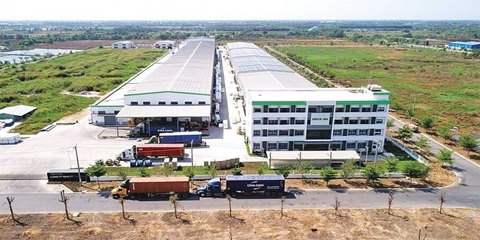
FOREIGN INVESTORS SEEKING A SYNCHRONISED MANUFACTURING ECOSYSTEM
Instead of focusing only on land costs and incentives as usual, foreign investors are seeking a synchronised manufacturing ecosystem, from stable power supply and logistics to shared infrastructure and the convenience of completing residence procedures for experts to serve their long-term investment in the country.

MEMBER CORNER / PROMOTIONS
SENTRYSAFE FHW40200 – PROTECT YOUR VALUABLES, ENJOY PEACE OF MIND!
Looking for a reliable solution to protect your important documents, cash, and valuables from fire and water damage? Genuine SENTRYSAFE - Reliable protection for your valuables and peace of mind! Contact Sen Wai Vietnam for more information and personalized product recommendations.
PROPERTY / INDUSTRIAL ZONE
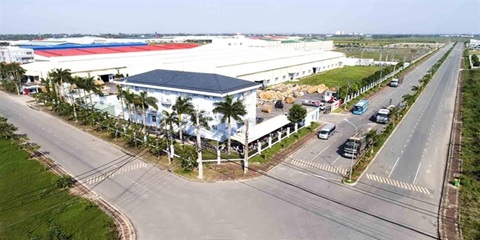
HCM CITY ATTRACTS US$5.7 BILLION INTO EXPORT PROCESSING AND INDUSTRIAL ZONES
HCM City attracted US$5.7 billion in domestic and foreign investment into its export processing and industrial zones during the first nine months of 2026. The figure exceeded the city's full-year target by 31 per cent, highlighting strong momentum in high-quality industrial investment under Resolution No.10-NQ/TW. Total investment reached 131 per cent of the 2026 target of $4.25 billion and represented a 29 per cent increase compared with the same period in 2025, according to the city's Export Processing and Industrial Zones Authority (HEPZA).
INFRASTRUCTURE / CONSTRUCTION / LOGISTIC / PORT
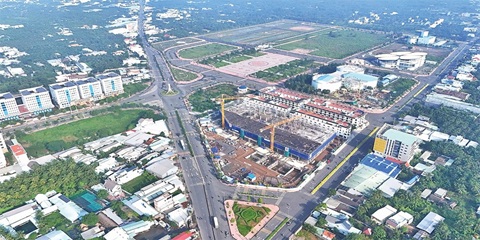
DONG THAP PROVINCE STEPS UP INDUSTRIAL EXPANSION AND INFRASTRUCTURE CONNECTIVITY
Accelerating public investment, strengthening inter-regional connectivity, and expanding industrial land are helping Dong Thap efficiently bolster competitiveness and drive economic growth. Following the 2025 merger of the former Dong Thap and Tien Giang provinces, the expanded Dong Thap province in the Mekong Delta faces mounting pressure to accelerate infrastructure development and strengthen connectivity among local economic zones, urban areas, industrial parks (IPs), and production centres.
Events Sponsors






















