Want to be in the loop?
subscribe to
our notification
Business News
INDUSTRY AND TRADE SECTOR TARGETS OVER 10% GROWTH IN 2026
Following a year marked by positive and notable achievements in 2025, the Ministry of Industry and Trade is set to implement a range of measures to strive for a growth exceeding 10 per cent in 2026.
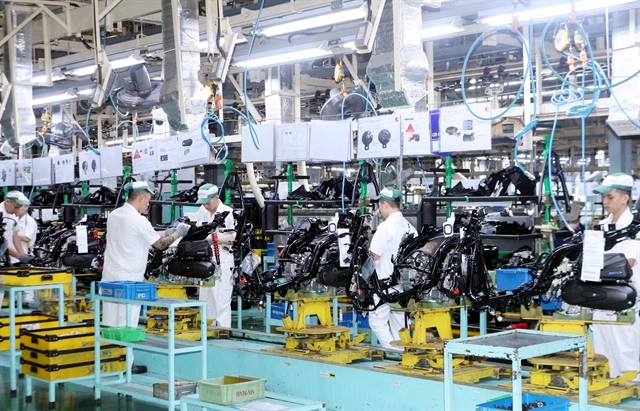
A production line of Honda Vietnam at Đồng Văn II Industrial Park, Ninh Bình Province. This province's industrial production index rose sharply by 22.8 per cent in 2025. — VNA/VNS Photo
HÀ NỘI — After a year of solid and wide-ranging gains in 2025, the Ministry of Industry and Trade (MOIT) is preparing a comprehensive set of measures, aiming for an economic growth rate of more than 10 per cent this year, officials said.
At the ministry’s regular press conference for the fourth quarter of 2025, held on January 29, Mai Thu Hiền, deputy head of the Department of Planning and Finance under the MOIT, said Việt Nam’s economic growth last year strengthened quarter by quarter across most sectors.
GDP rose by 7 per cent in the first quarter, 8.16 per cent in the second quarter, 8.25 per cent in the third quarter and 8.46 per cent in the fourth quarter. For the full year, GDP increased by 8.02 per cent compared with the previous year.
Throughout 2025, the ministry proactively and flexibly followed the directions of the Party and the Government, closely monitoring global developments to guide and manage the sector.
It implemented policies to develop infrastructure, create favourable conditions for innovation, attract domestic and foreign investment and decisively carry out tasks to promote production, enhance goods circulation and stabilise the market.
According to Hiền, industrial production and trade activities in 2025 recorded many positive results. Industrial production maintained strong momentum, with the industrial production index rising by 9.2 per cent, higher than in 2024.
Key growth drivers included manufacturing and processing, public investment activities and exports of computers, electronic products and components, along with various types of mobile phones and related components, all of which continued to post double-digit growth.
The industrial production index also surged in several localities, notably Phú Thọ with a 26.4 per cent increase, Ninh Bình 22.8 per cent, Bắc Ninh 17.1 per cent and Nghệ An 16.5 per cent year on year.
Việt Nam’s trade performance in 2025 also featured several bright spots. The trade surplus reached US$20.1 billion, equal to 4.2 per cent of total export turnover, contributing positively to macro-economic stability, improving the balance of payments, supporting economic growth and further reinforcing trade as a key driver of economic expansion and international integration.
Ministry data showed total export turnover in 2025 reached $475.1 billion, up 17 per cent year on year, while import turnover exceeded $455 billion, rising by 19.4 per cent.
The domestic market in 2025 recovered and developed steadily, becoming a reliable pillar for the consumption of Vietnamese goods. The supply of goods remained abundant, fully meeting production needs and consumer demand.
Domestic trade continued to play an important role in curbing inflation, stabilising the macro-economy and ensuring social security. For the year as a whole, total retail sales of goods and consumer service revenues were estimated at more than VNĐ7 quadrillion, up 9.2 per cent year on year.
To achieve the growth target of over 10 per cent in 2026, the ministry will implement resolutions of the National Assembly and the Government, particularly the economic recovery and development programme, as well as newly issued resolutions of the Politburo, according to Deputy Minister of Industry and Trade Nguyễn Sinh Nhật Tân.
From the start of the year, the MOIT has prioritised organising production more efficiently, reviewing and cutting costs to reduce production expenses, strengthening the competitiveness of products and corporate brands and rolling out solutions to boost production and consumption.
The ministry will also focus on resolving difficulties and bottlenecks to accelerate construction progress and ensure the early completion and operation of national important and key projects.
It will promote investment in reviewed projects, particularly newly launched key infrastructure projects and those aimed at strengthening export production capacity.
In addition, the ministry will step up exports while strictly controlling imports and making effective use of free trade agreements.
It will also expand the application of technology and digital transformation in import-export activities, proactively develop strategies to widen export markets and increase the presence of Vietnamese enterprises in emerging economies.
The ministry will intensify communication efforts in response to trade barriers imposed by partner countries on Vietnamese exports and actively seek domestic market outlets.
At the same time, it will continue to promote industrial restructuring, prioritise the development and transfer of new technologies and focus on building and effectively implementing a legal framework for smart manufacturing development, including smart factory and smart governance models.
Special attention is being paid to inflation control during the Tết festival period. The ministry is closely monitoring price movements of essential goods to proactively and flexibly regulate supply and demand and stabilise markets and prices before, during and after the Lunar New Year.
Ensuring sufficient supplies of electricity, petroleum, essential goods and input materials for production, business activities and daily life remains a top priority. — VNS
Source: VNS
Related News

BANKING / FINANCE / INSURANCE / TAX
REMITTANCES TO HCM CITY RISE NEARLY 40% IN Q3
Remittances to HCM City reached more than US$2.83 billion in the third quarter of this year, up 39.5 per cent from the previous quarter and 3.6 per cent year-on-year. This was the first quarter showing positive annual growth this year, helping narrow the decline in remittance inflows over the first nine months. According to the State Bank of Vietnam (SBV)’s Regional Branch 2, remittances transferred to HCM City through credit institutions and economic organisations totalled $2.835 billion in Q3, an increase of more than $802 million from the previous quarter.
TECHNOLOGY
TECH SECTOR GROWTH OPENS UP OPPORTUNITIES FOR VIỆT NAM TO GO GLOBAL
The growth of the electronics, semiconductor and high-tech sectors worldwide is opening up a variety of opportunities for Vietnamese enterprises to integrate more deeply into the global supply chain. However, to become suppliers for these corporations, domestic enterprises must meet rigorous standards regarding quality, technology, productivity and order fulfilment capabilities.
VIETNAM ECONOMY INVESTMENT
FOREIGN INVESTORS SEEKING A SYNCHRONISED MANUFACTURING ECOSYSTEM
Instead of focusing only on land costs and incentives as usual, foreign investors are seeking a synchronised manufacturing ecosystem, from stable power supply and logistics to shared infrastructure and the convenience of completing residence procedures for experts to serve their long-term investment in the country.
MEMBER CORNER / PROMOTIONS
SENTRYSAFE FHW40200 – PROTECT YOUR VALUABLES, ENJOY PEACE OF MIND!
Looking for a reliable solution to protect your important documents, cash, and valuables from fire and water damage? Genuine SENTRYSAFE - Reliable protection for your valuables and peace of mind! Contact Sen Wai Vietnam for more information and personalized product recommendations.
PROPERTY / INDUSTRIAL ZONE
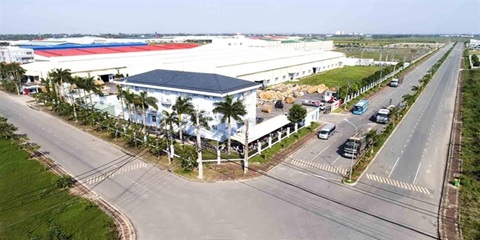
HCM CITY ATTRACTS US$5.7 BILLION INTO EXPORT PROCESSING AND INDUSTRIAL ZONES
HCM City attracted US$5.7 billion in domestic and foreign investment into its export processing and industrial zones during the first nine months of 2026. The figure exceeded the city's full-year target by 31 per cent, highlighting strong momentum in high-quality industrial investment under Resolution No.10-NQ/TW. Total investment reached 131 per cent of the 2026 target of $4.25 billion and represented a 29 per cent increase compared with the same period in 2025, according to the city's Export Processing and Industrial Zones Authority (HEPZA).
INFRASTRUCTURE / CONSTRUCTION / LOGISTIC / PORT
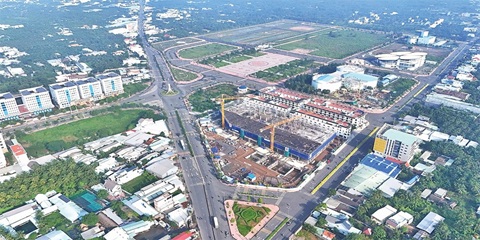
DONG THAP PROVINCE STEPS UP INDUSTRIAL EXPANSION AND INFRASTRUCTURE CONNECTIVITY
Accelerating public investment, strengthening inter-regional connectivity, and expanding industrial land are helping Dong Thap efficiently bolster competitiveness and drive economic growth. Following the 2025 merger of the former Dong Thap and Tien Giang provinces, the expanded Dong Thap province in the Mekong Delta faces mounting pressure to accelerate infrastructure development and strengthen connectivity among local economic zones, urban areas, industrial parks (IPs), and production centres.
Events Sponsors






















