Want to be in the loop?
subscribe to
our notification
Business News
INDUSTRIAL ZONE SUB-AREAS ATTRACTING ATTENTION OF BUYERS
Amid a slowly but steadily materialising recovery from social restrictions, real estate prices in the vicinity of Vietnam’s industrial zones are beginning to climb, heavily pushed by low supply.
Nguyen Van Dinh, vice chairman of the Vietnam Real Estate Brokers Association, said that although the third quarter was overshadowed by the pandemic, most industrial zones (IZ) were able to maintain normal production activities, except for a handful of provinces. “However, the pandemic significantly affected the rental business around IZs,” said Dinh.
Tran Huu Giap, CEO of Gia Dia Real Estate JSC, explained that inland projects in Bim Son district of the central province of Thanh Hoa are receiving great interest, despite the slow reopening.
“The supply of newly-built projects around IZs is currently limited, and the few small- and medium-sized projects are not fulfilling demand. Therefore, any new project immediately attracts attention,” Giap said.
A recent report by JLL stated that the industrial land market in the south of Vietnam had no new supply and remained at around 25,220 hectares in Q3.
Similarly, only one ready-built factory project was launched on the market during Q1/2021, with the total land supply reaching 3.3 million square metres. Meanwhile, occupancy rates were maintained at 85 and 87 per cent for IZs and ready-built factories respectively, as there were no notable transactions in both areas.
Due to the limited supply of new land and properties, land prices in areas surrounding IZs have been skyrocketing. Near Binh Duong city’s VSIP 2, land prices soared to around $950 per sq.m, with some locations even reaching as high as $1,740 per sq.m.
In contrast to the south, the industrial real estate market in the north remained more active, with new supply in both IZs and ready-built factories.
Pho Noi A Industrial Park in the northern province of Hung Yen saw an expansion of 93ha funded by Hoa Phat Group in Q3. Meanwhile, the northern province of Bac Ninh’s Yen Phong 2C Industrial Park by Viglacera has completed procedures like site clearances and new constructions, bringing the total available area for currently leasable industrial land in the north to about 9,900ha.
Following the new supply, the occupancy rates of IZs in Haiphong, Hung Yen, Hanoi, Bac Ninh, and Hai Duong temporarily decreased slightly to 72 per cent, lower than in previous quarters.
Nevertheless, Bac Ninh’s land prices around VSIP increased sharply to more than $1,000 per sq.m, nearly double the price of two years ago. In neighbouring Bac Giang, land prices near IZs like Van Trung, Dinh Tram, Song Khu, and Quang Chau communes also increased by up to 70 per cent compared to the end of 2020, reaching peaks of around $1,740 sper sq.m.
According to Le Dinh Chung, deputy CEO of Hai Phat Land, after the pandemic is under control, Bac Ninh and Bac Giang will likely be the two provinces with the most positive signs of recovery. “Real estate businesses are watching the market and even participating in new transactions through online channels,” said Chung.
Although heavily affected by the pandemic, the supply and absorption rate in the residential market of the southwest region decreased sharply, to only about 25 per cent, but according to Duong Quoc Thuy, chairman of the Can Tho Real Estate Association, real estate projects around IZs are still hot. “The market still absorbed popular products with clean legal status in the VND1 billion ($43,500) bracket located at industrial hubs and benefiting from public investment projects,” Thuy said.
By the end of May, 394 IZs have been established with a total natural land area of about 121,900ha. 286 of these are in operation with a total natural land area of about 86,000ha.
Source: VIR
Related News

BANKING / FINANCE / INSURANCE / TAX
REMITTANCES TO HCM CITY RISE NEARLY 40% IN Q3
Remittances to HCM City reached more than US$2.83 billion in the third quarter of this year, up 39.5 per cent from the previous quarter and 3.6 per cent year-on-year. This was the first quarter showing positive annual growth this year, helping narrow the decline in remittance inflows over the first nine months. According to the State Bank of Vietnam (SBV)’s Regional Branch 2, remittances transferred to HCM City through credit institutions and economic organisations totalled $2.835 billion in Q3, an increase of more than $802 million from the previous quarter.
TECHNOLOGY
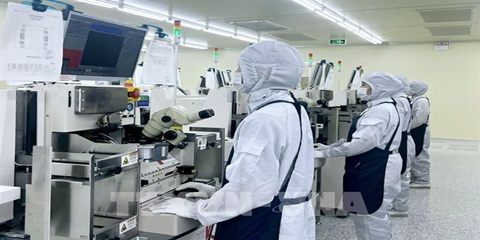
TECH SECTOR GROWTH OPENS UP OPPORTUNITIES FOR VIỆT NAM TO GO GLOBAL
The growth of the electronics, semiconductor and high-tech sectors worldwide is opening up a variety of opportunities for Vietnamese enterprises to integrate more deeply into the global supply chain. However, to become suppliers for these corporations, domestic enterprises must meet rigorous standards regarding quality, technology, productivity and order fulfilment capabilities.
VIETNAM ECONOMY INVESTMENT
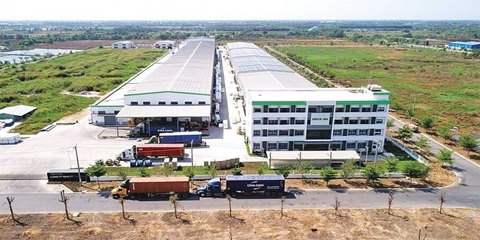
FOREIGN INVESTORS SEEKING A SYNCHRONISED MANUFACTURING ECOSYSTEM
Instead of focusing only on land costs and incentives as usual, foreign investors are seeking a synchronised manufacturing ecosystem, from stable power supply and logistics to shared infrastructure and the convenience of completing residence procedures for experts to serve their long-term investment in the country.
MEMBER CORNER / PROMOTIONS
SENTRYSAFE FHW40200 – PROTECT YOUR VALUABLES, ENJOY PEACE OF MIND!
Looking for a reliable solution to protect your important documents, cash, and valuables from fire and water damage? Genuine SENTRYSAFE - Reliable protection for your valuables and peace of mind! Contact Sen Wai Vietnam for more information and personalized product recommendations.
PROPERTY / INDUSTRIAL ZONE
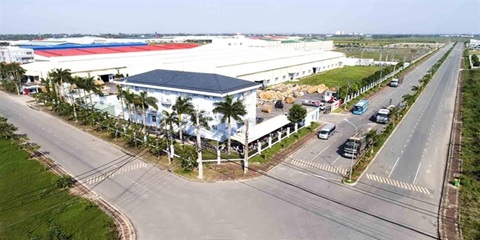
HCM CITY ATTRACTS US$5.7 BILLION INTO EXPORT PROCESSING AND INDUSTRIAL ZONES
HCM City attracted US$5.7 billion in domestic and foreign investment into its export processing and industrial zones during the first nine months of 2026. The figure exceeded the city's full-year target by 31 per cent, highlighting strong momentum in high-quality industrial investment under Resolution No.10-NQ/TW. Total investment reached 131 per cent of the 2026 target of $4.25 billion and represented a 29 per cent increase compared with the same period in 2025, according to the city's Export Processing and Industrial Zones Authority (HEPZA).
INFRASTRUCTURE / CONSTRUCTION / LOGISTIC / PORT
DONG THAP PROVINCE STEPS UP INDUSTRIAL EXPANSION AND INFRASTRUCTURE CONNECTIVITY
Accelerating public investment, strengthening inter-regional connectivity, and expanding industrial land are helping Dong Thap efficiently bolster competitiveness and drive economic growth. Following the 2025 merger of the former Dong Thap and Tien Giang provinces, the expanded Dong Thap province in the Mekong Delta faces mounting pressure to accelerate infrastructure development and strengthen connectivity among local economic zones, urban areas, industrial parks (IPs), and production centres.
Events Sponsors






















