Want to be in the loop?
subscribe to
our notification
Business News
INDUSTRIAL REALTY STOCKS REMAIN ATTRACTIVE IN SECOND HALF OF 2022
The shift of global investment to Vietnam is creating a bright spot for the industrial park real estate market.
A recent report by SSI Research expected that the industry's profit after tax will grow by 47.3 per cent compared to the same period last year thanks to industrial land demand which is forecast to recover positively after the economy reopened post-pandemic.
These positive signals also open up many expectations for industrial real estate stocks in the second half of 2022.
Speaking on a talkshow organised by Vietnam Investment Review newspaper, Ngo Thi Kim Thanh, senior Investment strategy specialist at the Center for Analysis and Investment Consulting of SSI Securities, believes that in the first period of 2022, cash flow into the stock market witnessed a strong divergence and a circulation between industry groups.
Recently the group of industrial real estate stocks recovered quite strongly, boosted by positive growth in demand for rental in industrial real estate when FDI flows tend to return to Viet Nam after two years of being interrupted by COVID-19 and causing rent prices in industrial parks to rise.
Although industrial real estate stocks have sharply rebounded, it is no longer as easy as in the previous period to choose the right stocks for investment due to different business results among companies.
However, SSI experts said that there are still attractive valuation stocks that investors may be interested in, which are those with large land banks available for lease and large cleared lands.
A forecast report of SSI Research showed that profit after tax of listed companies in the last six months of 2022 will grow by more than 24 per cent, mainly thanks to the strong increase in the rental land area during the period.
In addition, some industrial zones changed from regular recording to one-time recording, leading to a sharp gain in profits.
In 2023, SSI Research expected that the net profit of listed industrial park developers grows by about 18 per cent year-on-year due to many factors. The first is that the total area of land for lease rise by 10 per cent per year. Second, land rents are expected to pick up 8 per cent in the south Viet Nam and 6 per cent in the north in 2023.
Of which, Kinh Bac City Development Holding Corporation (HoSE: KBC)’s profit after tax is estimated at VND3.7 trillion (nearly US$158.4 million), up 25 per cent on year, as current projects continue to be the main source of revenue. Moreover, phase 3 of Trang Due Industrial Park project and other industrial zones in Long An Province can start to generate income.
Meanwhile, IDICO Corporatio (HNX: IDC)’s net profit is expected to edged up 24 per cent year-on-year to VND2.2 trillion, mainly thanks to profits from the expanded Huu Thanh and Phu My Industrial Parks, and the divestment in subsidiary companies.
SSI experts also noted that revenue on the financial statements of enterprises has long-term unrealised revenue.
For some industrial park developers, the value is very large such as IDC has VND5.9 billion in unrealised revenue. The reason is that in the past, revenues from leasing of industrial parks were recorded in the long-term unrealised revenue section and will be distributed over the remaining time of the industrial park.
For a large long-term unrealised revenue, if the investor does not have a land fund for lease, as well as a new project, this is a rather large source of money and will be used to pay cash dividends. This is also an investment trend to minimise risks when the market fluctuates, especially for investors who prefer a high dividend policy.
Source: VIR
Related News

BANKING / FINANCE / INSURANCE / TAX
REMITTANCES TO HCM CITY RISE NEARLY 40% IN Q3
Remittances to HCM City reached more than US$2.83 billion in the third quarter of this year, up 39.5 per cent from the previous quarter and 3.6 per cent year-on-year. This was the first quarter showing positive annual growth this year, helping narrow the decline in remittance inflows over the first nine months. According to the State Bank of Vietnam (SBV)’s Regional Branch 2, remittances transferred to HCM City through credit institutions and economic organisations totalled $2.835 billion in Q3, an increase of more than $802 million from the previous quarter.

TECHNOLOGY
TECH SECTOR GROWTH OPENS UP OPPORTUNITIES FOR VIỆT NAM TO GO GLOBAL
The growth of the electronics, semiconductor and high-tech sectors worldwide is opening up a variety of opportunities for Vietnamese enterprises to integrate more deeply into the global supply chain. However, to become suppliers for these corporations, domestic enterprises must meet rigorous standards regarding quality, technology, productivity and order fulfilment capabilities.
VIETNAM ECONOMY INVESTMENT
FOREIGN INVESTORS SEEKING A SYNCHRONISED MANUFACTURING ECOSYSTEM
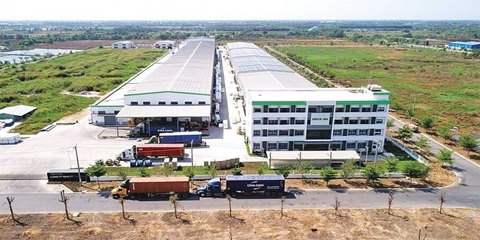
Instead of focusing only on land costs and incentives as usual, foreign investors are seeking a synchronised manufacturing ecosystem, from stable power supply and logistics to shared infrastructure and the convenience of completing residence procedures for experts to serve their long-term investment in the country.
MEMBER CORNER / PROMOTIONS
SENTRYSAFE FHW40200 – PROTECT YOUR VALUABLES, ENJOY PEACE OF MIND!
Looking for a reliable solution to protect your important documents, cash, and valuables from fire and water damage? Genuine SENTRYSAFE - Reliable protection for your valuables and peace of mind! Contact Sen Wai Vietnam for more information and personalized product recommendations.
PROPERTY / INDUSTRIAL ZONE
HCM CITY ATTRACTS US$5.7 BILLION INTO EXPORT PROCESSING AND INDUSTRIAL ZONES
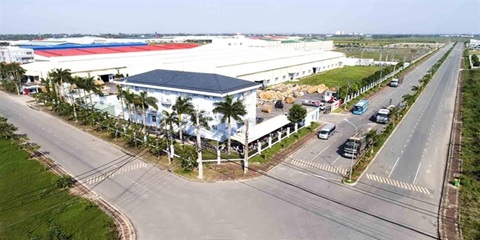
HCM City attracted US$5.7 billion in domestic and foreign investment into its export processing and industrial zones during the first nine months of 2026. The figure exceeded the city's full-year target by 31 per cent, highlighting strong momentum in high-quality industrial investment under Resolution No.10-NQ/TW. Total investment reached 131 per cent of the 2026 target of $4.25 billion and represented a 29 per cent increase compared with the same period in 2025, according to the city's Export Processing and Industrial Zones Authority (HEPZA).
INFRASTRUCTURE / CONSTRUCTION / LOGISTIC / PORT
DONG THAP PROVINCE STEPS UP INDUSTRIAL EXPANSION AND INFRASTRUCTURE CONNECTIVITY
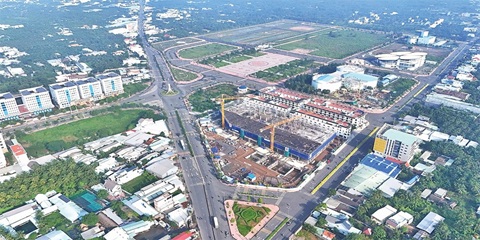
Accelerating public investment, strengthening inter-regional connectivity, and expanding industrial land are helping Dong Thap efficiently bolster competitiveness and drive economic growth. Following the 2025 merger of the former Dong Thap and Tien Giang provinces, the expanded Dong Thap province in the Mekong Delta faces mounting pressure to accelerate infrastructure development and strengthen connectivity among local economic zones, urban areas, industrial parks (IPs), and production centres.
Events Sponsors






















