Want to be in the loop?
subscribe to
our notification
Business News
INDUSTRIAL REAL ESTATE BOASTING FURTHER ROOM FOR GROWTH
Thua Thien-Hue People’s Committee and Gilimex Industrial Park (IP) JSC broke ground on the construction of Gilimex IP in the province’s Huong Thuy town on November 11.
The venture was approved in March 2021 and covers over 460 hectares, with $113 million in total investment and 20,000-30,000 projected employees.
The industrial real estate sector has also been attracting new supply sources. On November 12, investment was approved for developing infrastructure at Hai Long IP in the northern province of Thai Binh. Covering an area of 297ha, the project is funded by Bao Minh IP Infrastructure Investment JSC with total capital of VND2 trillion ($87 million).
Nguyen Manh Linh, deputy director of Dai Phong JSC – the developer of Dai Phong and Phu My Investment Zone (IZ) in the northern province of Nam Dinh – told VIR, “The number of delegations of Taiwanese and Chinese investors visiting our IP is increasing thanks to the Chinese government’s decision to ease some of its strict anti-pandemic rules.”
Dai Phong IP is fulfilled, and the final works at Phu My IZ are being completed to welcome tenants. “The demand for renting land plots in IPs is still large so the room for developing new parks is open. We are working with several Taiwanese investors who want to rent large plots.”
Elsewhere, Saigon-Bac Giang IP JSC received approval to expand the 90-ha Quang Chau IP, and many manufacturers registered to rent land plots with a fulfilment ratio of 90 per cent. Foxconn alone has registered to rent a 50-ha land plot for its expanded plant, with capital of $300 million.
Statistics from the Housing and Real Estate Market Management Agency under the Ministry of Construction showed that in the third quarter of 2022, many industrial real estate projects were started, inaugurated, or expanded, such as the Soc Son Clean IP, Dong Anh IP, and Phu Nghia IP.
Meanwhile, Son My I IP in the south-central province of Binh Thuan started construction in September and is one of the first smart and green IPs in the south-central coastal region.
According to the Ministry of Planning and Investment (MPI), in the first 10 months of this year, foreign inflows to real estate continued to surge, with the industry ranking second in the list of industries attracting foreign-invested capital. This hit more than $3.87 billion, against $2.12 billion in the same period last year. Notably, $1.43 billion was newly registered capital and $1 billion added capital.
Director of Haiphong Economic Zones Management Authority Le Trung Kien said, “The existing supply source of IPs in the city does not meet demand. Thus, the city wants to develop an additional 15 IPs by 2025. Currently, the city is concentrating on implementing procedures to establish six new IPs across 2,750ha.”
Northern Vietnam connects with the southern economic corridor of China, including some prominent regions such as Shanghai, Hong Kong, Shenzhen, Fujian, and Guangdong. This is the economic region chosen as the headquarters of giants in the manufacturing, biochemistry, commerce, and electronic technology industries. According to Cushman & Wakefield, this region accounted for more than 30 per cent of China’s total GDP in 2021, playing a key role in attracting investment and economic development.
Statistics published by the MPI’s Foreign Investment Agency showed that processing and manufacturing are taking the lead in foreign investment. In the first 10 months of this year, capital in this sector was estimated at $12.9 billion, accounting for 57.5 per cent of the investment inflow to the country.
Source: VIR
Related News

CHARITY / EXHIBITION / OTHER EVENTS
INVESTMENT OPPORTUNITIES IN CA MAU PROVINCE: 96 PROJECTS AND 20 STRATEGIC PROJECTS
We are pleased to share with you information on investment projects currently seeking investors in Ca Mau Province. Should your esteemed company or association be interested, we kindly invite you to review the project information and complete the registration form via the links provided. The Ho Chi Minh City Investment and Trade Promotion Centre (ITPC) will consolidate the expressions of interest and facilitate connections with the leadership of Ca Mau Province at a meeting tentatively scheduled for 13 November 2026 in Ho Chi Minh City.

MEMBER CORNER / PROMOTIONS
BẰNG KIỀU LIVESHOW - A SYMPHONY OF LOVE UNDER THE GOLDEN GLOW
A masterclass in live music that takes the audience on a soulful journey through immortal love songs, guided by the peerless artistry and emotive storytelling of renowned singer Bằng Kiều. The highlight of the night is his seamless musical chemistry with special guest Triệu Hồng Ngọc, promising passionate and deeply resonant duets inside the magnificent Grand Ballroom.
INFRASTRUCTURE / CONSTRUCTION / LOGISTIC / PORT
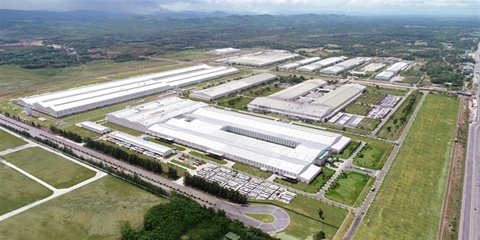
ĐÀ NẴNG GREEN-LIGHTS US$105 MILLION THAI DEVELOPMENT DEAL
The central city has approved an investment proposal by Thailand’s WHA Group to develop infrastructure for the 400ha WHA Đà Nẵng Industrial Park project on two communes of Thăng Bình and Đồng Dương, with an investment of more than VNĐ2.7 trillion (US$105 million). The city said it approved WHA Industrial Development International's status as an investor in the project, which is expected to take place between 2027 and 2034.
VIETNAM ECONOMY INVESTMENT
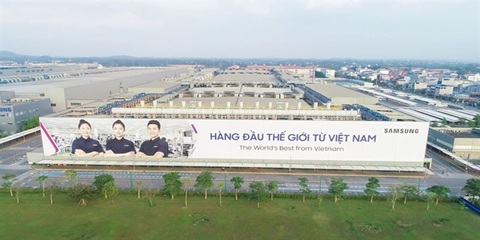
MOBILE PHONE EXPORTS RISE 20% TO $51.8 BILLION IN FIRST NINE MONTHS
Exports of mobile phones and components rose 20 per cent year-on-year to nearly US$51.8 billion in the first nine months of 2026, with China, the US and Republic of Korea accounting for more than half of the total. Shipments to the three markets reached a combined $26.18 billion, or 50.6 per cent of total exports of the product group during the period, according to data from the Vietnam Department of Customs under the Ministry of Finance.
INFRASTRUCTURE / CONSTRUCTION / LOGISTIC / PORT
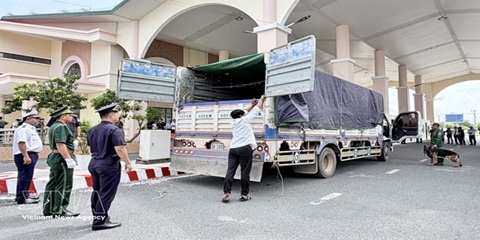
VIỆT NAM-CAMBODIA TRADE GATHERS PACE TOWARDS $20 BILLION TARGET
Trade between Việt Nam and Cambodia continues to grow, remaining a bright spot and a key pillar of bilateral cooperation as the two countries aim to raise two-way trade to US$20 billion in the coming years. After setting a record of more than $11.3 billion last year, bilateral trade reached about $8.7 billion in the first eight months of this year, up 8.3 per cent year on year.
VIETNAM ECONOMY INVESTMENT
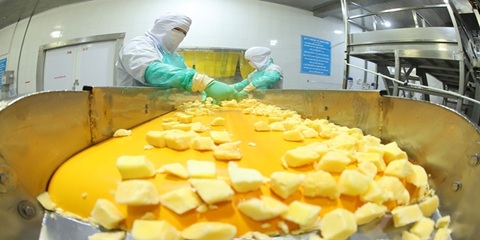
FRUIT AND VEGETABLE EXPORTS POISED TO HIT $10 BILLION IN 2026
Fruit and vegetable exports are on track to reach nearly US$10 billion in 2026, after rising 19.9 per cent year on year to nearly US$7.4 billion in the first nine months, driven by strong seasonal demand and abundant tropical fruit supplies. The Ministry of Agriculture and Environment said the growth reflected stronger international demand for fresh produce and processed agricultural products.
Events Sponsors






















