Want to be in the loop?
subscribe to
our notification
Business News
IFC EXPECTED TO ATTRACT CAPITAL INTO HCM CITY'S PROPERTY SECTOR
The development of the International Finance Centre (IFC) is poised to become a strategic catalyst for transforming HCM City into a major hub for global capital flows.
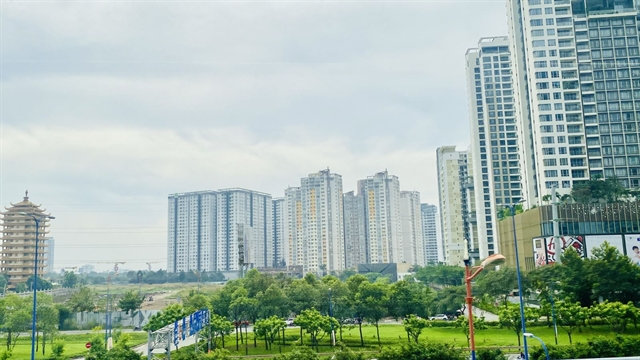
Apartment buildings seen in HCM City. — Photo baotintuc.vn
HÀ NỘI — The development of the International Finance Centre (IFC) is poised to become a strategic catalyst for transforming HCM City into a major hub for global capital flows.
Experts believe this will significantly enhance the appeal of the city’s real estate market, particularly in the central areas.
These insights were shared at the workshop on sustainable attraction of real estate in the centre of HCM City held in Hà Nội on November 26 and jointly organised by the Vietnam Real Estate Research Institute and the Vietnam Real Estate Electronic Magazine.
The event gathered more than 400 delegates, including economists, real estate experts and senior industry leaders, creating a platform for strategic discussions on new growth drivers for the real estate market of HCM City’s centre.
According to Associate Professor Trần Đình Thiên, a member of the Prime Minister's Policy Advisory Council and former Director of the Vietnam Economic Institute, HCM City is emerging as a concentration point for essential market resources - from finance and trade to high-quality human capital. As these strengths converge, the value of land and surrounding real estate will naturally rise, driven by market dynamics.
In recent years, the real estate market has observed a noticeable shift in investment flows from the North, particularly Hà Nội, toward HCM City and its neighbouring provinces.
This movement is influenced not only by price differences but also by investors seeking diversified portfolios, long-term profit margins and opportunities created by the restructuring of the Southern market.
Since early this year, many HCM City projects - especially high-end developments in the central districts - have recorded a significant proportion of buyers from Hà Nội.
With transparent legal frameworks, strong infrastructure, and promising long-term growth, central HCM City projects are becoming increasingly attractive to Northern investors.
Dr Nguyễn Văn Đính, vice chairman of the Vietnam Real Estate Association, noted that while Northern investors usually favour long-term asset accumulation, those investing in HCM City tend to focus on short-term value increases and high liquidity - reflecting the city’s dynamic economic environment.
However, unlike the more speculative periods in the past, the Southern real estate market has recently become more selective and cautious. This shift, experts say, is appealing to investors from Hà Nội who seek sustainable and high-quality opportunities.
New development phase
Experts said that HCM City is moving into a new stage of development, aiming to become an international megacity and rank among the world’s top 100 cities by 2045.
Institutional reforms, improved transport infrastructure, application of multi-polar urban models, transit-oriented development (TOD), and the establishment of the IFC are expected to fuel a new growth cycle in the city.
Within this context, the property market in the city's centre continues to affirm its status as a 'golden asset' due to its stability, modern infrastructure, and insulation from short-term market fluctuations.
The East bank of the Saigon River, including Thủ Thiêm, Bình Trưng and Cát Lái, is emerging as a new strategic growth zone.
in the post-merger period, HCM City will become one of Southeast Asia's and Asia’s leading megacities, with a population of about 14 million and contributing roughly 24 per cent of Vietnam’s GDP.
The city is set to take the lead in services, international finance, logistics, banking, insurance, fintech, global trade, and investment - becoming a convergence point for international financial capital.
HCM City is making systematic investments in its transport infrastructure, connecting the city center with the international airport, deep-water ports, and national expressway networks.
Key projects such as Ring Roads 2, 3, and 4, major routes, and the metro system enhance urban connectivity and support real estate growth.
According to the approved plan, HCM City’s IFC will cover a total area of 793 hectares and is expected to begin operations in 2025, with full completion targeted within five years.
The project spans Saigon Ward, Bến Thành (formerly District 1), and the Thủ Thiêm urban area. In its first phase, a 9.2-hectare core zone in Thu Thiem will be developed to house key financial management, supervision, and regulatory institutions.
The IFC project is estimated to require a total preliminary investment of approximately VNĐ172 trillion (US$7 billion). — VNS
Source: VNS
Related News

CHARITY / EXHIBITION / OTHER EVENTS
INVESTMENT OPPORTUNITIES IN CA MAU PROVINCE: 96 PROJECTS AND 20 STRATEGIC PROJECTS
We are pleased to share with you information on investment projects currently seeking investors in Ca Mau Province. Should your esteemed company or association be interested, we kindly invite you to review the project information and complete the registration form via the links provided. The Ho Chi Minh City Investment and Trade Promotion Centre (ITPC) will consolidate the expressions of interest and facilitate connections with the leadership of Ca Mau Province at a meeting tentatively scheduled for 13 November 2026 in Ho Chi Minh City.
MEMBER CORNER / PROMOTIONS
BẰNG KIỀU LIVESHOW - A SYMPHONY OF LOVE UNDER THE GOLDEN GLOW
A masterclass in live music that takes the audience on a soulful journey through immortal love songs, guided by the peerless artistry and emotive storytelling of renowned singer Bằng Kiều. The highlight of the night is his seamless musical chemistry with special guest Triệu Hồng Ngọc, promising passionate and deeply resonant duets inside the magnificent Grand Ballroom.
INFRASTRUCTURE / CONSTRUCTION / LOGISTIC / PORT
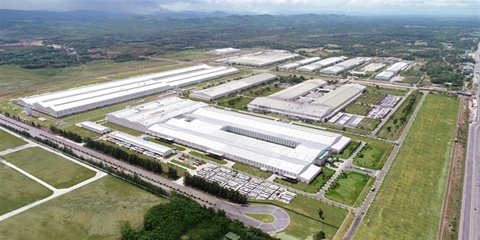
ĐÀ NẴNG GREEN-LIGHTS US$105 MILLION THAI DEVELOPMENT DEAL
The central city has approved an investment proposal by Thailand’s WHA Group to develop infrastructure for the 400ha WHA Đà Nẵng Industrial Park project on two communes of Thăng Bình and Đồng Dương, with an investment of more than VNĐ2.7 trillion (US$105 million). The city said it approved WHA Industrial Development International's status as an investor in the project, which is expected to take place between 2027 and 2034.
VIETNAM ECONOMY INVESTMENT
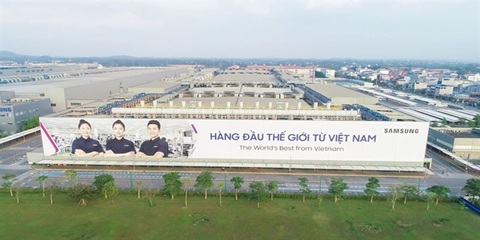
MOBILE PHONE EXPORTS RISE 20% TO $51.8 BILLION IN FIRST NINE MONTHS
Exports of mobile phones and components rose 20 per cent year-on-year to nearly US$51.8 billion in the first nine months of 2026, with China, the US and Republic of Korea accounting for more than half of the total. Shipments to the three markets reached a combined $26.18 billion, or 50.6 per cent of total exports of the product group during the period, according to data from the Vietnam Department of Customs under the Ministry of Finance.
INFRASTRUCTURE / CONSTRUCTION / LOGISTIC / PORT
VIỆT NAM-CAMBODIA TRADE GATHERS PACE TOWARDS $20 BILLION TARGET
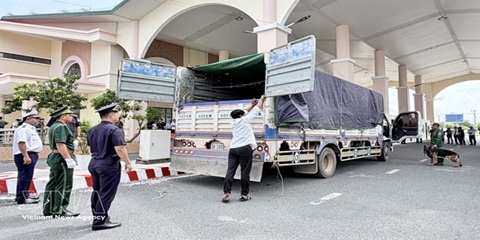
Trade between Việt Nam and Cambodia continues to grow, remaining a bright spot and a key pillar of bilateral cooperation as the two countries aim to raise two-way trade to US$20 billion in the coming years. After setting a record of more than $11.3 billion last year, bilateral trade reached about $8.7 billion in the first eight months of this year, up 8.3 per cent year on year.
VIETNAM ECONOMY INVESTMENT
FRUIT AND VEGETABLE EXPORTS POISED TO HIT $10 BILLION IN 2026
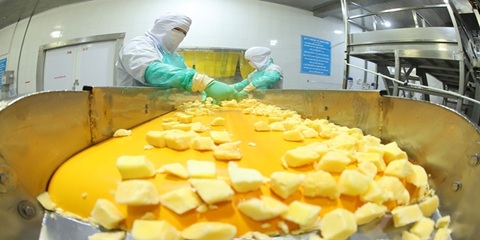
Fruit and vegetable exports are on track to reach nearly US$10 billion in 2026, after rising 19.9 per cent year on year to nearly US$7.4 billion in the first nine months, driven by strong seasonal demand and abundant tropical fruit supplies. The Ministry of Agriculture and Environment said the growth reflected stronger international demand for fresh produce and processed agricultural products.
Events Sponsors






















