Want to be in the loop?
subscribe to
our notification
Business News
ICAEW: ASEAN TO BE FASTEST-GROWING REGION GLOBALLY IN 2022, DESPITE NEW COVID-19 VARIANTS+
Growth across South-East Asian (ASEAN) economies contracted in the third quarter of 2021, because of the challenges of the Covid-19 Delta variant. However, ASEAN is expected to be the fastest-growing region in the world in 2022 with a growth forecast of 6.1%, as a result of high immunisation coverage and successful management of cases so far.
The forecast was recently presented by Sian Fenner, Lead Asia Economist at Oxford Economics, at an Economic Insight Forum held by chartered accountancy body ICAEW on 2 December 2021. At the forum, industry leaders and experts discussed South-East Asia’s economic outlook, with a focus on regional trade agreements and their impact on supply chains and business relations.
The forecast given at the event showed that recovery lagged for South-East Asian economies in Q3 2021, as countries battled a resurgence of cases due to the spread of the Delta variant. Tightened restrictions weighed heavily on consumer spending, while significant disruptions in production and weakened manufacturing hindered growth across the region. Vietnam recorded a 12% fall in manufacturing activity quarter-on-quarter, which contributed to a lower GDP forecast of 6.2% on the year, a record low for the region’s best performing economy during the pandemic. GDP in Malaysia, Philippines, Thailand, and Vietnam in Q3 2021 was 4% to 6% lower compared to pre-pandemic growth in Q4 2019 and was only marginally higher in Singapore.
Prospects for ASEAN in the year ahead are brighter, driven by easing restrictions and improved mobility as the pace of vaccinations steps up across the region. The lifting of restrictions and resumption of domestic tourism should also see a strong rebound in household spending and services in 2022.
Overall, South-East Asia’s GDP growth is expected to reach 6.1%. Malaysia, the Philippines, and Vietnam are expected to experience high growth in 2022, at more than 6%, double the pace achieved in 2021. Indonesia’s GDP is also expected to increase from 1.4% to 6.0%, a healthy growth after two years of falling below trend. In Singapore, GDP growth will be more muted at 3.8%.
A positive outlook for the region in 2022 but uncertainty abounds
The recovery of the tourism sector will likely be a partial one, as the uncertainty of new variants and increased costs associated with vaccine tests will continue to contribute to consumer hesitancy to travel. Sticking with its zero-Covid approach, China’s decision to keep outbound travel low will also dim the growth of the region’s tourism sectors.
The Omicron variant introduced an element of unpredictability, as there is currently little knowledge of the efficacy of current vaccines against it and what the health implications might be for the population. According to the forecast made at ICAEW’s event, the impact of the variant is expected to be acute but contained to Q1 2022. In the worst-case scenario where economies return to lockdowns, global GDP growth will drop from the current forecast of 4.5% to 2.3%. This would have a ripple effect on weaker export demand for ASEAN, which is projected to reduce growth from 6.1% to 4.3% in this scenario.
Supply chain disruptions to persist well in 2022
The ease of restrictions since August and relatively healthy world trade activities have contributed to the growth of ASEAN’s manufacturing Purchasing Managers Index (PMI). Capacity on major shipping routes between Asia, Europe and the United States has recovered to pre-shipping levels, up 6% during the first nine months of 2021.
Nonetheless, global demand has outstripped supply leading to delays in shipping, and economies will have to find a way to build their resilience to supply chain disruptions and tackle inflation. In addition, capacity at ports will remain tight as Asian manufacturers work through a backlog of orders and strive to meet global demand. While the worst may be over, a full easing in supply chain disruptions will not be possible before the second half of 2022.
Inflation on the rise in ASEAN
Inflation has been elevated for many Asian economies, driven by rising commodity prices and weather-related spikes in food security. It is expected to average about 2.8% across the region in 2022.
Source: VCCI
Related News

BANKING / FINANCE / INSURANCE / TAX
REMITTANCES TO HCM CITY RISE NEARLY 40% IN Q3
Remittances to HCM City reached more than US$2.83 billion in the third quarter of this year, up 39.5 per cent from the previous quarter and 3.6 per cent year-on-year. This was the first quarter showing positive annual growth this year, helping narrow the decline in remittance inflows over the first nine months. According to the State Bank of Vietnam (SBV)’s Regional Branch 2, remittances transferred to HCM City through credit institutions and economic organisations totalled $2.835 billion in Q3, an increase of more than $802 million from the previous quarter.
TECHNOLOGY
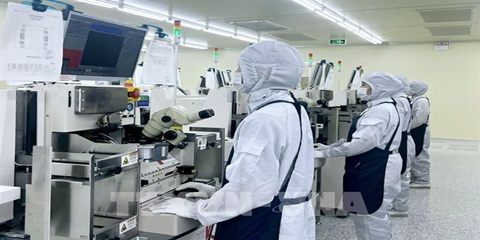
TECH SECTOR GROWTH OPENS UP OPPORTUNITIES FOR VIỆT NAM TO GO GLOBAL
The growth of the electronics, semiconductor and high-tech sectors worldwide is opening up a variety of opportunities for Vietnamese enterprises to integrate more deeply into the global supply chain. However, to become suppliers for these corporations, domestic enterprises must meet rigorous standards regarding quality, technology, productivity and order fulfilment capabilities.
VIETNAM ECONOMY INVESTMENT
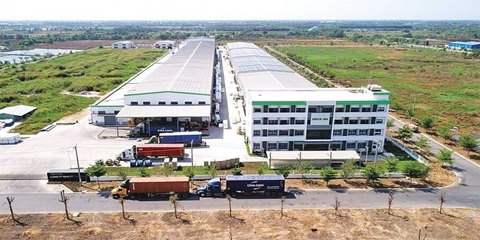
FOREIGN INVESTORS SEEKING A SYNCHRONISED MANUFACTURING ECOSYSTEM
Instead of focusing only on land costs and incentives as usual, foreign investors are seeking a synchronised manufacturing ecosystem, from stable power supply and logistics to shared infrastructure and the convenience of completing residence procedures for experts to serve their long-term investment in the country.

MEMBER CORNER / PROMOTIONS
SENTRYSAFE FHW40200 – PROTECT YOUR VALUABLES, ENJOY PEACE OF MIND!
Looking for a reliable solution to protect your important documents, cash, and valuables from fire and water damage? Genuine SENTRYSAFE - Reliable protection for your valuables and peace of mind! Contact Sen Wai Vietnam for more information and personalized product recommendations.
PROPERTY / INDUSTRIAL ZONE
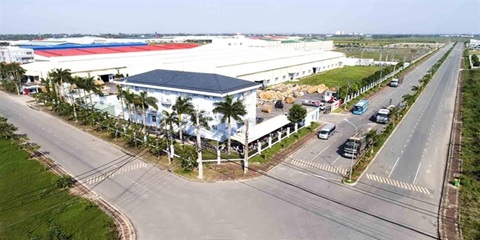
HCM CITY ATTRACTS US$5.7 BILLION INTO EXPORT PROCESSING AND INDUSTRIAL ZONES
HCM City attracted US$5.7 billion in domestic and foreign investment into its export processing and industrial zones during the first nine months of 2026. The figure exceeded the city's full-year target by 31 per cent, highlighting strong momentum in high-quality industrial investment under Resolution No.10-NQ/TW. Total investment reached 131 per cent of the 2026 target of $4.25 billion and represented a 29 per cent increase compared with the same period in 2025, according to the city's Export Processing and Industrial Zones Authority (HEPZA).
INFRASTRUCTURE / CONSTRUCTION / LOGISTIC / PORT
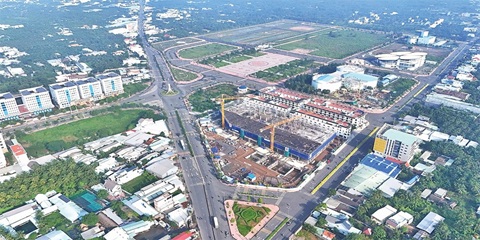
DONG THAP PROVINCE STEPS UP INDUSTRIAL EXPANSION AND INFRASTRUCTURE CONNECTIVITY
Accelerating public investment, strengthening inter-regional connectivity, and expanding industrial land are helping Dong Thap efficiently bolster competitiveness and drive economic growth. Following the 2025 merger of the former Dong Thap and Tien Giang provinces, the expanded Dong Thap province in the Mekong Delta faces mounting pressure to accelerate infrastructure development and strengthen connectivity among local economic zones, urban areas, industrial parks (IPs), and production centres.
Events Sponsors






















