Want to be in the loop?
subscribe to
our notification
Business News
HONG KONG SEEKS TO BUILD ON ASEAN RELATIONSHIP
The upcoming Belt and Road Summit in Hong Kong will highlight the territory's role in fostering economic cooperation with ASEAN by leveraging its strengths in finance, innovation, and green development.
The summit, co-organised by the Hong Kong Special Administrative Region (HKSAR) government and the Hong Kong Trade Development Council (HKTDC), will be held September 11-12, and is expected bring together over 80 key officials and business leaders to explore opportunities across the Belt and Road Initiative (BRI), with a special focus on ASEAN markets and Hong Kong’s unique position as a financial hub.
In August, Hong Kong’s chief executive John Lee led a delegation to Laos, Cambodia, and Vietnam, resulting in 55 cooperation MoUs, further strengthening the territory's network in Southeast Asia. The ASEAN region, which accounts for 13 per cent of Hong Kong’s foreign trade, remains a key focus for expansion under the BRI.
On day one of the summit, high-level discussions will centre on ASEAN markets, with participation from ministerial-level officials and business leaders. On day two, attention will shift to the Middle East, exploring further cooperation opportunities along the Belt and Road.
Previously, during his visit to Vietnam from July 31–August 2, Lee highlighted Hong Kong’s ambition to strengthen cooperation with Vietnam, a rapidly growing economy in Asia.
He emphasised that the territory's expertise as a global financial centre could support Ho Chi Minh City’s ambitions to become a regional financial hub.
"Vietnam's booming economy presents significant opportunities for foreign companies, and Hong Kong can serve as an ideal gateway to global and mainland Chinese investors," said Lee.
"We are committed to sharing our financial expertise, which can help develop Vietnam’s financial infrastructure," said Bonnie Y Chan, CEO of Hong Kong Exchanges and Clearing Limited noted, adding that collaboration among regional exchanges can draw in more global investors to Southeast Asia.
Phan Van Mai, Chairman of Ho Chi Minh City People’s Committee, also stressed the importance of drawing on Hong Kong’s experience to establish Ho Chi Minh City as a regional financial hub.
"We look forward to cooperation and learning from Hong Kong’s success as a global financial centre," Mai said.
As sustainability and green finance become increasingly crucial, the summit will debut a Green Chapter, focusing on green construction, finance, and innovation. Hong Kong has been at the forefront of green finance, with over $50 billion in green and sustainable debt issued in 2023. "Our thriving green finance market gives us a significant edge in sustainable development," said Dr Peter K N Lam, chairman of the HKTDC.
In addition to thematic sessions, the summit will feature business matching services, with more than 280 projects seeking investment and more than 800 one-on-one meetings. These sessions will focus on sectors such as energy, technology, urban development, and logistics, allowing project owners to present their ventures to potential investors from around the globe.
The exhibition area will showcase cutting-edge technologies and investment opportunities, further demonstrating Hong Kong’s role as a 'super connector' between China and international markets.
Source: VIR
Related News
BANKING / FINANCE / INSURANCE / TAX
REMITTANCES TO HCM CITY RISE NEARLY 40% IN Q3
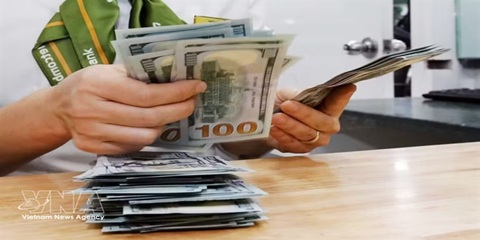
Remittances to HCM City reached more than US$2.83 billion in the third quarter of this year, up 39.5 per cent from the previous quarter and 3.6 per cent year-on-year. This was the first quarter showing positive annual growth this year, helping narrow the decline in remittance inflows over the first nine months. According to the State Bank of Vietnam (SBV)’s Regional Branch 2, remittances transferred to HCM City through credit institutions and economic organisations totalled $2.835 billion in Q3, an increase of more than $802 million from the previous quarter.
TECHNOLOGY
TECH SECTOR GROWTH OPENS UP OPPORTUNITIES FOR VIỆT NAM TO GO GLOBAL
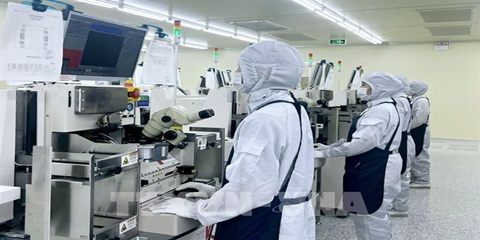
The growth of the electronics, semiconductor and high-tech sectors worldwide is opening up a variety of opportunities for Vietnamese enterprises to integrate more deeply into the global supply chain. However, to become suppliers for these corporations, domestic enterprises must meet rigorous standards regarding quality, technology, productivity and order fulfilment capabilities.
VIETNAM ECONOMY INVESTMENT
FOREIGN INVESTORS SEEKING A SYNCHRONISED MANUFACTURING ECOSYSTEM
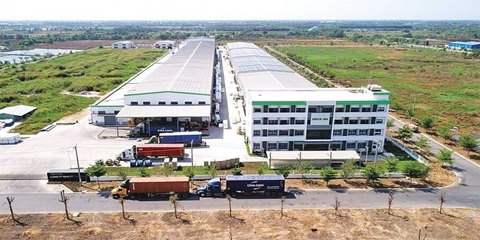
Instead of focusing only on land costs and incentives as usual, foreign investors are seeking a synchronised manufacturing ecosystem, from stable power supply and logistics to shared infrastructure and the convenience of completing residence procedures for experts to serve their long-term investment in the country.
MEMBER CORNER / PROMOTIONS
SENTRYSAFE FHW40200 – PROTECT YOUR VALUABLES, ENJOY PEACE OF MIND!
Looking for a reliable solution to protect your important documents, cash, and valuables from fire and water damage? Genuine SENTRYSAFE - Reliable protection for your valuables and peace of mind! Contact Sen Wai Vietnam for more information and personalized product recommendations.
PROPERTY / INDUSTRIAL ZONE
HCM CITY ATTRACTS US$5.7 BILLION INTO EXPORT PROCESSING AND INDUSTRIAL ZONES
HCM City attracted US$5.7 billion in domestic and foreign investment into its export processing and industrial zones during the first nine months of 2026. The figure exceeded the city's full-year target by 31 per cent, highlighting strong momentum in high-quality industrial investment under Resolution No.10-NQ/TW. Total investment reached 131 per cent of the 2026 target of $4.25 billion and represented a 29 per cent increase compared with the same period in 2025, according to the city's Export Processing and Industrial Zones Authority (HEPZA).
INFRASTRUCTURE / CONSTRUCTION / LOGISTIC / PORT
DONG THAP PROVINCE STEPS UP INDUSTRIAL EXPANSION AND INFRASTRUCTURE CONNECTIVITY
Accelerating public investment, strengthening inter-regional connectivity, and expanding industrial land are helping Dong Thap efficiently bolster competitiveness and drive economic growth. Following the 2025 merger of the former Dong Thap and Tien Giang provinces, the expanded Dong Thap province in the Mekong Delta faces mounting pressure to accelerate infrastructure development and strengthen connectivity among local economic zones, urban areas, industrial parks (IPs), and production centres.
Events Sponsors






















